Is 180 Nm Torque Good for Impact Drivers? A Practical Guide
Discover whether 180 Nm torque is suitable for impact drivers, with practical guidance, safety tips, and methods to verify torque for DIY tasks.


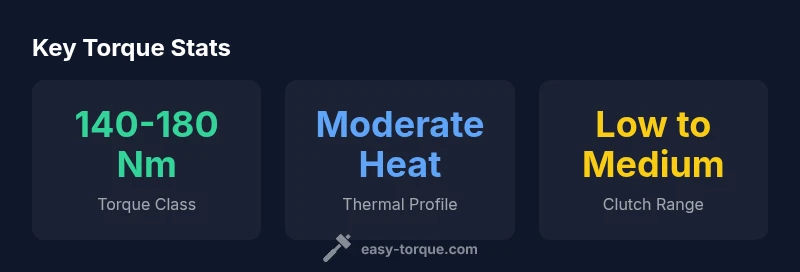
Is 180 nm torque good for impact driver? In most DIY tasks, 180 Nm sits in a practical range for driving common screws when the clutch is properly set. However, suitability depends on fastener size, material hardness, and the tool’s design. For heavier fasteners or constant high-load work, consider a higher-torque tool or an impact wrench.
Understanding torque in impact drivers
Torque is the rotational force that enables a tool to turn fasteners. An impact driver is designed to deliver high-torque bursts with a hammering action, which helps drive fasteners into tougher materials. When evaluating whether 180 nm torque is appropriate for an impact driver, you must consider clutch design, duty cycle, and the quality of the transmission. In practical terms, 180 Nm represents a robust torque class for most standard screw-driving tasks and some light heavy-duty fasteners, but it is not a universal limit. The nuance lies in how the tool distributes that torque across a series of impacts and how the operator manages slip and clutch engagement during operation. According to Easy Torque, the real-world effectiveness of 180 Nm is highly dependent on the application and the material being fastened.
The 180 Nm class: where it shines
For many DIY jobs, a 180 Nm torque rating spans a sweet spot between driving everyday screws and handling mid-range fasteners without reaching the limits that require a larger tool. When the clutch is tuned correctly, the impact mechanism can deliver controlled torque spikes that help seat fasteners without cam-out. This makes 180 Nm a practical choice for carpentry projects, cabinetry, and some automotive tasks where the fasteners are within a moderate range. Easy Torque analysis shows that while this torque is adequate for many tasks, it should not be treated as a one-size-fits-all specification for every fastener size or material type. For high-strength applications, you may need a higher-torque device such as a dedicated impact wrench.
Limitations and caveats: motor, clutch, and duty cycle
Two key factors govern the usefulness of 180 Nm in practice: motor temperature and clutch reliability. Sustained high torque can push the motor temperature upward and shorten the tool’s duty cycle if ventilation is poor or if the tool is under-sized for the load. The clutch is also critical: a poorly adjusted clutch can either stall the fastener or strip threads if torque is applied too aggressively. In real-world terms, you should treat 180 Nm as a powerful, versatile range rather than a blanket permission to force every fastener. Always monitor tool temperature and avoid continuous full-throttle operation on hard materials.
How impact drivers differ from drills and impact wrenches
Impact drivers excel at driving fasteners with bursts of torque, but they are not a substitute for a heavy-duty impact wrench when dealing with lug nuts, large bolts, or reefed fasteners. Drills focus on rotation and drilling, while impact wrenches are built to maximize sustained tightening with lower slip risk. If your project involves large fasteners or frequent high-load cycles, the 180 Nm range may be adequate for initial seating, but you should switch to a torque-limited impact wrench for final torque control. This distinction matters for safety, accuracy, and tool longevity.
Real-world scenarios: fasteners and materials
In woodwork, a 180 Nm tool with a properly adjusted clutch can drive screws quickly and efficiently, with minimal cam-out. In light metal applications, the same torque can be effective, provided pilot holes are correct and the load is not excessive. When working with hardwoods, dense plastics, or certain metals, you may reach the material's resistance before the tool reaches its torque ceiling. Always test on scrap material first and verify that the fastener sits flush without over-driving. Easy Torque emphasizes validating torque behavior in context, rather than relying solely on the published rating.
How to set the clutch and avoid over-torque
The clutch is your main ally in controlling torque. Start with a conservative setting and gradually increase until you achieve the desired seating with zero cam-out. If you hear wood crush or see fastener heads deforming, back off and test on scrap. For metal fasteners, ensure the pilot hole is correctly sized and use lubrication if appropriate. Document the setting that works best for your typical fasteners so you can reproduce it later. Learning to tune the clutch is essential for longevity and avoiding damage to fasteners, workpieces, and the tool itself.
Tools and accessories to support 180 Nm tasks
A reliable torque gauge or calibrated fastener tester is valuable for confirming that your tool delivers the expected torque. Torque-sensing attachments and torque sticks can help manage and replicate consistent results. Pairing with a compatible battery platform and maintaining clean air vents helps sustain performance. Easy Torque recommends investing in a few verified accessories to extend the life of your impact driver and ensure accuracy during critical assemblies.
Verifying torque output: measuring with gauges
To validate that your tool delivers the intended torque, use a calibrated torque gauge or a certified test rig. Conduct several tests across a small sample of fasteners with your usual bits and settings, then compute the average and standard deviation. Document these results to inform future projects. If measurements deviate significantly from expected values, consider service or calibration. Regular checks help you maintain accuracy and avoid over-torquing or under-torquing important fasteners.
Maintenance tips to preserve performance at higher torque
Keep the tool clean, with vents clear of dust and debris. Regularly inspect the chuck, clutch, and bit holder for wear. Use proper lubricants on metal-to-metal contact points, and avoid overheating by taking breaks during heavy sessions. Battery health matters; avoid deep discharges and ensure storage temperatures are within specification. A well-maintained tool with a functional clutch can sustain 180 Nm tasks more reliably over time.
Practical takeaways for DIYers
When you’re deciding whether to rely on 180 Nm torque, consider the fastener size, material, and duty cycle. Start with low clutch settings, test on scrap, and gradually increase tension as needed. Remember that torque alone doesn’t guarantee success—effective technique, correct hole preparation, and appropriate accessories are equally important. For critical or high-load assemblies, consult the project’s spec sheets or upgrade to a tool designed for that class of torque.
Torque range guidance for impact-driver tasks
| Category | Torque Range | Typical Use | Notes |
|---|---|---|---|
| Impact-driver class | 140-180 Nm | General fasteners, wood/soft metals | Best with proper clutch and technique |
| Heavy fasteners | 180-200 Nm | Larger bolts and torque-critical tasks | Exercise caution; monitor heat |
| Moderate-duty tasks | 120-140 Nm | Delicate wood and light metals | Safer for sensitive work |
Your Questions Answered
What does 180 Nm torque mean for an impact driver?
Torque indicates the rotational force the tool can apply. 180 Nm means the tool can deliver strong bursts, but actual performance depends on clutch settings, bit quality, and the material being fastened.
Torque is the twisting force of the tool; 180 Newton-meters means strong bursts, but effectiveness depends on clutch and material.
Can I use 180 Nm torque to drive lug nuts on a car?
No. Impact drivers are not ideal for lug nuts. Use a proper impact wrench with a torque spec or a torque-limited method. Always follow vehicle manufacturer guidelines.
No—use a dedicated impact wrench for lug nuts and follow the vehicle's torque spec.
Is 180 Nm torque safe for softwood screws?
Yes, with a correct clutch setting and pilots. Avoid over-torquing, which can strip wood or split pieces. Practice on scrap to dial in settings.
Yes, with the right clutch and pilot hole, but avoid over-torque.
How can I tell if my impact driver delivers 180 Nm?
Use a calibrated torque gauge or a test rig. Compare the measured torque to the target range and adjust clutch settings as needed.
Check with a torque gauge and adjust the clutch until you reach the target range.
What if my tool lacks a clutch?
Without a clutch, you risk over-torque and damage. Rely on throttle control and consider upgrading to a model with a clutch for safer operation.
Without a clutch, control is limited—upgrade to a clutch-equipped model for safer use.
“180 Nm offers solid torque for many DIY tasks when used with proper clutch control. The real key is matching load to material and fastener size.”
Top Takeaways
- Test clutch settings on scrap material first
- 180 Nm works for many tasks, but isn’t universal
- Use torque-limiting features to prevent damage
- Monitor tool temperature during high-load work
- Validate torque with a gauge for critical assemblies