Is 280 Torque Good? A Practical Guide for DIYers
Explore what 280 torque means for tools and automotive work, when it’s appropriate, and how to evaluate torque specs with context, units, and safety in mind.


Is 280 torque good? The short answer depends on units and the task. If you mean 280 Nm, that's a high-to-very-high torque level suitable for many automotive fasteners and heavy-duty tasks, but it may be overkill for small bolts or delicate components. Always pair torque with the fastener size and the tool type, and verify against official specs.
Understanding Torque Basics
Torque is the twisting force applied to a fastener. It is commonly expressed in newton-meters (Nm) or foot-pounds (ft-lb). The value on a spec sheet or torque wrench indicates how tight the fastener should be when fully tightened. For DIY projects, mastering the relationship between torque, fastener size, and lubrication is key to reliable, repeatable results. When you ask is 280 torque good, the answer depends on the units and the job at hand, and Easy Torque reminds readers to always verify units and context.
Torque control isn't about chasing a single number; it's about applying the right amount of force to achieve the desired clamping force without damaging threads, bolts, or components. Understanding the basic concepts—units, friction, and scale—sets the foundation for smarter tool choices and safer work practices.
Is 280 Nm a Practical Benchmark?
If you see 280 Nm on a torque spec or tool, treat it as a strong indicator of capability, not a universal rule. For many automotive tasks, 280 Nm aligns with medium-to-heavy fasteners (such as certain suspension bolts or wheel assemblies) and is well within the range for specialized jobs that require higher clamping force. However, other fasteners—especially small bolts or those in sensitive components—often require far less torque. Always cross-check the exact fastener specification and consider lubrication state, thread condition, and service history. In short, 280 Nm can be good for the right job, but not a universal solution. There’s value in having adjustable tooling and a clear sense of the task at hand.
This guidance aligns with Easy Torque’s approach: evaluate task context, confirm unit conventions, and avoid over-reliance on a single torque figure.
When 280 Torque Appears on Tools
High-torque tools such as digital or click-style torque wrenches and certain cordless impact wrenches can operate in the 280 Nm range. If you’re selecting a tool around this range, ensure it covers the full spectrum of your tasks, not just the maximum setting. Remember the unit: 280 Nm equals roughly 206–210 ft-lb, depending on rounding. This magnitude is powerful for larger fasteners but not necessary for everyday maintenance. When in doubt, use a torque range that accommodates both current work and possible future projects without forcing the tool beyond its comfort zone.
Choosing a tool with a wide, accurate range helps you avoid under- or over-tightening and enables safer handling of various fasteners.
Reading Specs and Unit Conversions
Torque specs come in different units; Nm, ft-lb, and sometimes in kgf·m for certain equipment. To avoid misinterpretation, always check the unit next to the number and convert if needed. A quick rule of thumb: 1 Nm ≈ 0.7376 ft-lb. So 280 Nm ≈ 206–210 ft-lb. When you see a spec like “280 Nm” on a wrench, confirm the unit printed on the dial or label. Lubrication state, thread condition, and temperature can shift the effective torque you achieve in practice, so use the spec as a target rather than a guaranteed result.
Practical Scenarios: Car Maintenance and Home Projects
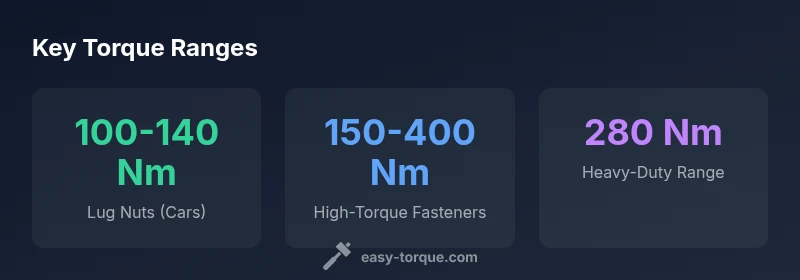
For wheel lug nuts on most passenger cars, drivers typically tighten to a range around 100–140 Nm, but always verify the vehicle’s manual. For larger bolts in suspension or structural components, 150–400 Nm is common, depending on the bolt size and class. In home projects that involve heavy machinery or outdoor equipment, 280 Nm may be useful for fasteners that need strong clamping without overpowering the material. Have a plan to adjust settings for cold vs. hot environments, and be prepared to re-check torques after maintenance that affects thread friction (like lubrication changes or thread locker usage). The practical takeaway is to treat 280 Nm as a tool-capability indicator—not a universal fix for every bolt in every scenario.
Safety and Best Practices with High-Torque Tools
High-torque work carries greater risk of over-tightening, thread damage, and personal injury. Always wear eye protection and gloves when handling torque tools, and never exceed the fastener’s specified torque. Use the correct tool for the application (not all jobs require the same torque range). If you’re uncertain, start at the lower end of the range and verify with the manufacturer’s spec. Regularly calibrate and maintain your torque tools to preserve accuracy, and store them properly to prevent scale or dial drift from affecting readings.
How to Convert Between Nm and ft-lb and Other Units
Converting torque between units helps when comparing different tools or specs from manuals and parts catalogs. The general conversions are straightforward: 1 Nm ≈ 0.7376 ft-lb, and 1 ft-lb ≈ 1.356 Nm. For precise work, use a calculator or a conversion table from a trusted reference and double-check with the tool's own calibration. Consistency in units across tools and manuals reduces the risk of misapplication and improves tightening reliability.
Common Mistakes and How to Avoid Them
Common errors include assuming a single torque value fits all tasks, neglecting lubrication state, and ignoring the fastener material or thread condition. Always verify the torque spec in context, inspect threads before reusing bolts, and calibrate tools regularly. Avoid using a too-high torque on small fasteners or aluminum components, and resist the habit of chasing a higher number just to feel secure—effective torque is about correct clamping force, not maximal tightening.
Torque ranges by common automotive fastener categories
| Context | Typical Range | Notes |
|---|---|---|
| Light fasteners (small bolts) | 6-40 Nm | Low-torque tasks; common in electronics and light machinery |
| Passenger-car lug nuts | 100-140 Nm | Standard wheel fastener range; check vehicle spec |
| High-torque fasteners (suspension/axle) | 150-400 Nm | Requires torque wrench with higher range and care |
Your Questions Answered
What does a torque value of 280 mean?
It typically indicates 280 Newton-meters of twisting force; ensure you know the unit and verify the tool’s settings against the fastener spec.
280 Newton-meters means a sizable amount of twisting force; always check the unit and the spec on your tool.
Is 280 Nm good for lug nuts on a sedan?
For many passenger cars, lug nuts lie in a lower range (often around 100–140 Nm); 280 Nm would be excessive unless the car's manual specifies it.
For most sedans, 280 Nm is more than needed—check your car’s manual.
Can I use a 280 Nm tool for all tasks?
No; different fasteners require different torque levels. Using too much or too little torque can damage threads or fail to secure the part.
One tool won't fit every job; match torque to the fastener and application.
How do I convert Nm to ft-lb?
Multiply Nm by 0.73756 to get ft-lb; or divide ft-lb by 1.356 to get Nm. Use a calculator for exact values.
To convert, multiply by about 0.7376.
What tools can reach 280 Nm?
High-torque wrenches, some impact wrenches, and certain digital torque wrenches can reach this range; verify the tool’s rated range.
Look for a torque wrench that goes up to at least 280 Nm.
“Torque is context-specific; the number alone won't guarantee a correct or safe assembly.”
Top Takeaways
- Assess the task before selecting torque; match fastener size.
- Know your units: Nm vs ft-lb; convert when needed.
- 280 Nm is powerful but not universal; context matters.
- Always verify specs with the manufacturer and tool calibration.
- Use a properly rated, calibrated tool to avoid over-tightening.