Torque Inch-Pounds to Foot-Pounds: A Practical Conversion Guide
Learn how to convert torque from inch-pounds to foot-pounds with a simple rule. This guide explains the math, shares examples, and provides a calculator to practice the conversion.


Understanding Torque Units and the Inch-to-Foot Relationship
Torque is a rotational force that depends on both the amount of force and the lever arm length. When torque is stated in inch-pounds (in-lb), it reflects the force applied at the end of a one-inch lever. To compare with foot-based specs, you convert to foot-pounds (ft-lb). The essential fact is that there are 12 inches in a foot, so the conversion from in-lb to ft-lb is exact: ft-lb = in-lb / 12. In practical terms, this matters every time you choose a torque specification for fasteners in engines, suspensions, or brake systems. For DIYers and technicians, mastering this unit relationship helps prevent over-tightening or under-tightening and ensures consistent clamping force across tools and tasks.
The Math Behind the Conversion
The math is intentionally simple. To convert from inch-pounds to foot-pounds, you divide by 12:
- ft-lb = in-lb / 12
This rule assumes standard gravity and lever geometry are constant, which is appropriate for torque specifications that are defined by mechanical design rather than by dynamic loading. For example, 24 in-lb equals 2 ft-lb, and 48 in-lb equals 4 ft-lb. When working with torque wrenches, always verify the scale you are reading on and ensure you are using the correct unit for the task at hand. Rounding should be limited to two decimals for practical tightening accuracy.
Practical Examples: Quick Walkthrough
Here are a few quick conversions to illustrate the rule in action:
- 24 in-lb → 2 ft-lb (24 ÷ 12 = 2)
- 60 in-lb → 5 ft-lb (60 ÷ 12 = 5)
- 125 in-lb → 10.42 ft-lb (125 ÷ 12 ≈ 10.4167, rounded to 10.42)
- 12 in-lb → 1 ft-lb (12 ÷ 12 = 1)
In each case, the result becomes the torque value you’d use with a ft-lb torque spec. If you prefer, you can also convert ft-lb back to in-lb by multiplying by 12. This reciprocal relationship makes cross-referencing specs across manuals and service sheets straightforward.
Common Pitfalls When Converting Torque
When performing in-lb to ft-lb conversions, watch for:
- Mixing units: Always confirm the unit specified in the service sheet before tightening.
- Rounding too aggressively: Rounding to too few decimals can cause under- or over-torque in precision assemblies.
- Using benchmarks outside the context: Some specialized fasteners are specified in other units or require calibration for temperature and lubrication.
- Assuming linearity under load: Real assemblies may experience dynamic factors that slightly alter effective clamping force.
How to Use the Calculator Effectively
The calculator focuses on the core conversion from in-lb to ft-lb. Enter the torque value in in-lb, and the tool will display the equivalent in ft-lb with two-decimal precision. Use the educational notes to understand why the conversion works and how rounding can affect final tightness. Always cross-check the numerical result against the vehicle or machinery spec sheet for the specific fastener.
Real-World Reference: Typical Ranges in Automotive Work
Torque specifications vary widely depending on fastener size, material, lubrication, and engineering requirements. In automotive maintenance, many small fasteners on engine covers or sensors fall under lower ft-lb figures, while wheel fasteners and main bearing caps may require significantly higher values. Always rely on the manufacturer’s spec sheet and convert consistently if you encounter mixed units in documentation. The core rule remains the same: in-lb to ft-lb is divide by 12.
Quick Reference Cheatsheet
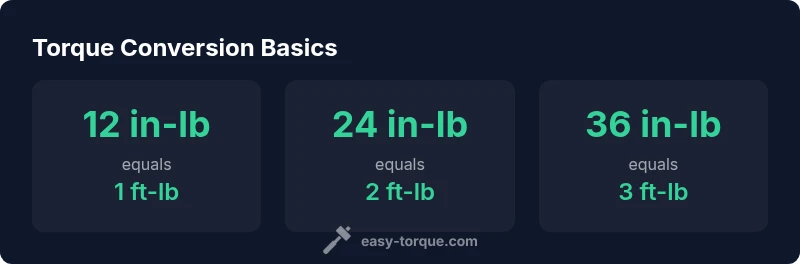
- 12 in-lb = 1 ft-lb
- 24 in-lb = 2 ft-lb
- 36 in-lb = 3 ft-lb
- 48 in-lb = 4 ft-lb
- 60 in-lb = 5 ft-lb
Keep this cheat sheet handy when you’re working with common fasteners in the workshop.
Safety and Accuracy Reminders for DIYers
- Always verify the unit in the service sheet before tightening.
- Use two-decimal precision for torque targets in critical joints.
- Calibrate your torque wrench regularly and store it correctly to maintain accuracy.
- When in doubt, consult the spec sheet or a qualified technician to confirm the correct torque value.