Cost to Replace Torque Converter Clutch Solenoid: A Practical Guide
Understand the cost to replace torque converter clutch solenoid, with breakdowns of parts, labor, and regional rates. A practical Easy Torque guide.


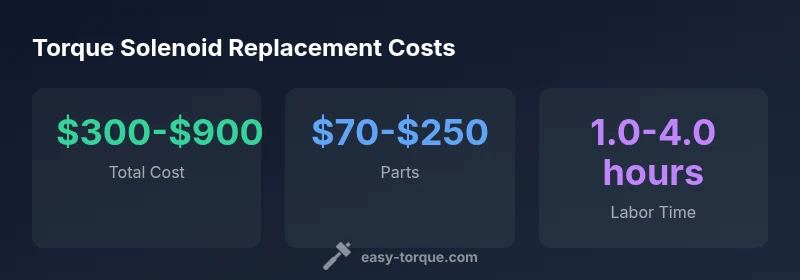
On average, replacing a torque converter clutch solenoid costs between $300 and $900. The total depends on the vehicle, solenoid type, and local labor rates. Parts typically run about $70–$250, with labor comprising most of the charge, especially if the transmission must be dropped. Get a detailed written estimate before any work, and ask about whether related seals or solenoids are included.
What is a torque converter clutch solenoid and why replacement costs vary
In modern automatic transmissions, the torque converter clutch solenoid is a compact electromechanical valve that signals the transmission control module when to engage the lockup clutch. When it fails, symptoms can include shudder, slipping, overheating, or a fault code. Replacement costs hinge on access to the solenoid, the solenoid type (standalone vs. assembled with seals), and whether the transmission must be removed for access. According to Easy Torque, pricing is driven by labor rates and the steps needed to reach the solenoid. Vehicles with tight packaging, low ground clearance, or nonstandard subframes demand more labor hours, pushing up the price. Regional wage differences and diagnostic fees also shape the final bill. Dealers can charge more, while independents may offer more transparent pricing. Understanding these factors helps you plan realistically and avoid surprises during service.
Cost components explained: parts, labor, taxes, and system checks
The cost to replace a torque converter clutch solenoid is composed of several elements. Part costs cover the solenoid itself and any seals, gaskets, or kit required. Labor costs depend on how accessible the solenoid is and whether the transmission must be dropped or a subframe removed. Taxes vary by location and are added to the final amount. In addition to the replacement, many shops perform a fault check, drain and refill transmission fluid, and test drive to verify proper operation. If a software calibration or reflash is required after the replacement, expect an extra line item. Diagnostic fees may apply if extensive inspection was needed. To avoid surprises, request an itemized estimate separating parts, labor, and possible ancillary services. A clear breakdown helps you decide what to defer if symptoms improve after the solenoid replacement.
How vehicle type and transmission design influence price
Vehicle type and transmission layout strongly affect labor effort. A compact car with easy access typically costs less than an SUV, truck, or high-torque transmission that sits deeper under the chassis. Some models require removal of other components to access the solenoid, or even removal of the transmission itself in extreme cases. In addition to the solenoid price, you must consider the potential need to replace seals, gaskets, or the transmission fluid, which can raise the total. When shopping, note that the design of the transmission, the age of the vehicle, and any OEM servicing requirements bias the final cost upward or downward. Easy Torque emphasizes that the most accurate estimate comes from a technician who uses the vehicle’s service bulletin and your VIN to assess access and required parts.
Regional labor rates and shop practices that affect total
Labor rates vary by region and shop type. Urban areas or dealership service centers typically charge higher hourly rates than rural independent shops, which can widen the total cost even if the same solenoid is replaced. Some shops include diagnostic and fluid service in one bundled price, while others itemize separately. The time required for the job can swell if special tools or cleaning steps are needed to remove contaminants from the valve body. If you are pushing for a tight turnaround, you may incur rush or after-hours fees. Always ask for a written estimate that lists any potential add-ons and a best- and worst-case scenario, so you can plan accordingly.
Scenarios: DIY potential vs professional service
DIY replacement is possible for some vehicles, especially when the solenoid is easily accessible and the transmission is straightforward. For many modern transmissions, accessing the solenoid demands significant disassembly or professional equipment, such as a transmission jack or alignment tools. If you lack the manual and the correct procedure, attempting the job can risk damage to the transmission and result in higher costs. When in doubt, obtain a diagnostic assessment first; it will reveal whether the solenoid is the sole issue or if related components require attention. For most drivers, a professional replacement with a warranty is the safer, more predictable path.
The role of additional components and related work that may be required
Sometimes solenoid failure accompanies wear on seals, gaskets, or the transmission fluid and filter. If debris or varnish has contaminated passages, a fluid flush and filter change may be advised. Some vehicles also require a software calibration to ensure the transmission control module correctly sequences the solenoid operation. If the transmission has a history of overheating or slipping, a more comprehensive inspection could reveal additional issues that influence the price. Clarify with the shop whether these services are included in the quoted price and whether a warranty covers both parts and labor.
Steps to obtain an accurate estimate and avoid surprises
Start with a diagnostic visit to confirm the solenoid is the root cause. Request an itemized estimate that separates parts, labor, and any potential add-ons. Ask if the price includes the transmission fluid service, gasket replacements, and any required calibration. If possible, obtain quotes from at least two shops to gauge regional pricing. Finally, check for a warranty on parts and labor; a longer warranty can save money over time if the solenoid or related components fail again.
Practical timeline and what to expect during service
From scheduling to completion, a typical job spans a few hours to a full day, depending on access and shutdown time. Expect gasket or seal replacement if the solenoid kit includes those parts. Most shops perform a test drive and a brief read of transmission codes to ensure the issue is resolved. If the solenoid is replaced during a broader transmission repair, it can extend the timeline and total cost. A well-communicated plan with an itemized estimate helps you manage expectations and reduces your risk of sticker shock.
Estimated cost ranges by vehicle category for torque converter clutch solenoid replacement
| Vehicle Type | Estimated Labor Time | Estimated Parts Cost | Estimated Total Cost Range |
|---|---|---|---|
| Compact Car | 1.5-2.5 hours | $70-$180 | $320-$820 |
| SUV/Crossover | 2.0-3.0 hours | $110-$240 | $420-$940 |
| Truck/HD | 2.5-4.0 hours | $130-$250 | $520-$1000 |
Your Questions Answered
What is a torque converter clutch solenoid and what does it control?
The solenoid is a valve controlled electronically to engage or disengage the torque converter clutch. When it fails, you may experience slippage, shudder, or transmission warning codes. Replacement typically restores proper lockup operation, but the exact cost depends on access and parts availability.
The solenoid controls the torque converter clutch. If it fails, you might feel slipping or a shudder, and replacement usually fixes it.
How long does it take to replace the solenoid?
Labor time varies with transmission design and access. Typical ranges are about 1.5 to 3 hours, but some models require more extensive disassembly. Always ask for a time quote before work begins.
Most solenoids take about 1.5 to 3 hours, depending on access and transmission design.
Are there other components to replace at the same time?
Yes. Often, seals, gaskets, or the transmission fluid and filter are inspected or replaced if the system is opened. In some cases, software calibration may be needed after replacement.
You might also replace seals or do a fluid change, and possibly calibrate the software.
Can a DIYer replace the solenoid?
Possible on simpler designs, but many modern transmissions require professional access and special tools. If unsure, consult the service manual or a technician before attempting the job.
DIY can work if you have the right tools and access, but many cars need a pro.
How can I minimize costs for this repair?
Shop around for bids, ask for bundled services, and verify warranty terms. If the solenoid is replaced along with related maintenance, you may save in the long run by addressing multiple issues at once.
Compare quotes, check warranties, and consider bundling maintenance to save.
“Solenoid replacement is straightforward when the transmission is accessible, but total cost hinges on the transmission design and whether fluid service or calibration is needed.”
Top Takeaways
- Expect a broad price range based on access and vehicle design
- Parts are a smaller portion of the total for most jobs
- Labor dominates cost when transmission work is required
- Get an itemized, written estimate before work starts
- Consider regional rates and shop policies to compare quotes