How to Fix Torque Converter Clutch Circuit Stuck On: A Practical Guide
Learn a thorough, practical approach to diagnosing and repairing a torque converter clutch circuit stuck on. This guide covers electrical checks, solenoid testing, safety considerations, and clean repair paths for DIY mechanics and enthusiasts.


This how-to will guide you through diagnosing and repairing a torque converter clutch circuit stuck on. You’ll verify electrical signals, inspect the wiring, test the TCC solenoid, and determine whether repair or replacement is most appropriate. Expect to use a DVOM, scan tools, and basic hand tools, with safety steps built in for DIY mechanics.
What it means when the torque converter clutch circuit sticks on
When the torque converter clutch (TCC) circuit sticks on, the transmission attempts to lock the torque converter even at low speeds or idle. This can produce a constant drive condition, reduced fuel economy, and potential transaxle wear if left unaddressed. The underlying causes may include electrical faults, a failed solenoid, wiring corrosion, or a PCM reading fault. According to Easy Torque, many TCC-stuck-on issues originate with the solenoid or wiring rather than a purely mechanical bind. You may notice harsh engagement, RPM instability during cruise, or a subtle shudder when the vehicle moves between gears. The first objective is to confirm the symptom is electrical rather than mechanical, and to pull diagnostic trouble codes (DTCs) from the transmission control module to guide the next steps.
In the context of a stuck-on TCC, avoid assuming a single cause. A systematic approach helps you separate electrical faults from hydraulic or mechanical complaints. This section sets the stage for a repeatable diagnostic workflow that minimizes guesswork and reduces unnecessary repairs. The goal is to determine whether the fault lies in the solenoid circuit, the wiring harness, sensor feedback, or the PCM’s control logic, before committing to costly parts replacement.
How the torque converter clutch circuit interacts with the transmission control module
The TCC circuit is integrated with the vehicle’s transmission control module (TCM) or the engine control module (ECM) in many modern autos. When conditions call for the lockup, the TCM issues a controlled signal to the TCC solenoid, modulating current to engage or disengage the clutch. A fault in this signaling path can cause the solenoid to stay energized, keeping the clutch engaged even when it shouldn’t. Electrical resistance, ground integrity, and sensor inputs all influence the PWM (pulse-width modulation) control that governs the solenoid’s duty cycle. In some vehicles, a stuck-on signal may be a symptom of an external fault like a short to voltage, degraded ground, or a failed temperature sensor that alters the ECM’s timing. Easy Torque notes that in practice, most stuck-on conditions stem from wiring or solenoid reliability issues rather than a PCM reset alone. Understanding the control loop helps you pinpoint where to test first and how to interpret live data.
Common symptoms you may notice
- Constant drive condition even at idle or low speeds
- Poor fuel economy and possible overheating of the transmission fluid
- Transmission shudder or harsh engagements during gear changes
- Check Engine or transmission warning lights that may illuminate intermittently
- Difficulty downshifting or unusual RPM behavior during cruise
- Occasional harsh engagement when the TCC should disengage
These symptoms do not guarantee a TCC fault, but they strongly suggest checking the electrical control path as a priority. Always verify that the issue replicates under test conditions and that it is not caused by a mechanical binding or fluid issue before replacing components. Easy Torque emphasizes documenting symptom patterns to distinguish intermittent electrical faults from stable mechanical failures.
Diagnosing the stuck-on condition: a stepwise approach
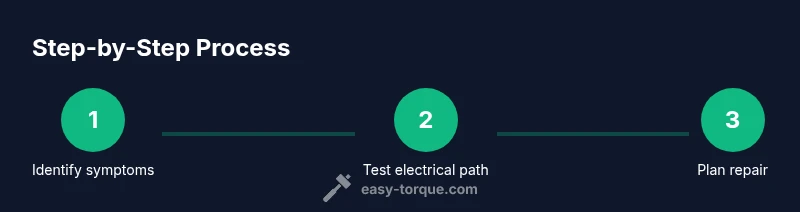
A structured diagnostic approach reduces waste and improves chances for a correct fix. Begin with safe diagnostics using a factory-style scan tool to read transmission codes and view live data for TCC status. Confirm whether the TCC is actively commanded on during conditions where it should be disengaged. If the TCC signal is present when it should be off, proceed to inspect the wiring harness, connectors, and grounds. Next, verify supply voltage and ground integrity for the TCC solenoid and test the PWM control signal by observing voltage drop across the solenoid with the engine running. If voltage and ground are solid but the solenoid still remains energized, the fault may lie in the solenoid coil itself or in the PCM output stage. The diagnostic flow should move from non-invasive scans to targeted electrical checks, and then to component-level tests.
As you progress, document each finding and keep a clean, labeled wiring diagram for reference. If the symptom persists after electrical checks, consider substituting a known-good solenoid in a controlled test (where feasible) to confirm whether the fault is solenoid-related rather than a PCM issue. Easy Torque highlights that corroborating data from multiple tests increases confidence before replacing parts.
Electrical checks you can perform safely
Electrical checks are the backbone of catching a stuck-on TCC circuit. Start with the vehicle’s battery in good condition, then inspect fuse and relay for the TCC circuit. Use a DVOM to verify continuity of the wiring from the TCC solenoid to the control module and confirm a solid ground at the solenoid connector. Inspect connectors for corrosion, bent pins, or damaged seals, and apply electrical contact cleaner as needed. Inspect the ground path at the transmission housing and the battery negative to ensure a low resistance path. If a harness appears damaged, note the location and plan for a controlled repair. When performing voltage tests, avoid shorting any circuits and follow proper PPE guidance. These checks establish whether there is a simple fault (open circuit, bad ground) or a more complex pathology in the control path.
Testing the TCC solenoid and PWM control
Testing the TCC solenoid requires careful observation of current flow and response to control signals. With the engine running and transmission warmed, measure the solenoid resistance with the DVOM and compare to the service manual’s specification. A resistance outside the specified range indicates a faulty coil. For PWM control, observe the solenoid’s response to the control signal using a scope or a fast sampling digital multimeter if available; an erratic PWM signal suggests PCM or harness issues rather than a simple coil failure. If permissible, bench-test the solenoid by applying a known-good supply voltage in a controlled environment to confirm it can energize and disengage as commanded. Remember to isolate power and follow an approved procedure to avoid backfeeding or short circuits. Easy Torque stresses doing this with proper safety equipment and a clean work area.
When to replace vs repair: decision logic
Not every TCC fault requires a full transmission removal. If tests show a damaged solenoid coil or a compromised PWM output from the PCM, replacement is typically the correct course. However, if the harness shows corrosion or a loose connector, a repair or connector replacement can restore function without costly parts. For intermittent faults, a repair to a corroded ground or a harness repair may be the most cost-effective solution. Always weigh the vehicle’s age, the availability of replacement parts, and the likelihood of a complete PCM reprogram or replacement. Documented test results should guide whether you should pursue a repair path or a full component replacement. Easy Torque recommends starting with the least invasive repair and escalating only when data supports it.
How to plan and perform a repair job
Planning is essential for a reliable fix. Start by outlining the fault tree based on the tests you’ve performed, listing potential causes from simple wiring faults to solenoid failure or PCM issues. Gather the necessary tools, parts, and safety equipment, and set aside a dedicated workspace with ample lighting. Create a repair timeline that accounts for potential delays, such as waiting for a replacement solenoid or a PCM calibration. Document all steps and re-check test results after each repair action. After performing any repair, perform a controlled test drive to verify the TCC behavior across the vehicle’s operating range and ensure there are no residual codes. Easy Torque notes that meticulous documentation makes future diagnostics faster and reduces the risk of rework.
Prevention and maintenance to avoid future issues
Prevention focuses on keeping electrical paths clean and connectors secure. Schedule periodic visual inspections of the TCC wiring harness, connectors, and protective loom. Use dielectric grease on connector seals to prevent corrosion, and ensure secure routing away from heat sources or moving parts. Check the transmission fluid for correct level and quality, as degraded fluid can influence hydraulic behavior and sensor readings that feed the TCM. Keep the battery and alternator in good health to avoid voltage dips that can confuse PWM control signals. Regular maintenance reduces the chances of a TCC circuit fault returning and helps you catch issues before they escalate. Easy Torque emphasizes a proactive maintenance mindset for durability.
What to expect after repair and test drives
After completing the repair, re-scan the system for codes and perform a thorough test drive. Verify that the TCC engages and disengages as commanded across various speeds, throttle inputs, and climate conditions. Monitor the transmission temperatures and fluid consistency during the test drive, and listen for any abnormal noises or harsh engagements. If the check engine light returns or the TCC fault reappears, re-evaluate the wiring and solenoid path with a fresh diagnostic pass. A clean bill of health from the test drive indicates a successful repair and a restored control loop between the TCC solenoid, wiring, and the PCM.
Authority sources
- Official safety and vehicle information: https://www.nhtsa.gov
- Electrical standards and best practices: https://www.nist.gov
- Industry reference and standards: https://www.sae.org
- Educational overview: https://ocw.mit.edu
Tools & Materials
- Digital multimeter (DVOM)(For resistance, continuity, and voltage checks around the TCC circuit)
- OBD-II scan tool(To read transmission codes and live data for TCC status)
- Wrench set and screwdrivers(General hand tools for access to the solenoid and connectors)
- Electrical contact cleaner(Clean dirty connectors without leaving residue)
- Dielectric grease(Protects and seals electrical connections)
- Replacement TCC solenoid (OEM or equivalent)(Only if diagnostics indicate solenoid failure)
- Service manual for the vehicle(Vehicle-specific wiring diagrams and specs)
- Safety gear (gloves, safety glasses)(Personal protective equipment)
- Fuse/relay tester(Helpful for quick circuit checks)
- Jumper wires or test leads(For bench testing solenoids if applicable)
Steps
Estimated time: 2-4 hours
- 1
Identify symptoms and pull codes
Begin by confirming the symptom pattern with the vehicle at idle and during light acceleration. Use an OBD-II scanner to pull transmission-related codes and view live data for TCC status. Record the codes and note any abnormal PCM or solenoid readings. This establishes a baseline before you touch wiring or components.
Tip: Document any clustering of codes to identify a faulty subsystem rather than a single failed sensor. - 2
Check power and ground paths
Inspect all power and ground wires leading to the TCC solenoid. Verify continuity from the battery or fuse block to the solenoid, and confirm a solid ground at the transmission shell. Replace or repair corroded connectors and restore a clean ground path if needed.
Tip: A poor ground can cause the solenoid to misbehave even when the signal path is good. - 3
Inspect the solenoid and connector health
Physically inspect the solenoid and its connector for corrosion, bent pins, or water intrusion. Clean any corrosion with appropriate contact cleaner and reseat the connector firmly. If the solenoid winding shows damage or the connector pins are loose, plan for replacement.
Tip: Avoid forcing pins or connectors; damaged pins can worsen intermittent faults. - 4
Verify the control signal with live data
With the vehicle running, observe the TCC command signal and PWM duty cycle in live data. Compare against the service manual’s expected behavior. If the signal is present when it shouldn’t be, the fault likely lies in the signal path or PCM output.
Tip: Cross-check the same data on a second scan tool if available for data reliability. - 5
Perform a resistance check on the solenoid
Measure the solenoid’s resistance using the DVOM and compare it to the manufacturer’s specification in the service manual. A reading outside tolerance indicates a faulty coil that should be replaced.
Tip: Do not assume a bad reading is due to wiring; isolate the coil to confirm. - 6
Test for parasitic or short-to-Voltage conditions
Inspect for any short-to-voltage conditions on the TCC circuit. Disconnect the harness and recheck resistance and voltage to identify a short or a misrouted wire. Correct any harness routing or damaged insulation during repair.
Tip: Shorts often hide behind the connector boot; inspect entire harness length. - 7
Decide on repair path based on test results
If the solenoid tests fail or the PWM control path shows PCM issues, plan for solenoid replacement or PCM service as needed. If wiring or connector faults are found, prioritize harness repair before replacing the solenoid.
Tip: Aim for the simplest fix that resolves the fault—avoid unnecessary replacements. - 8
Replace components and reseal connections
Install the replacement solenoid or repaired harness segments, re-clean connectors, and apply dielectric grease as needed. Ensure all wiring is routed away from hot components and moving parts. Reconnect and secure all fasteners.
Tip: Test the repaired area for movement and clearance to prevent chafing. - 9
Perform a controlled test drive
After repair, start with short, low-speed drives to verify TCC disengagement and engagement cycles. Confirm no codes reappear and monitor transmission temperatures and fluid condition.
Tip: Gradually increase test duration to reproduce operating conditions safely. - 10
Re-scan and document results
Run another scan to clear any residual codes and save the new data for future reference. Update the maintenance log with parts replaced, test results, and recommended follow-up intervals.
Tip: A good maintenance log makes future diagnostics faster and more accurate.
Your Questions Answered
What is the torque converter clutch circuit and why can it stick on?
The TCC circuit controls the clutch inside the torque converter. It can stick on due to electrical faults, coil failure, short circuits, or PCM signal issues, causing the clutch to engage when it shouldn't.
The TCC circuit controls the lockup clutch. Electrical faults or a bad signal can make it stay engaged.
Can I fix a stuck-on TCC without removing the transmission?
Many electrical faults can be addressed without removing the transmission. Start with wiring, connectors, and solenoid tests. If the issue is PCM-related, you may need professional service.
In many cases you can fix the wiring or solenoid without pulling the transmission.
What tools do I need to diagnose a stuck-on TCC circuit?
A DVOM, an OBD-II scan tool, basic hand tools, dielectric grease, and service manual are essential for diagnosing a stuck-on TCC circuit.
You’ll need a DVOM, an OBD-II scanner, and some basic tools.
How long does a typical TCC solenoid replacement take?
Solenoid replacement can take 1-3 hours depending on access to the solenoid and vehicle model. Always follow the service manual instructions.
Typically about one to a few hours, depending on access and model.
Will driving with a stuck-on TCC cause damage?
Continuing to drive with a faulty TCC can overheat transmission fluid and wear the valve body. Address the fault promptly.
Yes, driving with a stuck-on TCC can risk transmission damage if not fixed.
Is PCM replacement necessary if the PCM is at fault?
If tests indicate the PCM output is at fault, PCM replacement or reprogramming may be necessary. Always confirm with a controlled bench test or professional diagnostic.
If the PCM is at fault, replacement or reprogramming may be needed.
Watch Video
Top Takeaways
- Diagnose electrical paths first, not immediately replace parts
- Verify correct TCC signals with live data
- Isolate and test the solenoid before considering PCM issues
- Document test results and maintain meticulous wiring references
- Always test drive to confirm repair before closing the case