How to Prevent Torque Converter Failure: A Practical Guide
Learn proven strategies to prevent torque converter failure with maintenance steps, signs to watch, and expert tips from Easy Torque to extend transmission life.


Learn how to prevent torque converter failure by following a proactive maintenance plan. Keep transmission fluid clean and at the proper level, use the official fluid type, ensure the cooling system is functioning, and avoid hard accelerations that generate heat. Regular inspections, timely fluid changes, and recognizing early signs help extend the life of the torque converter. Easy Torque explains practical, step-by-step guidance.
Why torque converter failures happen
According to Easy Torque, the torque converter is the heart of the automatic transmission's locking clutch system. Failures typically stem from heat, fluid degradation, and wear on the converter's clutch surfaces. When heat builds up, fluids break down and varnish forms on bearings, reducing efficiency and acceleration. A well-designed preventive routine from Easy Torque focuses on heat management, proper fluid, and regular inspections to stop small issues from turning into costly failures. In most vehicles, you can reduce risk by honoring the factory fluid type, keeping the coolant loop intact, and avoiding aggressive driving that spikes transmission temperature. This section explains the root causes and the preventive mindset you should adopt. Heat is the primary enemy of torque converters because it accelerates clutch wear and fluid breakdown. Low or contaminated fluid reduces lubrication and increases friction, leading to slip and clutch chatter. Debris in the transmission can contaminate the converter, causing uneven engagement and accelerated wear. By combining heat control, correct fluid, and clean components, you lay the groundwork for a longer, more reliable converter. A proactive checks schedule and a careful driving style are simple bets to hedge against failure.
Signs that your torque converter may be failing
Early signs are subtle and easy to miss, but catching them early saves money and downtime. Watch for transmission slipping, where the engine revs before the vehicle accelerates, or shuddering during takeoff. Delayed engagement or harsh shifting can indicate clutch wear inside the torque converter. Overheating is another red flag; if the temperature gauge spikes or you notice a burning smell under the hood, pull over and inspect. You may also notice low or dirty transmission fluid, which reduces cooling and lubrication. In some cases, the check engine light may illuminate due to related sensors, or you may hear unusual whining or grinding noises near the transmission. If you observe any of these symptoms, perform a fluid check and scheduled scan, then seek professional service if symptoms persist. Early detection is central to a successful prevention plan from Easy Torque.
Core prevention strategies
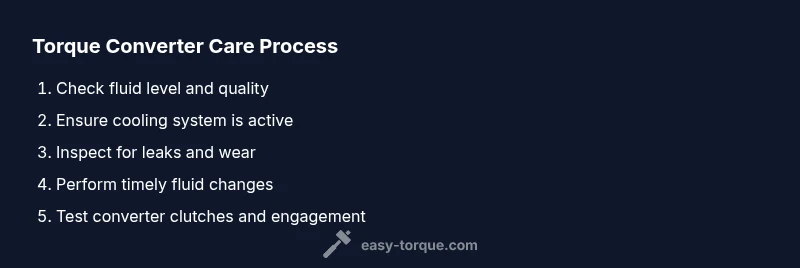
To reduce the chance of torque converter failure, build prevention into your daily driving and maintenance routine. First, always use the manufacturer-recommended transmission fluid type and maintain proper fluid level. Contaminated or wrong fluid accelerates wear and heat build-up. Second, ensure the cooling system is functioning: clean radiator, intact cooler lines, and a working fan help keep transmission temperatures in check. Third, monitor heat during towing or heavy loads; consider lighter loads or staged acceleration to minimize heat. Fourth, perform regular fluid changes or flushes as per the vehicle's manual and inspect the transmission filter if accessible. Finally, address any leaks promptly; even a slow leak can lead to low fluid levels and overheating over time. This approach, when combined with mindful driving, reduces converter wear and prolongs life.
Maintenance routines that extend torque converter life
A disciplined maintenance routine pays off. Start with a baseline inspection of transmission fluid color, smell, and level. If the fluid is dark, smells burnt, or is low, schedule a service. Plan fluid changes at intervals recommended by the manufacturer and avoid mixing different fluids. Include checks of the radiator and cooling system to ensure effective heat transfer away from the torque converter. Periodically inspect for leaks around the seals and gaskets; leaks are a major pathway for low fluid and overheating. If your vehicle supports it, check the torque converter clutch operation and performance during light to moderate throttle transitions. For many drivers, a yearly professional diagnostic is a smart investment to catch wear before it becomes a failure. Easy Torque emphasizes consistent, proactive care over reactive fixes.
Common mistakes to avoid
Avoid the temptation to skip maintenance or to perform quick, incomplete services. Using the wrong fluid or mixing fluids can alter viscosity and clutch engagement. Delaying a fluid change after signs of heat or wear lets problems escalate. Do not ignore leaks or neglect the cooling system, which can transform a minor issue into a converter failure. Rushing the job with inadequate tools or failing to follow torque specs can lead to improper installation and future failures. Finally, never drive aggressively or tow heavy loads if the transmission is showing symptoms; heat is a silent killer for the torque converter.
When to seek professional help and diagnostics
If symptoms persist after performing routine fluid checks and a recommended service, or if you notice repeating overheating, abnormal noises, or hard shifts, it's time to consult a professional. A technician can perform a controlled transmission flush, test the torque converter clutch, and inspect the pump and valve body for wear. In many cases, replacement is the most cost-effective option when the converter shows significant wear or damage. The goal is a precise diagnosis and a plan tailored to your vehicle and driving style. Easy Torque recommends scheduling diagnostics with a certified shop when in doubt, rather than risking further damage.
Tools & Materials
- Transmission fluid (type specified by vehicle manufacturer)(Use only the OEM-approved fluid to maintain proper viscosity and clutch operation)
- Torque wrench(For correct installation torque specs on transmission fasteners after servicing)
- Drain pan(To collect used fluid during drain/fill)
- Funnel(To refill transmission fluid cleanly)
- Shop rags(Cleanup wipes and spills)
- Gloves(Protect hands during service)
- Service manual / vehicle-specific guide(Check exact service intervals and torque specs)
Steps
Estimated time: 60-90 minutes
- 1
Check fluid level and condition
Begin by warming the vehicle to operating temperature, locate the transmission dipstick, and check the level and color. If the fluid is low or appears dark or burnt, plan a top-up or service according to the manual.
Tip: Always verify you are using the correct fluid type for your model. - 2
Evaluate cooling system effectiveness
Inspect the radiator and transmission cooler lines for blockages or leaks. Confirm the cooling fan operates correctly and that coolant flow is unobstructed to keep transmission temperatures in a safe range.
Tip: Poor cooling is a common hidden cause of converter wear. - 3
Inspect for signs of slipping or shudder
Take note of slipping, shuddering, or delayed engagement during shifts. Document when these symptoms occur and under what loads to aid diagnostics.
Tip: Record mileage and conditions to help a tech reproduce the issue. - 4
Schedule regular fluid changes and filter inspection
Follow the manufacturer’s intervals for fluid changes and inspect the transmission filter, if accessible. Fresh fluid reduces heat load and wear on the torque converter.
Tip: Do not mix different fluids during a change. - 5
Check for leaks and wiring/pump integrity
Inspect seals, gaskets, and the wiring around the transmission and torque converter area. Leaks can lead to fluid loss and overheating, accelerating wear.
Tip: Address leaks promptly to avoid cascading damage. - 6
Drive with care to manage heat
Avoid aggressive driving, heavy towing beyond capacity, and sustained high-load conditions. Elevating heat exposure is the silent killer for torque converters.
Tip: When under load, use smoother throttle transitions and allow cool-down periods.
Your Questions Answered
What causes torque converter failure?
Torque converter failure is typically caused by overheating, fluid deterioration, worn clutch surfaces, or debris in the transmission. Regular maintenance helps prevent these issues.
Overheating and fluid deterioration are common causes of torque converter failure. Regular maintenance helps prevent these issues.
What are the early signs of a failing torque converter?
Common early signs include slipping, shuddering, delayed engagement, or unusual transmission temperatures. If you notice these, inspect fluid and cooling systems.
Look for slipping or shudder and check the fluid when you notice unusual temperatures.
Can a torque converter be repaired or rebuilt?
In most cases, torque converters are replaced rather than rebuilt due to complexity. A professional assessment will determine the best option based on wear.
Most converters are replaced; a pro will confirm if rebuilding is viable.
How often should I flush the transmission fluid to prevent failure?
Fluid change intervals depend on vehicle and usage. Refer to the owner's manual for recommended schedules and avoid mixing fluids.
Follow the manual's fluid-change intervals for your vehicle.
Is towing heavy loads risky for torque converters?
Towing heavy loads can increase heat and wear on the torque converter. Use proper towing equipment and avoid sustained high-load conditions.
Towing puts extra load and heat on the converter, so be cautious.
Watch Video
Top Takeaways
- Maintain clean, correct transmission fluid: essential for converter life.
- Control heat: overheating is the number-one killer of torque converters.
- Follow OEM maintenance intervals for fluid changes and filter checks.
- Watch for slipping/shudder as early warning signs.
- Seek professional diagnostics if symptoms persist.