Signs Bad Torque Converter: Diagnosis and Fix Guide
Identify the signs of a bad torque converter and learn quick checks, diagnostics, and when to seek professional help to protect your transmission and drivetrain from costly failure.


Most likely cause: a failing torque converter lockup, contaminated transmission fluid, or worn turbine bearings. Quick fix: check the transmission fluid level and condition; if it's dark, smells burnt, or is low, top up or flush as recommended. If slipping, shudder, or RPMs rise without acceleration, avoid driving and seek a qualified technician promptly to prevent further damage.
Signs Bad Torque Converter
Understanding the signs bad torque converter can help you respond quickly before collateral damage hits other parts of your drivetrain. For DIYers and professional techs, several symptoms stand out: shuddering when you accelerate, persistent slipping, or a hard shift between gears. You may notice the engine RPM climbing without a corresponding increase in vehicle speed, or the transmission running hot after a short drive. According to Easy Torque, these signs often point to fluid issues, worn clutch components, or torque converter overheating rather than a complete transmission failure. Vehicle owners should not ignore a warning like a burning smell, metal fragments in the pan, or a complaint of limp-home mode, as these can indicate imminent fail. The goal is to distinguish converter problems from other transmission faults so you can target the right solution quickly.
Common Causes Behind Torque Converter Failures
Torque converter failures usually stem from fluid problems, heat, and wear. Common causes include low or contaminated transmission fluid, which reduces clutch slip control and cooling efficiency; excessive operating temperatures that degrade the converter and fluid; excessive towing or aggressive launches that overload the torque converter; and internal wear of the bearings or turbine clutch that leads to slipping and overheating. In many cases, a combination of issues — such as marginal fluid and heat exposure — accelerates wear. Easy Torque data indicates that drivers who neglect regular service are more likely to encounter these symptoms earlier. Understanding these root causes helps you plan maintenance and avoid downstream damage to the transmission and engine.
Quick Checks You Can Do Safely
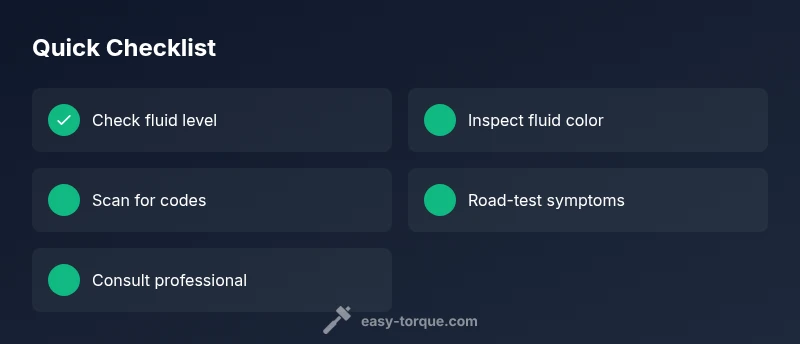
Before diving into heavy diagnostics, start with safe at-home checks that might reveal the culprit. Park on a level surface with the parking brake set, and confirm the transmission fluid level while the engine is warm. Inspect the fluid color and smell; burnt or metallic odors indicate fluid degradation. Look for red flags like leaks around the transmission pan or cooler lines. If you notice a burning smell, grinding noises, or the check engine light, note the symptoms and avoid hard driving. For many vehicles, you can also scan codes with a basic OBD-II tool to see if transmission-related codes appear. These quick checks help you decide whether a fluid change, cooling fix, or more advanced service is needed, and they minimize risk while you investigate.
Diagnostic Steps To Narrow Down The Problem
A logical diagnostic flow helps identify whether the torque converter is the root cause or a related transmission fault. Start with symptom observation: does the issue appear when cold or after a warm-up, during acceleration, or at idle? Next, verify fluid conditions and perform a controlled road test to reproduce the behavior safely. Use a diagnostic scanner to pull transmission codes and check for torque converter clutch (TCC) faults. If codes point to TCC, consider fluid condition and possible valve body issues. Finally, isolate potential mechanical wear by verifying the torque converter and clutch pack operation through professional testing if needed. Always document findings and consult a technician when in doubt.
Final Safety & Maintenance Tips
Once the issue is diagnosed, implement a maintenance plan to extend component life. Regularly check and replace transmission fluid with the manufacturer-recommended type and interval. Ensure the cooling system is functioning and the radiator and cooler lines aren’t blocked. Avoid towing beyond the vehicle's rated capacity and minimize aggressive launches. By keeping up with these practices, you reduce the risk of premature torque converter problems and protect your drivetrain for the long haul.
Steps
Estimated time: 60-90 minutes
- 1
Prepare vehicle and safety
Park on level ground, engage parking brake, and disconnect the battery if you’ll be opening any components. Wear eye protection and gloves. Ensure the engine is cool before touching hot surfaces.
Tip: Never work under a raised vehicle with no supports; use jack stands. - 2
Check transmission fluid
With the engine warm, check the transmission dipstick or level sight glass. Note color and smell; burnt fluid indicates degradation. If low, top up to the recommended level and plan a fluid change if advised by the vehicle’s service manual.
Tip: Document the level and color for future reference. - 3
Inspect for leaks and damage
Look for puddles under the transmission and inspect cooler lines and pan gasket for leaks. Leaks can cause fluid loss that leads to converter problems. Clean any residue to accurately track future leaks.
Tip: A flashlight and magnetic mirror help find hidden leaks. - 4
Scan for codes
Connect an OBD-II scanner to retrieve transmission-related codes, especially anything mentioning TCC or clutch performance. Save codes for reference when discussing diagnostics with a technician.
Tip: Clear codes only after you’ve recorded them. - 5
Road test and observe
Take a safe test drive to replicate symptoms: note when shudder, slipping, or harsh shifts occur. Listen for abnormal noises and monitor the temperature gauge if your vehicle has one.
Tip: Test on a controlled, wide-open area away from traffic. - 6
Decide on service path
If symptoms persist after fluid service and codes implicate the TCC, plan professional testing. For best outcomes, avoid driving aggressively until diagnosed.
Tip: If unsure, consult a technician rather than guessing.
Diagnosis: Symptoms include shuddering, slipping, hard shifts, or overheating, especially after a warm-up.
Possible Causes
- highFluid issues (low level, burnt smell, or contaminated fluid)
- mediumWorn torque converter clutch or bearings
- lowInternal transmission wear or valve body issues
Fixes
- easyCheck transmission fluid level and quality; flush or replace if necessary
- hardRepair or replace torque converter if clutch components are worn
- mediumAddress underlying transmission issues (valve body, bearing wear, cooling system) if fluid is not the root cause
Your Questions Answered
Can a bad torque converter cause transmission slipping?
Yes. A failing torque converter can fail to lock properly, causing slipping under acceleration and abnormal shifts. This symptom is often confused with transmission wear, so confirm with fluid checks and codes before replacement.
A failing torque converter can slip or not lock properly, especially when accelerating. Check fluid and codes to confirm before replacing.
Is it safe to drive with a suspected bad torque converter?
Driving with a suspected torque converter problem can cause further damage. If you notice shudder, overheating, or slipping, limit driving and seek professional evaluation promptly.
If you notice shudder or overheating, limit driving and get a professional check soon.
How is a torque converter diagnosed?
Diagnosis combines symptom mapping, fluid analysis, code scanning, and sometimes professional pressure tests. A technician may inspect the converter directly or remove and bench-test it to verify clutch wear and gear engagement.
Diagnosis uses symptoms, codes, and fluid checks, sometimes with bench testing by a pro.
How long does a torque converter replacement take?
Replacement duration varies by vehicle. It typically requires several hours in a shop, with additional time for possible related repairs or drivetrain cleaning.
Expect several hours in a shop, depending on the vehicle and related work.
Can overheating cause torque converter failure?
Yes, sustained overheating degrades the converter’s clutch and hydraulic fluid, increasing wear and risk of failure. Always address cooling and fluid issues first.
Overheating can wear out the torque converter; fix cooling and fluid issues first.
What’s the difference between converter failure and transmission failure?
Converter failure is specific to the torque converter; transmission failure involves gears, bands, or valve bodies. Symptoms can overlap, so a structured diagnostic approach is essential.
Converter issues affect the torque converter; transmission issues involve gears and valves. Diagnose carefully.
Watch Video
Top Takeaways
- Identify symptoms early to protect the drivetrain
- Fluid quality and overheating are common culprits
- Use a structured diagnostic flow before replacing parts
- Consult a professional when symptoms persist