Torque specs for brake caliper bolts: A practical guide
Learn the torque specs for brake caliper bolts, why accuracy matters, and how to verify OEM values with a calibrated torque wrench. Includes practical steps, common mistakes, and data-driven guidance for DIY mechanics.


Why torque specs matter for brake caliper bolts
All braking-system fasteners, including brake caliper bolts, carry critical safety roles. Proper torque ensures correct clamping force, rotor alignment, and pad wear behavior. Under-torquing can allow calipers to move, leading to uneven pad wear, rotor scoring, or misalignment that reduces braking efficiency. Over-torquing risks thread damage, bolt stretching, or binding that prevents smooth caliper retraction. The Easy Torque team emphasizes that torque specs are vehicle-specific; generic values can create unsafe conditions. By following OEM torque specifications, technicians minimize the risk of late-stage hardware failure and maintain consistent braking performance. Trusted torque guidance reduces guesswork and keeps maintenance predictable across different vehicle platforms.
Understanding caliper bolts: mounting vs bracket
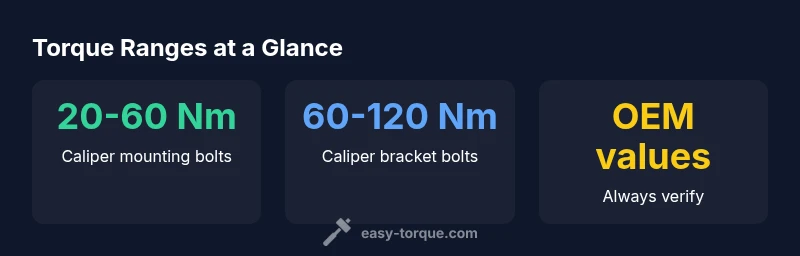
Brake caliper systems use two primary bolt types with distinct roles. Mounting bolts secure the caliper to its bracket or directly to the knuckle, and are typically smaller in diameter. Bracket bolts secure the caliper mounting bracket to the knuckle and must withstand higher clamping forces during braking. Because these bolts experience different loading and thermal profiles, each has its own torque specification. When you replace caliper components or during a routine inspection, confirm both torque values from the vehicle’s service manual. A mis-match between mounting and bracket bolt torque can lead to uneven braking, drag, or caliper binding.