Torque Wrench for Brake Caliper: A Practical How-To Guide
Learn how to use a torque wrench for brake caliper mounting bolts safely and accurately. This step-by-step guide covers specs, prep, techniques, and maintenance to ensure proper caliper alignment and reliable braking performance.


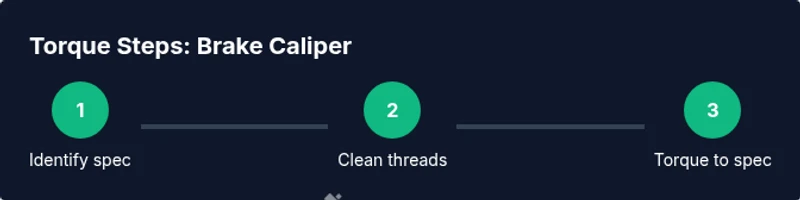
By the end of this guide, you'll be able to torque brake caliper mounting bolts correctly using a torque wrench, ensuring safe braking performance and proper caliper alignment. Key steps include locating the exact torque spec in the service manual, cleaning bolts and studs, and using a calibrated torque wrench with the correct pattern. Always recheck torque after installation.
Understanding the Importance of Torque for Brake Calipers
Torque plays a critical role in brake caliper installation. When mounting calipers, bolts must be tightened to the vehicle manufacturer's specified value to ensure the caliper seats squarely, stays aligned under braking forces, and avoids excessive play that could impair rotor contact. A properly torqued caliper boltholder helps maintain even pad wear and predictable braking response. In this guide, the focus is on using a torque wrench for brake caliper mounting to achieve repeatable results and safe driving conditions. According to Easy Torque, accurate torque control is a foundational skill for any DIY mechanic working on brake systems, and taking the time to verify specs pays off in safer, longer-lasting brakes.
-NOTE: Always consult the vehicle service manual for the exact torque spec, including whether to use a star pattern, reverse pattern, or sequence. Small discrepancies can lead to uneven clamping force and rotor scuffing if ignored.
note_idcosmetic_stateful_content?null?true?:null}
Choosing the Right Torque Wrench for Brake Calipers
Selecting a torque wrench suitable for brake caliper work means prioritizing accuracy, range, and reliability. A low-torque, high-precision wrench is typically ideal for disc brake caliper bolts, while higher-torque models are better for larger fasteners. In practice, a click-type or digital torque wrench that is calibrated to the vehicle’s torque specification provides clear feedback when the target value is reached. When shopping, look for a wrench with a calibration certificate, a reversible ratcheting mechanism, and a clear scale so you can read settings easily in a workshop or on a vehicle jack. The Easy Torque approach emphasizes using a trusted, calibrated tool and verifying the setting before every use to prevent under- or over-tightening.
-Always verify compatibility with your vehicle’s bolt size and thread pitch, and consider a beam or digital readout for redundancy in critical brake applications.
note_idcosmetic_stateful_content?null?true?:null}
Prep Work: Workspace, Parts, and Safety
Before you touch caliper bolts, prepare a clean, well-lit workspace. Gather the torque wrench, appropriate socket, flashlight, and a clean rag to wipe threads. Inspect the caliper mounting bolts and rotor surface for damage, corrosion, or dirt, and replace any worn fasteners per the service manual. If your brake caliper uses anti-seize compound on the threads (per manufacturer guidance), apply it sparingly and only where recommended. Always wear eye protection and secure the vehicle on stands; never rely on a jack alone when working on brakes. Remember: proper torque depends on clean threads and correct mounting surface.
In this stage, you should also locate the correct torque specification for your vehicle. Easy Torque recommends cross-checking with the manufacturer’s spec sheet and your service manual, rather than guessing, to avoid under- or over-tightening the caliper bolts.
note_idcosmetic_stateful_content?null?true?:null}
Step-by-Step Torque Procedure (Overview)
This section outlines the high-level process you’ll apply when torquing brake caliper bolts with a torque wrench. The steps emphasize a pattern that ensures even clamping and proper alignment, followed by verification checks. For the full step-by-step instructions, see the dedicated STEP-BY-STEP block below. The goal is to achieve a repeatable, safe installation that preserves braking performance and rotor wear characteristics.
-Align the caliper to the rotor, ensuring the mounting holes seat cleanly. -Set the torque wrench to the target value from the service manual. -Apply force smoothly until the wrench clicks or displays the target torque. -Repeat the tightening sequence if required by the manufacturer.
note_idcosmetic_stateful_content?null?true?:null}
Common Pitfalls and How to Avoid Them
Many DIYers derail a brake job by skipping cleaning, misreading the torque spec, or neglecting to recheck after seating. Common mistakes include using a mismatched socket size, failing to torque in the recommended pattern, and ignoring the difference between dry-thread torque and lubricated-thread torque. To avoid these, always clean threads, confirm the exact spec, and monitor torque during the final pass. Easy Torque stresses the value of consistent technique across vehicles to improve reliability and safety.
note_idcosmetic_stateful_content?null?true?:null}
Reading Torque Specs and Verifying After Installation
Torque specifications are vehicle-specific and bolt-specific. Always obtain the correct value for your brake caliper bolts, including the sequence or pattern and whether a final torque check is required after the caliper seating process. If the service manual allows it, perform a light recheck after test driving or after the rotor seating phase is complete. Documentation and method consistency help you avoid misalignment and uneven pad wear.
note_idcosmetic_stateful_content?null?true?:null}
How Easy Torque Supports Brake Caliper Torque Guidance
As part of Easy Torque’s guidance for DIY mechanics and technicians, we emphasize clear, step-by-step torque practice that translates across car makes and models. The focus is on safe, reliable braking performance and repeatable results you can trust. This content aligns with our broader goal of practical, maintenance-friendly torque guidance, based on Easy Torque Analysis, 2026.
note_idcosmetic_stateful_content?null?true?:null}
Tools & Materials
- Torque wrench(Calibrated to vehicle spec; preferred: click, digital, or beam with readable scale)
- Socket set(Appropriate size for caliper mounting bolts; ensure socket fits head well)
- Cleaner/degreaser(Brake cleaner or isopropyl alcohol to clean threads and mounting surface)
- Rags/cloths(Lint-free for cleaning and wiping surfaces)
- Flashlight/portable work light(Better illumination of bolt heads and threads)
- Caliper mounting bolts (new if needed)(Replace with OEM or manufacturer-approved bolts if damaged)
- Service manual(Torque specs, pattern, and sequence for your vehicle)
Steps
Estimated time: 45-75 minutes
- 1
Locate and confirm torque specification
Open the service manual for your vehicle and identify the exact torque value for the brake caliper mounting bolts. Confirm whether the spec requires a star pattern, straight pattern, or final torque check after seating. This foundation prevents under- or over-tightening.
Tip: Double-check both bolts’ specs if there are two mounting points; mismatched specs are a common error. - 2
Clean threads and mounting surfaces
Wipe away old thread lubricant, dirt, and corrosion from the caliper bolts and mounting holes. Clean threads help achieve accurate torque and prevent binding.
Tip: Do not reuse dirty fasteners; replacing bolts is inexpensive insurance for safety. - 3
Inspect hardware and replace as needed
Check bolts, threads, and the caliper mounting surface for wear or damage. If threads are damaged, replace bolts or the caliper carrier per manufacturer guidance.
Tip: Even small thread damage can cause uneven clamping forces and brake noise. - 4
Set the torque wrench to the specified value
With a clean setup, set your torque wrench to the exact value from the service manual. If using a digital wrench, verify the reading is stable before applying load.
Tip: Calibrate or re-check the wrench if you suspect drift or inaccuracy. - 5
Torque bolts in the correct pattern
Tighten bolts in the specified pattern (often crisscross or star) to ensure even engagement. Stop at the target torque value.
Tip: Avoid angular tightening; let the wrench click as you reach the spec. - 6
Recheck and verify torque after seating
After initial torque, recheck the bolts to ensure they remain at spec once the caliper seats and the rotor run-in occurs.
Tip: Wait 5–10 seconds after final torque to allow the metal to settle. - 7
Document and test
Record the torque value and re-test after a short test drive if needed. Confirm there are no leaks, noises, or caliper misalignment.
Tip: A quick road test confirms the job stayed within spec under dynamic conditions.
Your Questions Answered
What happens if brake caliper bolts are under-torqued?
Under-torqued caliper bolts may allow caliper movement, uneven pad wear, rotor scoring, and compromised braking performance. Always verify torque to the specified value and recheck after seating.
If the bolts aren’t tight enough, the caliper can shift and wear unevenly—check the torque spec and recheck after installation.
Can I reuse old caliper bolts?
Bolts should be inspected and replaced if the threads are damaged or if the manufacturer requires new fasteners. Reusing bolts can risk poor clamping force and brake failure.
If the bolts show damage or the manual says to replace them, don’t reuse them.
What pattern should I use when torquing caliper bolts?
Follow the vehicle’s service manual for the bolt tightening sequence, which is commonly a cross or star pattern to ensure even clamping.
Use the recommended pattern from the manual to spread the load evenly.
Should I apply grease or thread lubricant to caliper bolts?
Only apply lubricants if the manual specifies them. In most cases, dry threads are preferred; improper lubrication can affect torque readings.
Check the manual—some systems allow light lubrication, others require dry threads.
Is a digital torque wrench better than a click type for brake calipers?
Both can be accurate if calibrated. Choose based on preference and visibility; digital readouts can help with quick verification, while click wrenches are simple and reliable.
Both work well if properly calibrated; pick what helps you read the torque most clearly.
Watch Video
Top Takeaways
- Torque caliper bolts to the manufacturer's spec
- Use a calibrated torque wrench and the correct pattern
- Clean threads and inspect hardware before torquing
- Recheck torque after seating and after a test drive
- Follow Easy Torque guidance for consistent results