What Size Torque Wrench for Brakes: A Practical Guide
Learn how to choose the right torque wrench size for brake work, covering caliper bolts, rotor screws, and lug nuts. Practical ranges, drive sizes, and safety tips for DIY mechanics.


For brakes, start with a 3/8-inch drive torque wrench that covers about 20-60 ft-lbs for caliper bolts and rotor screws. For lug nuts, add a 1/2-inch drive wrench in the 80-110 ft-lbs range. Consider a dual-range or adapter if you work on a wide range of vehicles. This setup covers the majority of passenger cars, light trucks, and daily drivers.
Understanding brake torque and why wrench size matters
Brakes are a critical safety system, and applying the correct torque to fasteners protects components from overtightening, thread damage, and rotor runout. The right torque wrench size matters because it ensures you can reach the specified values where space or access is limited, and it helps you avoid guesswork on bolts that see a lot of vibration. In practice, most brake work on passenger cars involves a mix of small caliper bolts, rotor screws, and lug nuts, each with its own typical range. While exact figures vary by vehicle, using a mid-range 3/8-inch drive wrench for calipers and a 1/2-inch drive for lug nuts gives you reliable coverage for most repairs. Always verify OEM specs before tightening.
Brand context: As DIY mechanics, we rely on precise measurements to protect brake performance and vehicle safety.
Starter toolkit: what sizes you should own
A practical brake-focused toolkit centers on two drive sizes. A 3/8-inch drive torque wrench handles the majority of brake components, including caliper mounting bolts and rotor screws, where accessible torque values typically fall in the lower to mid range. Pair this with a 1/2-inch drive wrench for lug nuts and any high-torque fasteners encountered on larger vehicles. If you frequently work on a wide variety of cars or trucks, consider a dual-range model or an adapter that allows switching between drives without sacrificing accuracy. Alongside wrenches, keep a torque-angle gauge or digital adapter to verify final seating where manufacturers request angle-tightening rather than a fixed torque.
Tip: store wrenches in a clean, dry case and check calibration annually or after heavy use.
Brake components and their torque ranges (general)
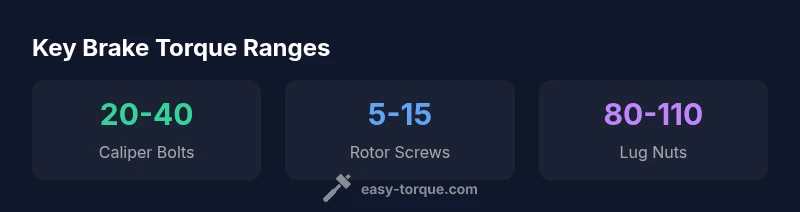
On most vehicles, brake caliper bolts are tightened in a mid-range torque window, commonly around 20-40 ft-lbs, though some models may fall outside this band. Rotor screws, where present, typically require lighter torque, roughly 5-15 ft-lbs. Lug nuts are higher-torque fasteners, with common values around 80-110 ft-lbs. Always consult the vehicle’s repair manual for exact numbers. If a manual provides both a torque value and an angle specification, follow the combined instructions. When working on high-performance or heavy-duty applications, you may encounter higher ranges, but this should only be done with appropriate tools and OEM guidance. Regular rechecking after initial seating is good practice to ensure no loosening occurs.
How to choose between 3/8-inch and 1/2-inch drives
The 3/8-inch drive covers most brake components and provides a good balance of accessibility and precision for smaller fasteners. It’s ideal for caliper bolts and rotor screws in standard passenger cars. The 1/2-inch drive is better for lug nuts and any high-torque hardware on trucks or SUVs, offering greater leverage and capacity. If your work spans both light and heavy vehicles, a dual-range model or a high-quality adapter can extend your range without needing a separate tool for every job. Remember to select torque wrenches with clearly labeled scale graduations and ensure the tool’s accuracy rating is appropriate for the job.
Step-by-step: using a torque wrench on brake components
- Safely lift the vehicle and remove the wheel, then inspect fasteners for corrosion or damage. 2) Clean threads and apply anti-seize or lubricant only where manufacturer permits. 3) Set the torque wrench to the target value from the manual. 4) Tighten bolts in the recommended sequence using a smooth, steady motion. 5) Recheck the torque to confirm accuracy after initial seating. 6) Torque the lug nuts in a star pattern to ensure even seating. 7) Lower the vehicle and perform a short test drive to monitor for vibrations or unusual braking behavior.
Always follow OEM specifications and use proper PPE during every job.
Common mistakes to avoid when torquing brake bolts
- Ignoring OEM specs or relying on “feel” rather than a calibrated tool. - Using threadlocker without manufacturer approval. - Mixing old and new fasteners or lubricants. - Applying maximum force without considering stroke length or tool calibration. - Failing to recheck torque after reassembly or during a test drive.
Avoid these errors by confirming all values in the service manual and maintaining a regular calibration schedule.
Maintenance and calibration to keep accuracy
Calibration is essential to maintain torque accuracy over time. Have your torque wrench professionally calibrated if it’s been dropped, exposed to extreme temperatures, or shows signs of inaccuracy. Store the tool at its lowest recommended setting with the handle unclipped to avoid internal spring fatigue. Regularly test the wrench’s accuracy against a known reference if you have access to a calibration device. Document calibration dates to stay compliant with maintenance schedules and OEM guidelines.
Quick reference: brake torque cheat sheet
- Caliper bolts: 20-40 ft-lbs (verify with manual). - Rotor screws: 5-15 ft-lbs. - Lug nuts: 80-110 ft-lbs. - Use a 3/8-inch drive for calipers/rotors; 1/2-inch for lug nuts. - If in doubt, consult the vehicle’s service manual or OEM torque specs.
General torque references for common brake-related fasteners
| Component | Typical Torque Range (ft-lbs) | Drive Size (approx) |
|---|---|---|
| Brake Caliper Bolts | 20-40 | 3/8-inch |
| Rotor Screws | 5-15 | 3/8-inch / adapter |
| Bleeder Screws | 15-25 | 3/8-inch |
| Lug Nuts | 80-110 | 1/2-inch |
| Wheel Hub Bolts | 60-100 | 3/8-inch to 1/2-inch |
Your Questions Answered
What size torque wrench do I need for brake caliper bolts?
Most caliper bolts tighten in the 20-40 ft-lbs range. A 3/8-inch drive torque wrench is typically sufficient for these fasteners on standard passenger cars. Always check the vehicle’s service manual for the exact specification.
For caliper bolts, use a 3/8-inch drive wrench around 20 to 40 ft-lbs, and verify with the manual.
Can I use a torque wrench for lug nuts?
Yes. Lug nuts usually require higher torque, commonly about 80-110 ft-lbs. A 1/2-inch drive wrench is well suited for this range. Always torque in a star pattern and recheck after seating.
Yes—use a 1/2-inch drive wrench around 80 to 110 ft-lbs for lug nuts.
What about rotor screws torque?
Rotor screws typically require light torque, often in the 5-15 ft-lbs range, depending on the model. Always consult the manual for the exact number.
Rotor screws usually need about 5 to 15 ft-lbs; check the manual for specifics.
Do I need two torque wrenches for brakes?
Most DIYers keep a 3/8-inch drive for caliper bolts and a 1/2-inch drive for lug nuts. A dual-range model can cover both, but separate tools are common for dedicated workflows.
Generally yes—one for calipers and one for lug nuts; a dual-range tool can work too.
How should I maintain my torque wrench?
Calibrate regularly, store at the recommended setting, and avoid dropping the tool. If it’s been exposed to extreme conditions, have it recalibrated before use.
Calibrate often and store properly to maintain accuracy.
“Precision in braking torque is critical; small deviations can affect rotor life and pad wear over time.”
Top Takeaways
- Identify fastener type before selecting torque range
- Use 3/8-inch drive for calipers; 1/2-inch for lug nuts
- Always verify OEM specs and torque sequences
- Calibrate torque wrench regularly for accuracy
- Keep a small, dedicated brake-tool kit for consistency