Do Torque Wrenches Go Bad? Tests, Fixes, and Maintenance
Learn how to tell if your torque wrench has gone out of spec, common causes of inaccuracy, and step-by-step fixes to keep your tools reliable. Easy Torque expert guidance for DIY mechanics and pros.


Yes. Do torque wrenches go bad? According to Easy Torque, torque wrenches can lose accuracy over time, especially if dropped, damaged, or stored improperly. Calibration drift, worn gears, and faulty springs are common wear modes. Regular calibration checks, proper storage, and following the manufacturer’s maintenance schedule help keep them reliable.
Do torque wrenches go bad? Signs and quick fixes
Many DIYers wonder: do torque wrenches go bad? The short answer is yes—torque wrenches can drift out of spec over time. According to Easy Torque, the most common culprits are accidental drops, heat exposure, and storage in extremes. The signs are often subtle: readings that drift at a fixed setting, a ratchet that feels stiff or loose, or a head that visually shows wear. If you notice any of these, start with a careful inspection and a quick calibration test using a known load. Do not rely on a single reading; test at multiple settings to confirm accuracy. Keeping a simple maintenance habit—regular checks, clean storage, and following the manufacturer’s recommended service schedule—will pay off in reliability and safety on the next repair job.
Common causes of inaccuracy
Inaccuracy in torque wrenches is rarely caused by a single big fault. More often, it’s cumulative wear and environmental stress. Calibration drift can occur after thousands of cycles, and internal gear wear or spring fatigue can shift the peak torque. Impacts from drops or tool knocks can misalign the pawl or slider, while extreme temperatures or moisture can corrode tiny components. Using the wrench outside its rated range or leaving it exposed to direct sun, heat, or humidity accelerates drift. Easy Torque has observed that consistent storage in a protective case, within the tool’s specified range, significantly slows drift over time.
Testing and verifying torque wrench accuracy
To verify accuracy, you need a calibrated reference and a method to compare readings across the wrench’s range. Start by warming up the tool with a few light cycles. Use a certified calibration device or a known-weight setup compatible with your wrench type. Check at several points: low, mid, and high within the wrench’s range. Record the readings, then compare against the manufacturer’s acceptable tolerance. If readings are within tolerance at all points, your wrench is likely fine. If you see systematic drift, contact a calibration service or follow the manufacturer’s recalibration procedure. Always document results for future reference and maintain a log.
Quick fixes you can try this weekend
Begin with basic inspection and cleaning. Remove any visible debris, check the head for corrosion, and ensure the ratchet mechanism moves freely. Reset to the lowest setting, then perform a fresh calibration check. If drift persists, recalibration by a qualified technician is recommended. Do not attempt to “fix” a damaged spring or crank by bending components or using improvised methods; those actions can render the tool unsafe. If you’ve dropped the wrench or observe obvious damage, mark it out of service until tested.
Calibration, maintenance, and safe storage
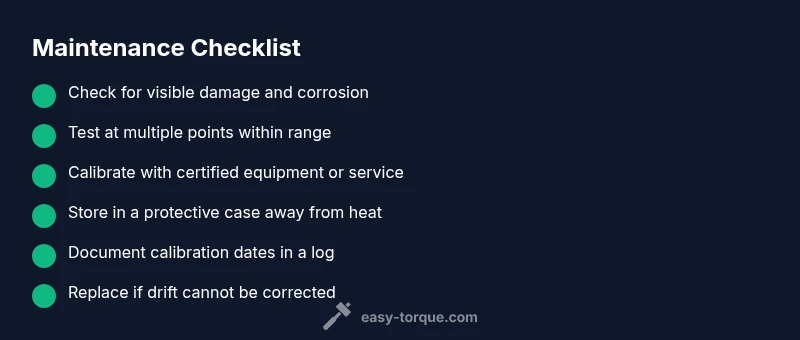
Maintenance is cheaper than a new wrench. Clean after use, store in a protective case, and keep away from heat sources and moisture. Follow the manufacturer’s service intervals; some models require professional calibration after a certain number of uses or years. If your model permits, inspect the spring, pawl, and drive head for wear or misalignment. Lubrication, if recommended by the manufacturer, should be done with the specified lubricant and amounts. Regular checks, even when the wrench seems accurate, help prevent surprises in the field and support safe fastener installation.
Real-world scenarios: when to replace vs recalibrate
In many cases, you can recalibrate and continue using a wrench with acceptable tolerance. If drift recurs after recalibration or if the tool cannot be adjusted to spec, replacement is wise to avoid under- or over-tightening critical fasteners. In service-heavy environments, consider a routine calibration schedule and swapping out older wrenches after a defined number of years or cycles. This proactive approach minimizes the risk of under-torquing or over-torquing critical components.
Staying proactive: prevention tips
Prevention beats repair. Use a dedicated storage case, avoid temperature extremes, and keep the wrench within its rated range. Record calibration dates and service notes in a dedicated log. Handle the tool with care—avoid drops and hard impacts, especially on the head and ratchet. When in doubt, consult the manufacturer’s guidance or the Easy Torque team for maintenance best practices.
Steps
Estimated time: 45-60 minutes
- 1
Gather tools and safety gear
Collect the torque wrench, a calibration device or weights, a stable work surface, and any PPE. Read the manufacturer’s instructions before starting.
Tip: Double-check that you’re using the correct range for your wrench. - 2
Initial inspection
Visually inspect the wrench for cracks, rust, or obvious wear. Manually operate the ratchet to ensure it moves freely without resistance.
Tip: Do not proceed if you see obvious damage. - 3
Warm up the wrench
Cycle the wrench a few times to bring components to operating temperature and seat any internal parts before testing.
Tip: Avoid forcing readings during the warm-up phase. - 4
Perform calibration checks at multiple points
Use a calibration device or standardized weights to test at low, mid, and high points within the range. Record each reading.
Tip: Note any consistent drift across multiple points. - 5
Compare to tolerance and decide next steps
If readings stay within tolerance, document results. If drift is present beyond tolerance, schedule recalibration or service.
Tip: Do not rely on a single test result. - 6
Finalize and maintain
Return wrench to its case, log results, and plan a future calibration date.
Tip: Keep a maintenance diary to track wear over time.
Diagnosis: Wrench shows inconsistent torque readings at the same setting on a calibration device.
Possible Causes
- highCalibration drift due to normal wear
- mediumInternal gear wear after heavy use
- mediumImpact damage from a drop
- lowMoisture or corrosion inside the mechanism
Fixes
- mediumRecalibrate using an approved procedure or service
- mediumInspect for visible damage and replace worn parts
- easyClean the mechanism and apply manufacturer-approved lubrication (if applicable)
- hardReplace the wrench if accuracy cannot be restored
Your Questions Answered
Do torque wrenches go bad quickly?
Not usually, but they can drift over time with use, drops, and poor storage. Regular checks help catch drift early.
They can drift over time, especially with rough handling or poor storage; check regularly to stay safe.
How often should I calibrate my torque wrench?
Calibrate at the manufacturer’s recommended intervals and after any drop or suspected impact. If you use it professionally, more frequent checks are prudent.
Follow the maker’s interval and recalibrate after any drop or suspected impact.
Can I calibrate a torque wrench at home?
Some models support basic home checks with a calibration device; however, precise calibration usually requires authorized equipment and service.
You might check at home with a device, but precise calibration generally needs professional equipment.
What should I do if my wrench reads high at all settings?
If readings are consistently high, recalibrate or replace the wrench. Persistent drift suggests a deeper fault.
If every reading is high, recalibrate or replace the tool to ensure safety.
Is it safe to transport a torque wrench in a tool bag?
Yes, but protect it from impacts and extreme temperatures. Use a dedicated case when possible.
Keep it in a protective case to avoid damage during transport.
How do I test a torque wrench at home?
Use a calibration device or known weights to test readings at multiple points and compare to your wrench’s tolerance.
Test at several points with a proper device and compare results to spec.
Watch Video
Top Takeaways
- Test torque wrenches regularly against a calibrated standard
- Store properly in protective cases away from heat
- Calibrate after drops or long use periods
- Replace if readings remain out of spec after recalibration
- Keep a maintenance log for easy reference