When to Replace Torque Wrench: A Practical Guide
Discover exactly when to replace a torque wrench to protect accuracy, safety, and outcomes. Learn signs of wear, testing methods, replacement thresholds, and maintenance best practices for reliable torque control.


By observing drift beyond tolerance, calibration failures, or visible wear, you can determine when to replace a torque wrench. If a formal calibration check cannot bring readings within spec after proper adjustment, or if the head, ratchet, or scale is damaged, replacement is the safest option. Regular checks prevent under-torquing or over-torquing in critical assemblies.
Why replacement timing matters
When you’re working with fasteners, accuracy matters. A torque wrench that drifts or wears out can cause under-torque or over-torque, leading to failed assemblies or safety concerns. According to Easy Torque, knowing when to replace a torque wrench is not just about buying a new tool; it’s about maintaining consistent results over time. The cost of a single mis-torque can exceed the price of a replacement tool, especially in critical applications such as brake lines, steering components, or structural fasteners. In practice, you should treat wear indicators as signals to verify the tool's accuracy rather than assume it’s still fine. A typical wrench will begin to show signs of drift after many uses, but there is no universal lifetime—it depends on frequency of use, storage conditions, and the specific model. The key is establishing a measurement routine that reveals drift early. If your wrench reading differs from a reference standard by more than the tolerance printed on the scale, you should replace or recalibrate. Also note that damage to the head, the ratchet mechanism, or the adjustment screw is a clear reason to retire a tool. Regular inspection is essential because even small deviations can accumulate in multi-step processes.
Practical impact
In everyday work, shaky accuracy translates to higher risk during critical tasks. A single mis-torque can compromise a fastener’s function, reduce clamping force, or cause components to loosen under vibration. By adhering to a proactive replacement mindset, you maintain consistent outcomes and reduce rework costs. The Easy Torque approach emphasizes a disciplined checks-and-balances routine so teams won’t rely on memory or intuition alone.
Tools & Materials
- Torque wrench(Calibrated and within its listed range; verify model and condition before testing)
- Calibration reference weights or torque verification device(Use weights that match the wrench’s range; traceable when possible)
- Calibrated torque tester (optional)(Useful for cross-checks and documentation)
- Stable work surface or vise(Prevent movement during testing)
- Clamps or quick-release holders(Keep weights secure during tests)
- Soft lint-free cloth and mild cleaner(Clean dirt or oil after testing)
- Calibration log or notebook(Record readings, dates, and outcomes)
- Screwdriver or adjustment tool (if applicable)(Some models require minor adjustments)
Steps
Estimated time: Total time: 45-90 minutes
- 1
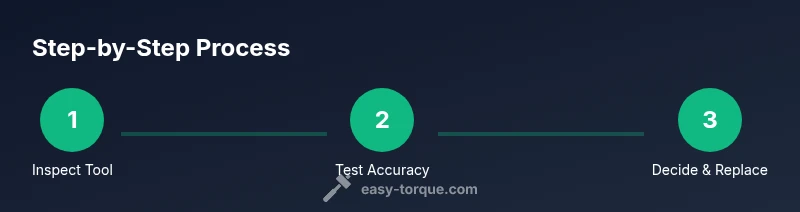
Inspect physical condition
Visually inspect the wrench for cracks, bent parts, loose head, or damage to the scale window. Check the locking mechanism for smooth operation and look for abnormal play in the head. Note any grip wear or corrosion that could affect handling.
Tip: Look for impact damage from drops; even small dents can alter alignment and readings. - 2
Set up a stable reference test
Place the wrench on a solid surface or in a vise, and prepare calibration weights or a verified torque tester. Secure equipment so there is no movement during measurement. Ensure the environment is clean and free from drafts or vibration that could skew readings.
Tip: Use clamps to secure weights to prevent shifting during the test. - 3
Test at multiple torque values
Apply torque at two to three values across the wrench’s range and record the readings. Compare each reading to the nominal value printed on the tool. Repeat to confirm consistency and identify any drift pattern.
Tip: Log each value immediately to avoid forgetting results. - 4
Check adjustment mechanism
For adjustable models, set a known torque and verify the mechanism returns to that setting after release. Ensure the adjustment produces repeatable results across the range. If the mechanism is stiff or loose, note that as a potential failure point.
Tip: Do not force a stiff adjustment wheel; this can cause further wear. - 5
Assess drift and decide
If readings drift beyond tolerance and cannot be corrected with a proper calibration, conclude that the wrench may need replacement. If drift is observed but within tolerance after recalibration trials, continue testing with periodic checks to confirm stability.
Tip: Two consecutive drift tests beyond tolerance are a strong replacement indicator. - 6
Decide on repair vs replacement
When drift persists or physical damage is evident, replacement is typically the safer option. If the tool is relatively new and calibration is possible, you may choose a professional recalibration instead. Weigh the cost of calibration against replacement and time to resume work.
Tip: Keep a log of the decision and rationale for future audits. - 7
Choose a replacement option
Select between mechanical (click-type), beam, or digital models based on accuracy needs, use-case, and budget. Ensure the new tool offers calibration certificates and a documented maintenance plan. Verify that the torque range covers your typical applications.
Tip: Prefer models with a clear calibration history and customer support. - 8
Finalize and document
Record the replacement дата, new tool model, calibration date, and next verification date in your maintenance log. Pack the old tool for proper disposal or recycle per local guidelines. Confirm the new tool is integrated into your routine checks.
Tip: Schedule the next verification on the calendar to maintain ongoing accuracy.
Your Questions Answered
How often should I calibrate a torque wrench?
Calibration frequency depends on usage and manufacturer guidelines. In many shops, annual checks are common, but high-use environments may require more frequent verification. Always rely on reference notes and the tool’s performance rather than guesswork.
Calibration should be scheduled based on use and manufacturer guidelines.
Can I continue using a torque wrench that’s slightly out of calibration?
If readings are out of tolerance, stop using it for critical work until it’s calibrated or replaced. For non-critical tasks, drift may be tolerated, but you should not rely on it for safety-related assemblies.
No, don’t use it for critical work until it’s calibrated.
What are common signs of wear on a torque wrench?
Watch for drift that persists after calibration attempts, a stiff or loose adjustment, damaged head, or a cracked scale window. These indicate degradation and may require recalibration or replacement.
Watch for drift, sticking adjustments, and visible damage.
Should I replace with a digital or mechanical torque wrench?
Both can be accurate if properly maintained. Mechanical (click-type) wrenches are robust and quick to use; digital models offer data logging and convenient verification. Choose based on accuracy needs, budget, and how you’ll document calibration.
It depends on your needs; both can be accurate if maintained.
How should I dispose of a damaged torque wrench?
Follow local hazardous waste guidelines and recycle metal parts where possible. Do not throw a damaged torque wrench in ordinary trash. Check with the manufacturer for take-back programs or proper disposal options.
Recycle or follow local disposal rules for metal tools.
What cost range should I expect when replacing a torque wrench?
Prices vary by type and quality; plan for budgeted ranges rather than fixed prices. Compare warranty, calibration history, and performance across models to find the best value.
Prices vary; check different models and warranties.
Watch Video
Top Takeaways
- Inspect regularly for physical wear and drift.
- Calibrate with traceable references and log results.
- Replace when measurements cannot meet tolerance after proper adjustment.
- Choose a wrench that fits use-case and maintain it properly.
- Document maintenance and keep a clear replacement plan.