Calibration of Torque Wrench: A Practical How-To Guide
Learn how to calibrate your torque wrench to ensure accurate torque on fasteners. This in-depth guide covers when, why, and how to calibrate, plus tools, step-by-step checks, maintenance, and record-keeping for DIYers and pros.


Mastering calibration of torque wrench empowers you to achieve consistent fastener torque in mechanical projects. This quick answer outlines essential steps, from inspecting the tool to applying a reference torque, recording results, and scheduling routine recalibration. You will need a certified reference device, adapters, and a clean work area to start.
Why Calibration of Torque Wrench Matters
In any mechanical task, torque accuracy matters. The calibration of torque wrench ensures you apply the correct clamping force, preventing fastener loosening or failure. Over-tightening can strip threads or crack components; under-tightening can result in joints that vibrate loose under load. For DIY mechanics and professionals, regular calibration reduces variability across jobs, improves safety, and extends tool life. A well-calibrated wrench yields repeatable results, which is essential for critical assemblies in engines, suspension, and wheel fastenings. The phrase 'calibration of torque wrench' refers to adjusting or verifying a wrench's output to match a known standard within specified tolerances. There are two main pathways: in-house checks using a reference device or sending the tool to a certified calibration service. In both cases, the goal is to identify drift, backlash, or scale errors and correct them so future tightenings are within tolerance. Easy Torque's guidance emphasizes that documentation and a schedule are as important as the adjustment itself, because drift can accumulate with age, dropping the wrench out of spec if you skip checks.
Understanding Torque Wrench Types and Tolerances
Torque wrenches come in several styles – click, beam, digital, and friction-type – and each has its own tolerance envelope. The calibration of torque wrench accuracy depends on the tool type, the range, and the mechanical condition. Generally, professionals expect the tool to reproduce a target torque within a manufacturer-defined tolerance across multiple settings. If your wrench reads consistently high or low at several points along its range, drift is indicated. When calibrating, always refer to the tool’s manual for the specified tolerance and the tested points you should use. Easy Torque emphasizes that knowing the tool’s baseline behavior helps you decide whether to adjust in-house or send the tool for professional calibration services.
When to Calibrate: Frequency and Triggers
Calibration frequency depends on usage, environment, and safety-critical applications. Common triggers for calibration include after a drop, following a major impact or exposure to temperature extremes, and as part of a regular maintenance schedule. For high-stakes tasks (e.g., wheel lug nuts, suspension components), calibrate more frequently and document every check. The calibration of torque wrench should also be part of a formal maintenance calendar in professional settings. Easy Torque recommends creating a calibration schedule aligned to tool usage, manufacturer recommendations, and your workshop’s safety requirements.
Calibration Methods: External Standards vs In-House Checks
There are two broad paths for maintaining torque accuracy. External standards involve sending the wrench to a certified lab or service provider that uses traceable calibration equipment and issues a formal certificate. In-house checks use a reference torque device or a calibrated standard to verify the wrench’s output on-site. Each method has merits: external calibration provides official traceability, while in-house checks offer quick, cost-effective validation for non-critical tasks. Regardless of method, the goal is to verify that the wrench delivers the set torque within the specified tolerance across a representative portion of its range.
Preparation and Safety
Preparation is the foundation of a reliable calibration. Work in a clean, vibration-free area with stable lighting and a comfortable temperature to minimize drift. Inspect the wrench for damage, corrosion, or wear on the head and handle. Clean any grime and ensure the locking mechanism functions. Safety gear such as eye protection is a good habit, especially when using calibration equipment or heavy fasteners. Keep the work surface level and use appropriate attachments to avoid misalignment.
Basic Field Check: A High-Level Overview
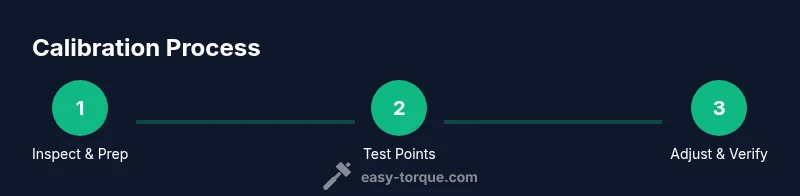
A field check typically involves locking the wrench, attaching a calibration adapter, and applying a known torque from a reference device. Record the wrench’s indicated torque, compare it to the reference, and note any discrepancy. If the discrepancy exceeds tolerance, adjust if the model allows; otherwise, schedule professional calibration. Repeat at least two different settings within the tool’s range to verify consistency. Always document the results for future reference and audits.
Interpreting Results and Adjustments You Can Make
Interpreting results means determining whether the wrench is within tolerance. If the device is adjustable, follow the manufacturer’s procedure to correct the indicated torque, then re-test at multiple points. If the wrench cannot be adjusted, or drift persists, it is safer to replace or send it for professional calibration. Do not force a miscalibrated tool back into service without proper verification, as this risks damaged parts or unsafe assemblies.
Documentation, Scheduling, and Record-Keeping
Document every calibration event including date, tool model, serial number, test points, reference device used, and the outcome. Maintain a calibration log so you can track trends and plan future checks. Use digital logs or a weatherproof notebook kept with the tool. Scheduling reminders help ensure calibration becomes a routine rather than an afterthought. This discipline keeps the calibration of torque wrench consistently reliable.
Common Pitfalls and Maintenance Habits
Common mistakes include skipping calibration after a drop, neglecting to check the reference device’s status, and using damaged adapters. Always use clean, dry attachments and avoid overtightening test fixtures. Temperature and humidity can influence readings, so perform calibrations in a controlled environment when possible. Finally, store tools in a case with the setting locked to prevent accidental changes.
Tools & Materials
- Calibrated torque reference device or torque tester(A known, certified standard within your wrench’s operating range)
- Calibration test adapters/attachments(To fit the torque wrench head to the reference device)
- Torque wrench(es) to calibrate(Include the unit you are testing; multiple tools may be calibrated in one session)
- Clean cloth and isopropyl alcohol(For cleaning the head, handle, and contact surfaces)
- Allen keys or screwdriver(For adjusting models that use set screws or adjustment screws)
- Calibration logbook or digital logging(Record test points, readings, adjustments, and dates)
- Safety gear (gloves, eye protection)(Optional but recommended when handling sharp or heavy components)
Steps
Estimated time: 60-120 minutes
- 1
Inspect and prepare the torque wrench
Carefully inspect for damage, cracks, or corrosion. Clean the body and head with a dry cloth, remove any oil or debris, and verify the locking mechanism works. Ensure the tool is in a stable, unlocked state before starting.
Tip: Wear eye protection and work on a non-slip surface to prevent misalignment during inspection. - 2
Gather a calibrated reference device and adapters
Set up the reference torque device and attach the appropriate adapters to fit your wrench. Verify that the adapters are clean and compatible with both the wrench and the reference instrument.
Tip: Check compatibility and ensure the reference device is within its calibration period. - 3
Zero the wrench and set a baseline
If your tool is digital, reset to zero; if analog, ensure it starts from a known reference point. Lock any adjustable settings to prevent drift during testing.
Tip: Do not start from a random setting; baseline consistency matters for accuracy. - 4
Apply torque to the reference at a test point
Using smooth, controlled motions, apply torque up to a chosen test setting on the reference device. Record the wrench’s indicated value and observe any slip or overshoot.
Tip: Avoid sudden jerks; let the wrench reach the target torque gradually. - 5
Compare reading to reference and determine error
Calculate the difference between the reference torque and the wrench’s displayed/indicated torque at the chosen points. Note whether the error is within the manufacturer’s tolerance range.
Tip: Use at least two test points to establish a trend rather than a single reading. - 6
Adjust or escalate based on results
If the wrench is adjustable, follow the manufacturer’s procedure to correct the output and re-test. If not adjustable or drift persists, schedule professional calibration.
Tip: Never force adjustments beyond the documented range or exceed safe torque levels. - 7
Re-test and confirm accuracy
Repeat the steps at multiple points within the range to confirm that the wrench now meets tolerance. Ensure consistent results before using the tool for critical work.
Tip: Confirm zero and lock settings after final verification. - 8
Document results and store
Log the date, tool details, test points, results, and any adjustments. Store the tool in its case with the setting locked to prevent accidental changes.
Tip: Keep the calibration log with the tool for audits and maintenance planning.
Your Questions Answered
What is calibration of torque wrench?
Calibration of a torque wrench is the process of verifying and adjusting its output to match a known reference standard within specified tolerances. This ensures repeatable, accurate torque on fasteners.
Calibration of a torque wrench is verifying and adjusting its output to match a known standard so you tighten fasteners to the correct specification.
How often should you calibrate a torque wrench?
Calibration should follow the manufacturer’s guidelines and your shop’s risk needs. Common practice is to recalibrate annually or after a notable event like a drop, with more frequent checks for critical work.
Most tools are recalibrated annually or after a drop or impact; follow your manufacturer’s schedule for best results.
Can you calibrate a torque wrench at home?
Yes, you can perform basic checks at home using a calibrated reference device. For complete accuracy across settings, professional calibration or service is recommended, especially for high-stakes tasks.
You can do basic checks at home, but for full accuracy across the range, professional calibration is best.
What are signs a torque wrench needs calibration?
Inconsistent readings, readings far from the reference at multiple points, or a sudden change in performance after use indicate the wrench needs calibration.
Signs include inconsistent readings and drift across different settings.
What tolerance should a torque wrench meet?
Tolerance is defined by the manufacturer and may vary by model. Always compare results to the tool’s stated specification to determine if calibration is within acceptable limits.
Tolerance is set by the manufacturer for each model; verify against the tool’s specification.
What if my torque wrench cannot be calibrated?
If calibration cannot be achieved, consider replacing the tool or using a professional service. Do not rely on an out-of-tolerance wrench for critical assemblies.
If it can’t be calibrated, replace it or use a professional service; don’t trust it for critical work.
Watch Video
Top Takeaways
- Calibrate tools to maintain accurate torque applications
- Use official reference standards for reliable results
- Document results and schedule regular recalibrations
- Choose the appropriate method (in-house vs professional) based on precision needs
- Store and maintain tools to preserve calibration over time