How to Adjust Torque Wrench: A Practical Guide
Learn how to adjust a torque wrench for precise tightening. This step-by-step guide covers types, settings, verification, and maintenance for safe, accurate torque control.


With this guide, you will learn how to adjust a torque wrench to the correct setting for your fasteners. We'll cover identifying your wrench's range, unlocking adjustment locks if present, dialing in the target torque, and locking the setting. You'll also learn how to verify accuracy and document results for consistent, safe tightening.
Understanding Torque Wrench Types and Units
When you ask how to adjust torque wrench, the first step is to understand the different types and the units they use. The most common varieties are click-type, beam, and digital torque wrenches. Each relies on a slightly different mechanism to indicate when the preset value is reached, but all share a core principle: the wrench must be set to a precise value before tightening a fastener. In practice, you’ll encounter ranges, scales, and sometimes lock mechanisms to prevent drift. According to Easy Torque, knowing your wrench’s range and how its scale is marked is essential to avoid overshoot or under-torquing. This section lays the groundwork for a safe, repeatable adjustment process.
Why Accuracy Matters in Automotive Work
Accuracy in torque control isn’t cosmetic—it's critical for wear, safety, and performance. Over-tightening can strip threads, crush gaskets, or bend bolts; under-tightening can lead to joint failure. In automotive tasks, consistent torque helps seals, bearings, and fasteners perform as intended under load. Easy Torque emphasizes that even small deviations multiply across multiple fasteners, compounding risk. This is why the adjustment step must be deliberate, traceable, and followed by verification checks. A well-tuned wrench improves longevity of components and reduces return visits for rework.
How Calibration and Measurement Work
Calibration aligns a torque wrench’s readings with a known standard, ensuring the indicated torque matches the actual tension delivered. This involves applying specified loads at known speeds and checking the wrench’s readings against reference weights or a calibrated tester. Over time, friction, temperature, or handling can cause drift, which is why periodic checks matter. Easy Torque recommends documenting calibration status and scheduling recalibration based on use frequency, duty cycle, and manufacturer guidance. If you suspect drift, a simple verification test with a tester can save costly misadjustments.
Reading the Scale: Inch-Pounds vs Newton-Meters
Torque values can be shown in different unit systems. Inch-pounds (in-lbs) and Newton-meters (N·m) are the two most common. Converting between them requires a reliable factor (1 N·m ≈ 8.85 in-lbs). When adjusting, be sure you’re reading the same unit as your fastener spec. Some wrenches switch units easily, while others require you to re-zero or re-center the dial. Always double-check your target unit before dialing in the torque, and use the included scale for accuracy. This practice keeps your tightening consistent across jobs and avoids unit-related errors.
Key Factors that Affect Torque Readings
Multiple variables can influence measured torque. Temperature changes alter material properties and lubricant behavior; dirt or corrosion on the screw threads affects friction; tool wear can shift the scale slightly; and user technique can introduce human error. A light touch during adjustment, clean components, and a stable work environment minimize drift. Easy Torque recommends taking readings in a consistent environment and re-checking after any major change to the tool or conditions.
Step-by-Step: How to Adjust a Torque Wrench
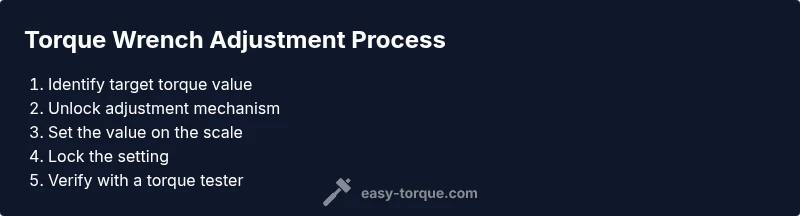
Accurately adjusting a torque wrench requires attention to model-specific details, but the general approach is widely similar. Start by identifying the target torque and the wrench’s current setting. If your model has a locking mechanism, unlock it before turning the adjustment dial or knob. Make incremental changes (1–2 units at a time), then re-lock and wipe away any residue. Finally, verify the new setting with a test bolt or torque tester to confirm the reading aligns with your target. The steps below provide a practical narrative you can adapt to most models. This section complements the dedicated STEP-BY-STEP block.
Tip: For most models, small adjustments produce more accurate results than large jumps. Avoid pushing the dial past the stop range, which can damage the mechanism.
Using Calibration Techniques to Verify Torque
After adjusting, verification is essential. Use a calibrated torque tester or a test bolt with a known spec to compare the wrench’s output. If the reading deviates beyond the tolerance, adjust again and re-test. Documentation of each verification run helps maintain a log for maintenance intervals. Easy Torque suggests performing a quick check on both low and high ends of the range you use most often to ensure linearity and consistency across your target spectrum.
Maintenance After Adjustment
A torque wrench benefits from gentle maintenance after any adjustment. Wipe it with a clean, dry cloth, avoid solvents that could degrade lubricants, and store it in its case to protect from dust and temperature swings. If your model includes a locking collar, ensure it is secured after setting a value. Regular checks and proper storage extend the tool’s life and keep calibration stable over time.
Storage, Handling, and Longevity of Your Tool
Proper storage is as important as proper use. Keep the wrench in a protective case, away from moisture and direct sunlight. Don’t expose it to heat sources or rapid temperature changes, which can alter internal components. When not in use, set the wrench to a middle value that you use frequently to minimize drift from constant high-load exposure. Consistent handling habits and periodic checks help you maintain peak accuracy over years.
AUTHORITY SOURCES
- OSHA: https://www.osha.gov/
- NIST: https://www.nist.gov/
- SAE International: https://www.sae.org/
Common Mistakes to Avoid
- Rushing the adjustment without verifying the setting against a test reference. This can lead to undetected drift and improper tightening.
- Forgetting to unlock the mechanism before turning the dial on models that require it.
- Over-tightening the dial or applying torque beyond the scale’s limits, which can damage internal components.
- Ignoring calibration schedules after long-term use or exposure to extreme temperatures.
Tools & Materials
- Torque wrench(Ensure it covers the target range and is within calibration window)
- Hex/Allen wrench or screwdriver(Model-dependent—use the correct tool for the adjustment mechanism)
- Manufacturer's manual(Model-specific instructions and diagrams)
- Calibrated torque verifier or torque tester(Optional for verification tests)
- Cleaning cloth(Wipe away oil, dust, or debris safely)
- Calibrated torque reference weight(Optional for home verification)
Steps
Estimated time: 20-30 minutes
- 1
Identify target torque and wrench range
Consult the fastener specification and locate the wrench’s current setting on the scale. Confirm you’re using the correct unit (N·m or ft-lb) and note the target value before making any adjustments.
Tip: Use the model’s manual to confirm the proper scale and unit for your task. - 2
Unlock the adjustment mechanism
If your wrench has a lock ring or switch, unlock it so you can rotate the adjustment dial without resistance. Some models require you to depress a button first.
Tip: Only unlock just enough to adjust; excess movement can cause misreads. - 3
Adjust to the target value
Turn the dial, knob, or digital input to approach the target torque. Make small changes (1–2 units) and avoid overshooting the mark.
Tip: Make gradual adjustments to preserve the calibration integrity. - 4
Lock the setting in place
Re-engage the lock mechanism (if present) to prevent drift during use and storage. Ensure the dial is still aligned with the target value.
Tip: A locked setting reduces inadvertent changes when you handle the tool. - 5
Verify with a test reference
Apply the wrench to a torque tester or a known-test fastener to confirm the setting reads correctly. Document any discrepancy.
Tip: If the reading is off, repeat steps 2–4 with smaller adjustments. - 6
Document the setting
Record the final torque value and the date of adjustment in your maintenance log. This helps track drift over time and plan recalibration.
Tip: Regular records support consistent results across jobs. - 7
Re-check after use
After using the wrench, re-check the setting to ensure it hasn’t drifted due to handling or temperature changes.
Tip: Drift can occur with heavy use or extreme conditions. - 8
Plan calibration if needed
If you notice persistent drift or inconsistent readings, schedule a calibration with a reputable service or use a calibrated verifier.
Tip: Routine calibration keeps tools reliable over the long term.
Your Questions Answered
How do I know if my torque wrench is properly calibrated?
Use a calibrated torque tester or reference weights to compare the wrench’s reading against a known standard. If the results fall within the manufacturer’s tolerance, calibration is good. If not, calibrate or service the tool.
Check with a calibrated torque tester; if readings are outside tolerance, service is needed.
Can I adjust any torque wrench with a screwdriver?
Many torque wrenches use a dial, button, or hex adjustment; some require a screwdriver or hex key. Always consult the model’s manual because the adjustment method varies by design.
Some models use a dial or hex key; check your manual for the correct method.
What happens if I over-tighten or under-tighten bolts?
Over-tightening can strip threads or damage seals; under-tightening may lead to fastener failure. Always use the specified torque for the fastener and verify with a tester when possible.
Over-tightening can harm threads, under-tightening can fail joints.
How often should I calibrate my torque wrench?
Calibration intervals depend on use, environment, and manufacturer guidance. Typically, heavy use or critical applications require more frequent checks. Keep a maintenance log and schedule recalibration accordingly.
Check calibration regularly and after heavy use or exposure to harsh conditions.
Is there a safety risk when adjusting torque wrenches?
There is minimal risk if you follow the manual, but improper use can cause injury or tool damage. Always wear eye protection when testing and work in a controlled area.
Be careful with moving parts and always follow the manual.
Watch Video
Top Takeaways
- Know your wrench type and range
- Always verify with a torque tester or standard weight
- Lock the setting after adjusting
- Calibrate regularly and after heavy use
- Record settings for repeatable results