How to Choose and Use a Torque Wrench for Mountain Bikes
Learn how to choose, calibrate, and use a torque wrench for mountain bikes to protect components, improve reliability, and ride safely. This step-by-step guide covers tools, setup, torque sequences, and maintenance.


By the end of this guide, you will know how to select, set up, and use a torque wrench for mountain bikes to ensure precise fastener torque. You'll learn what type of wrench to choose, how to verify accuracy, and a safe torque sequence for common MTB components. The steps cover setup, calibration, torque application, and post-checks.
Why a torque wrench matters for mountain bikes
Mountain bikes rely on a network of fasteners that are tight enough to withstand rough terrain but not so tight that threads strip or carbon frames crack. A torque wrench provides a repeatable torque so the same tightening force is applied every time. Without it, you might overtighten headset or stem bolts, causing frame flex; or undertighten rotor bolts, leading to rotor wobble. The Easy Torque team notes that accurate torque improves durability and safety across suspension pivots, brake rotors, and wheel hubs. When you're riding rough trails, vibration can micro-loosen bolts; a calibrated torque wrench helps prevent that. For MTB maintenance, a torque wrench should be part of your toolbox alongside a basic hex bit set, torque charts, and a clean workspace. Different materials— aluminum, steel, carbon—have different clamping behavior. Carbon frames are sensitive to over-torque; metal parts tolerate a bit more, but still require controlled tightening. The goal is to achieve uniform clamping force across the fastener, ensuring even load distribution and preventing localized stress. This results in smoother operation, less noise, and longer component life. In short: precision torque is a protective habit that pays dividends over a season of riding, maintenance cycles, and potential winter rides when moisture and corrosion are factors. Easy Torque's guidance emphasizes real-world playbooks rather than guesses; you will gain confidence by practicing with inexpensive practice bolts and a basic torque wrench before working on critical MTB parts.
Choosing the right torque wrench for mountain biking
Choosing the right torque wrench for mountain biking means weighing type, range, accuracy, and ergonomics. Options include click-type wrenches, digital/readout wrenches, and beam-type wrenches. A good MTB setup benefits from a compact, lightweight model with a clear, audible or visible indication of when the target torque is reached. Click-type wrenches provide a reliable audible cue and are generally the most affordable option for hobbyists; digital wrenches offer precise numeric readouts and easier calibration checks, but can be more expensive and battery dependent; beam-type wrenches are inexpensive and simple but require you to read the scale visually, which can be harder under trail-ride lighting. When selecting, look for compatibility with MTB fasteners (hex sizes common on crank bolts, derailleur bosses, rotor bolts) and a torque range that comfortably covers light to mid-range fasteners without forcing you to overspec. A well-balanced handle and a compact head design reduce fatigue during longer sessions. Remember: a trustworthy torque wrench is an investment in consistency and safety, not a one-off tool. As Easy Torque recommends, prioritize accuracy, repeatability, and ease of use over flashy features. Always verify the wrench’s calibration before major maintenance tasks, and keep a small torque chart in your shop for quick reference.
Key torque specs for common mountain bike fasteners
Manufacturer torque specs are the gold standard. Your bike’s service manual or the component maker’s chart should guide every tightening step. In practice, most MTB components use relatively modest torque values, with small fasteners requiring careful control and larger bolts needing firmer clamping. The essential practice is to tighten in a logical sequence, ensuring even load distribution and avoiding cross-threading. Always check for any specs that differ by material (aluminum frame, carbon parts, steel hardware) and adjust accordingly. If you don’t have the exact numbers, start with a conservative setting within the wrench’s range and then re-check after a ride. If any bolt shows signs of slipping, stripped threads, or unusual resistance, stop and reassess. Easy Torque emphasizes cross-checking critical components—crank bolts, derailleur mounting bolts, brake caliper bolts, and rotor bolts—against the official specs before commuting or counting on a hard ride. In addition, avoid using thread lockers on parts that aren’t designed for them, unless the manufacturer explicitly recommends it. Consistency and patience pay off in reliability and safety on the trail.
How to set and calibrate your torque wrench
Calibration is the cornerstone of accurate tightening. Start by selecting the correct head for your fastener and zeroing the wrench according to the manufacturer’s instructions. Set an initial torque value within the wrench’s usable range, then apply torque to a known test object (a dedicated calibration bolt is ideal) to confirm the wrench clicks or displays the expected reading. If the wrench drifts, recalibrate following the user manual—often this involves adjusting the setting, applying torque to the calibration bolt, and confirming the readout. After calibration, document the setting in your shop notebook. Regular checks are essential: a drift can occur after a hard impact, a drop, or after extended use. For MTB maintenance, pre-ride checks on essential bolts and mid-season recalibration are prudent practices. Always wait a moment after applying torque to allow the fastener to settle, and then re-check to confirm you’ve reached the target. Remember to replace worn or damaged washers, seals, or bolts rather than forcing a torque value through damaged hardware. This approach protects the bike and keeps components aligned and performing optimally.
Techniques for different parts: crank bolts, derailleur bolts, brake rotor bolts
Crank bolts demand careful attention: use the appropriate hex bit, avoid cross-threading, and apply torque gradually in a star or crisscross pattern to ensure even clamping force. Derailleur bolts should be tightened in a sequence that respects the derailleur’s mounting points, with attention to tail tension and hanger alignment. For brake rotors, follow the manufacturer’s recommended torque pattern and uniform sequence across mounting bolts to prevent rotor warping. When working with carbon parts, err on the side of lower torque to avoid damage, and always consult the component’s documentation. If you’re unsure about a bolt’s placement or whether threadlocker is appropriate, contact the manufacturer or a qualified technician. Finally, after assembly, re-check all critical fasteners again after a short ride to confirm nothing has loosened under real riding conditions. Rigorous checks prevent common MTB failures such as rotor rub, chainring wobble, or stem/handlebar misalignment, ensuring a safer, more confident trail experience.
Maintenance and calibration schedule
Keeping your torque wrench accurate requires a simple, repeatable routine. Start each bike maintenance session by inspecting the wrench for wear, rust, or damage, and verify its calibration. If you ride aggressively or the wrench takes a hard hit, schedule an early recalibration check. For routine trail maintenance, a lightweight monthly check is common practice for avid riders, with more frequent checks during peak riding seasons or when you’re tackling demanding builds like enduro or gravity runs. Store the tool in a protective case and keep calibration records handy for easy reference. Regular hygiene—cleaning the head, checking for burrs on the bit, and ensuring the wrench head seats cleanly on fasteners—minimizes slippage and prolongs lifespan. Easy Torque recommends documenting the calibration date and setting to track drift over time and decide when a professional recalibration may be needed.
Common mistakes and safety tips
Common mistakes include using the wrong head size, failing to zero the wrench, skipping calibration, and tightening bolts in random orders. To stay safe, always wear eye protection when working near rotating parts and ensure the bike is stable on a stand before applying force. Don’t use the torque wrench as a breaker bar—torque controls rely on a clean, controlled input. Avoid introducing lubricants like oils on fastener surfaces unless the manufacturer specifically requires it; this changes friction and torques. If you encounter a sticky or frozen bolt, stop and apply penetrating oil, allow time for it to work, then reattempt with a fresh torque setting. Finally, never exceed the wrench’s rated range; attempting to torque beyond the wrench’s capability can lead to measurement drift or tool failure. These safeguards help protect your bike’s integrity and keep you safe on the trail.
Putting it all together: an MTB torque routine
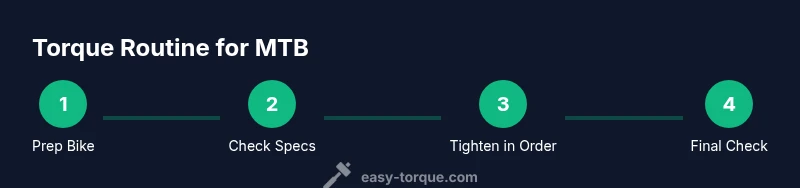
To build a practical MTB torque routine, begin with a pre-ride fastener check using your torque wrench set to manufacturer specs. Maintain a consistent tightening order: start at the drivetrain or crank set, move to the brake system, and finish with the wheel hubs and headset. After each major service, re-check key fasteners after the first ride to account for settling and dynamic loading. Keep a simple log of torque settings and calibration dates, so you can anticipate when recalibration is due. With a reliable routine, you’ll protect threads, maintain component alignment, and ride with greater confidence.
AUTHORITY SOURCES
- Park Tool. Torque Specifications and Tightening Order. https://www.parktool.com/blog/repair-help/torque-specification
- SAE International. Torque and Fastening Guidelines. https://www.sae.org/
- NIST. Measurement Standards and Torque Calibration Basics. https://www.nist.gov/
Tools & Materials
- Torque wrench(Choose a click-type with a broad, MTB-appropriate range and audible/visible confirmation.)
- Torque bits and adapters(Hex sizes common on MTB bolts; include M6/M8 and 2.5-7 mm ranges as needed.)
- Calibration test bolt or reference fastener(Used to verify torque reading accuracy before service.)
- Bike stand(Stability helps during torque application and testing.)
- Torque chart or manufacturer specs(Keep a printed or digital reference handy for quick checks.)
- Threadlocker or anti-seize (as recommended)(Only if the component specification calls for it.)
- Clean rags and degreaser(Prep bolts and threads for accurate torque readings.)
Steps
Estimated time: 30-60 minutes
- 1
Prepare the bike and toolkit
Place the bike on a stand, inspect all fasteners for damage or wear, and lay out your torque wrench, bits, and reference specs. Verify the wrench is within its calibration window before you begin.
Tip: Keep a clean workspace; a small magnet tray helps organize fasteners. - 2
Zero and set baseline
Zero the wrench according to the manual and set a baseline torque within the wrench’s usable range. Use the calibration bolt or a test bolt to confirm it reads correctly.
Tip: Do not guess the baseline; small drift is common and should be verified. - 3
Tighten in the correct sequence
Follow the manufacturer’s tightening order for your MTB bike, typically starting with crank or bottom bracket, then derailleur mounts, brake components, and finally wheel hubs.
Tip: Tighten gradually in small increments and check for any binding or resistance. - 4
Apply torque to each fastener
Apply the specified torque in a smooth, steady motion until the wrench indicates the target is reached. Stop immediately if the bolt threads feel gritty or damaged.
Tip: Pause briefly after reaching target to let components settle. - 5
Re-check critical fasteners
Repeat tightening sequence for the most critical parts after a short test ride to account for settling and vibration.
Tip: If any bolt requires re-tightening, re-verify with your torque reference. - 6
Record and store
Log your torque values and calibration date for future reference and predictive maintenance.
Tip: Keep the log with your toolkit for quick access.
Your Questions Answered
What is a torque wrench, and why do I need one for mountain bikes?
A torque wrench measures and applies a specific tightness to bolts, reducing the risk of over- or under-tightening. For mountain bikes, this protects threads, frames, and components like brakes and cranks, and it helps maintain consistent performance over time.
A torque wrench helps you tighten bolts to a precise level, protecting your bike and keeping components reliable.
How do I know which torque wrench to buy for MTB work?
Choose a wrench that covers the common MTB bolt sizes and offers a clear indication when the target torque is reached. Click-type wrenches are affordable with reliable feedback; digital wrenches provide precise readings but can be pricier and battery-dependent.
Pick a model with a good range, clear feedback, and comfortable handling for long rides.
Can I use my bike's torque chart without a wrench?
A torque chart is a reference, but tightening bolts without a torque wrench increases the risk of damage. Use a wrench to reach the specified torque and verify with a chart after you set the tool.
A chart helps, but you should still tighten using a torque wrench to the exact spec.
How often should I calibrate my torque wrench for MTB use?
Calibrate when you buy the wrench, after any hard impact, and on a regular maintenance schedule. If you ride aggressively, check calibration more often.
Calibrate on purchase, after impacts, and as part of your routine maintenance.
Is it okay to use threadlocker on MTB bolts?
Only use threadlocker if the component specification calls for it. Otherwise, avoid it on bolts where the manufacturer recommends standard torque tightening.
Only use threadlocker when the maker says so; otherwise, torque as usual.
What should I do if a bolt feels resistant while tightening?
Stop, inspect for cross-threading, damage, or debris. Clean and reseat the bolt, check its size, and then re-try with a correct torque.
If a bolt resists, stop and inspect for damage before continuing.
Watch Video
Top Takeaways
- Choose a MTB-friendly torque wrench with clear feedback.
- Always follow manufacturer torque specs and tightening order.
- Calibrate regularly and after impacts or heavy use.
- Re-check fasteners after a short ride for settling.