Mastering a Wrench with Torque: A Practical DIY Guide
Learn to select, calibrate, and use a wrench with torque safely. This step-by-step guide covers torque wrench types, specs, maintenance, and best practices for precise fastening in automotive and home projects.


By the end of this guide you will confidently pick the right wrench with torque, set the correct specification, and tighten fasteners with precision. You'll learn safe handling, routine calibration, and best practices to avoid under- or over-tightening across common automotive and workshop tasks.
Why a Wrench with Torque Matters\n\nA wrench with torque gives you control over joint load, which reduces the risk of damaged fasteners and unreliable assemblies. In automotive work, mis-torqued bolts can lead to leaks, component failure, or unsafe handling. According to Easy Torque, using the right torque wrench and sticking to a verified spec is a cornerstone of quality workmanship. In this guide, we’ll explore how torque control translates into repeatable results across projects—from lug-nuts on a rim to small engine fasteners. The goal is to build a workflow that makes torque discipline a habit rather than a guess.\n\nYou’ll notice two core benefits: accuracy and consistency. An accurate wrench minimizes sacrificial wear on threads, while consistency reduces variation between repeated tasks. For DIY mechanics and technicians, that combination saves time and money over the long run. As you read, keep a running mental note of where torque specifications come from (manufacturer charts, service manuals, or industry standards) and how your tool’s mechanism converts user input into a precise preload on the fastener.
Types of Torque Wrenches and How They Work\n\nTorque wrenches come in several styles, each with strengths and limitations. The most common are mechanical (click) wrenches, which emit a palpable and audible cue when the preset torque is reached; beam and dial wrenches, which show a reading on a scale; and digital models, which display the exact value and may log data. The key difference is feedback: you want clear, repeatable signals so you stop tightening at the correct moment. The Easy Torque team emphasizes choosing a style that fits your typical workloads and your tolerance for measurement drift. In this section, we’ll compare accuracy, cost, and durability across popular models, so you can pick a wrench with torque that suits your projects.
Reading Torque Specifications and Conversions\n\nTorque is commonly expressed in either Newton-meters (Nm) or foot-pounds (ft-lb). If you’re following a manufacturer spec, you may need to convert units. The conversion factor is 1 Nm = 0.73756 ft-lb. While many torque wrenches display both units, it’s critical to read the scale at eye level and lock in the setting before applying force. Also, remember temperature, thread lubricant, and bolt grade affect the actual preload you achieve. In practice, you should verify guidance from service manuals and use a calibrated torque tester for sensitive assemblies.\n\nA simple rule of thumb: set the wrench to the target unit, then snug the fastener once before the final torque application. Tiny deviations at the start can compound as you approach the spec, especially on jointed assemblies or multi-bolt patterns.
How to Choose the Right Wrench with Torque for Your Projects\n\nYour choice depends on the size of fasteners, the required torque range, and the environment. For light-duty home repairs, a compact click-type model with a 5-60 Nm range is often sufficient. For automotive work and machinery, you’ll want higher ranges (e.g., 20-200 Nm or more) and a tool with corrosion resistance. Digital wrenches offer data logging and peak hold, but can be more expensive and require batteries. Easy Torque recommends matching the tool’s torque range to the most common fasteners in your toolkit, and documenting your preferred settings for quick access during jobs.\n\nBudget matters, but don’t sacrifice accuracy for price. A reputable torque wrench with a reliable return-to-specified setting will pay for itself through reduced installation errors and fewer call-backs.
Calibration, Maintenance, and Longevity\n\nCalibration is essential to maintain accuracy over time. Without consistent calibration, readings drift and you risk under- or over-tightening. Calibration intervals vary by usage, environment, and tool type, but a general rule is to check accuracy at least once a year, and after any drop or heavy impact. Keep the mechanism clean, avoid exposing torque wrenches to solvents, and store them in a protective case to prevent accidental knocks. Always reset to the lowest setting when not in use to minimize wear on internal springs and gears.\n\nThis section emphasizes that a well-maintained torque wrench is a core asset in any workshop. Routine checks safeguard the integrity of your tools and the accuracy of your work.
Safe Handling and Common Mistakes to Avoid\n\nUnsafe or incorrect usage leads to injuries and inaccurate tightening. Always wear eye protection when working with fasteners and maintain a stable stance while applying force. Avoid using adapters or extensions that exceed the manufacturer’s recommended limits, as they can amplify torques in unexpected ways. When you’re working in tight spaces, use light, short pulls and verify settings after setup. The aim is to develop a consistent technique that minimizes surprise torque spikes and protects threads, bolts, and surrounding components. Remember, the torque value is a target, not a guarantee—real conditions can alter outcomes.\n\nIn practice, insist on proper lubrication per the fastener manufacturer and clean threads before installation to reduce friction variability. If you’re new to torque work, practice on scrap fasteners to build your muscle memory and confidence.
Real-World Use Cases: Automotive and Home Projects\n\nProfessional mechanics use torque wrenches to ensure critical joints meet exact specs—from lug nuts on wheel assemblies to cylinder head bolts. The approach is the same in home maintenance: identify the spec, select a wrench with torque in the correct range, and apply tightening in a logical sequence. For automotive enthusiasts with basic sets, a versatile 20-200 Nm range covers most common tasks, while a smaller 5-60 Nm range handles electronics or household fixtures. Good data logging and labeling of torque values helps avoid confusion over multiple projects. The takeaway is that torque discipline translates into safer vehicles, longer-lasting parts, and more repeatable results.
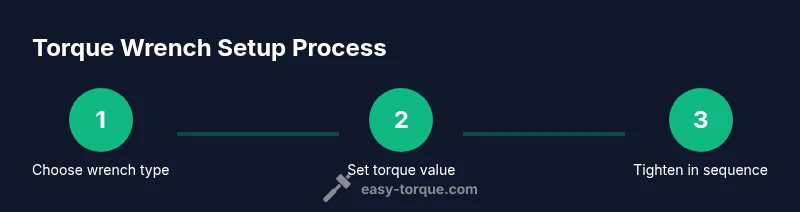
Quick Reference: Setup Checklist and Maintenance Routine\n\nCreate a simple routine you can repeat for every job. Start by selecting the right torque wrench, inspecting the fasteners, and confirming the target torque. Set the wrench, then tighten in the recommended sequence. After use, reset to the lowest setting, clean the tool, and log any calibration needs. A one-page checklist keeps you consistent across projects.
Tools & Materials
- Torque wrench(Choose the type (click, dial, or digital) based on typical tasks.)
- Calibration tool or torque tester(Used to verify accuracy before critical jobs.)
- Owner's manual(Know your torque range and reset procedures.)
- Thread lubricant or anti-seize (optional)(Use only if manufacturer requires it.)
- Extensions/adapters (optional)(Only for access in tight spaces; never exceed tool limits.)
- Storage case(Protects the tool from shocks and environment.)
Steps
Estimated time: 60-90 minutes
- 1
Select the correct torque wrench and setting
Review the fastener specification from the service manual and choose a wrench with a torque range that comfortably covers the value. If using a click-type, listen for the audible cue; for digital, verify the display matches the spec.
Tip: If you’re between ranges, pick the lower end to improve control. - 2
Prepare the fasteners and workspace
Clean threads and bolt holes; inspect fasteners for wear or damage. Ensure you have clear space to operate, with stable footing and proper lighting; remove any debris that could skew readings.
Tip: Dry threads read higher than oiled threads; account for lubrication in your calculation. - 3
Set the torque and practice a test snug
Set the wrench to the target spec. Bring the fastener to a snug close, then begin the final tightening, watching or listening for the torque cue. Do not over-tighten or use leverage that moves the tool.
Tip: Always double-check the final torque value after a brief pause. - 4
Apply torque in the recommended sequence
Follow the recommended tightening sequence (often a star or cross pattern in multi-bolt flanges). Apply force smoothly and steadily; avoid sudden jerks that can spike torque.
Tip: Rotate your body with the tool, not just your wrist, for consistent torque. - 5
Verify and re-check if needed
After achieving the target, re-check the initial fasteners to ensure you haven’t loosened others in the sequence. If a digital wrench logs data, review the peak torque value for realism.
Tip: Take a short break to let hardware settle before final verification. - 6
Store and maintain after use
Wipe down the tool, store it in its case, and reset to the lowest setting. Schedule the next calibration and log the current state for future reference.
Tip: Avoid storing with the tool in a locked state at high torque.
Your Questions Answered
What is a wrench with torque and when should I use one?
A wrench with torque lets you tighten fasteners to a precise specification, which is critical for safety and performance. Use it whenever specified by the manufacturer or when hands-off accuracy matters. This reduces the risk of under- or over-tightening compared to a standard wrench.
A torque wrench lets you tighten to a precise specification; use it whenever the manual calls for a specific torque.
How do I choose between a click-type and a digital torque wrench?
Choose based on workload and budget. Click-type wrenches are reliable and simple, while digital models offer data logging and precise readouts. Consider durability, battery life, and how often you need to record torque values.
If you need data logs, go digital; otherwise a click-type is a dependable workhorse.
How often should I calibrate my torque wrench?
Calibration should be performed at least annually, and more often if you use it daily or in critical assemblies. Look for signs of drift, such as inconsistent readings or mechanical looseness, and arrange service as needed.
Check accuracy at least once a year or after heavy use.
Can I reuse fasteners if the torque was off?
If a fastener was over- or under-torqued, replace it rather than reusing it. Tensioned bolts can yield or fail; follow the manufacturer’s guidance and retorque to spec after replacement or significant loosening.
If torque was off, replace the fastener and re-torque to spec.
What maintenance does a torque wrench require?
Regular cleaning, proper storage, and calibration checks are essential. Avoid exposure to solvents, and always reset to the lowest setting when not in use to extend tool life.
Keep it clean, stored, and calibrated; reset to the minimum setting when not in use.
Watch Video
Top Takeaways
- Choose the right torque wrench for your range and projects.
- Always verify the target torque with a calibrated tool.
- Follow proper tightening sequences to ensure even load.
- Maintain and calibrate regularly to keep accuracy high.