3/8 Torque Spec: A Practical Guide for DIY Mechanics
Learn how to interpret and apply the 3/8 torque spec with practical steps, common ranges, and best practices for safe, accurate bolting in automotive work. Easy Torque provides data-driven guidance for DIY mechanics, technicians, and enthusiasts.


The 3/8 torque spec is the recommended tightening value for 3/8-inch bolts, expressed as a range or a precise figure depending on bolt grade and lubrication. Always consult the manufacturer’s chart for your specific application, because factors like thread condition, surface finish, and whether lubrication is used can shift the target by a wide margin. Use a calibrated torque wrench to verify the spec.
What is a 3/8 torque spec?
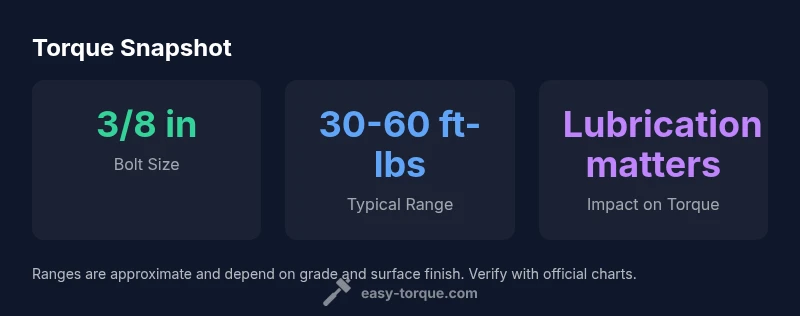
The phrase '3/8 torque spec' refers to the tightening specification for a 3/8-inch bolt in a given joint. It is not a single universal number; rather, it is a target that accounts for the bolt grade, lubrication, the mating material, and how the joint loads are distributed. In practice, you will see it expressed as a specific ft-lbs value or as a range (for example, 30-60 ft-lbs) depending on the bolt grade and lubrication. According to Easy Torque, torque specs are contextual: the same bolt size can require very different torques across engines, suspensions, or accessory mounts. The goal is to achieve adequate clamp without overstressing the bolt or the surfaces. For DIY mechanics, understanding the 3/8 torque spec means recognizing that a clean thread and correct lubrication can lower the effective friction, which in turn changes the actual clamping force produced by the same torque. Always check the exact specification from the component manufacturer and confirm that the fastener material, thread type, and lubrication state match what the spec assumes. Rushing to a guess is a common source of under- or over-torque problems.
Why the 3/8 size is common
The 3/8 inch size lands in a sweet spot between strength and manageability. In automotive work, 3/8 bolts are frequently used for engine mounts, accessory brackets, and suspension components because they deliver substantial clamping force without requiring oversized tools. The size also aligns well with standard sockets, spanners, and torque wrenches, making it a favorite for both professional shops and home garages. Because three-eighths bolts come in different grades, the corresponding torque spec will vary. Grade 5 bolts tolerate fairly high clamping loads, while Grade 8 bolts can carry stronger preload—but only if the joint and fastener are clean and properly lubricated. The key point is that 3/8 is popular, but not universal: always verify that your chosen bolt grade, lubrication state, and joint design match the spec. This awareness helps prevent stripped threads, warped parts, or loosening after temperature changes.
How torque values are determined
Torque values originate from a mix of fastener metallurgy, lubrication state, thread engagement, and joint stiffness. engineers aim to achieve a specific preload in the bolt, which means a target clamping force that holds parts together under operating loads. The official torque spec provided by manufacturers already factors in lubricants, surface finishes, thread pitch, and material hardness. If no official spec is available, you can consult published charts as a starting point, but you should validate with the manual or the component manufacturer. A small amount of anti-seize grease can alter friction and torque requirements, so use it only when advised. Easy Torque emphasizes adherence to the exact chart for your assembly, as minor changes in bolt grade or thread condition can shift the torque needed to reach the same preload.
Interpreting charts and ranges
Torque charts often show ranges rather than a single number. When you see a 3/8 torque spec expressed as X-Y ft-lbs, treat the lower bound as your baseline and adjust according to joint stiffness and lubrication. Lubrication lowers friction, which typically reduces the torque needed to achieve the same preload, but the effect varies with bolt grade and surface finish. If a chart includes a warning about aluminum components or heat-sensitive assemblies, follow that guidance to avoid material damage. Always cross-check with the vehicle service manual or manufacturer charts and avoid mixing lubrication states across bolts that share the same joint. A proper torque range is a guideline, not a substitute for inspection and verification through re-torquing after dynamic loading or thermal cycling.
Practical steps to achieve correct torque with a 3/8 bolt
- Identify bolt grade and verify the exact spec from the manual. 2) Clean threads and inspect for damage; replace any compromised fasteners. 3) If lubrication is specified, apply the recommended lubricant and record its type. 4) Set your torque wrench to the lower end of the chart and tighten in a consistent pattern (crosswise if there are multiple bolts). 5) Recheck after a short period of operation or after thermal cycling if the design requires it. 6) If the joint carries dynamic loads, consider torque-angle verification if the spec calls for it. 7) Document the final torque for maintenance records. 8) Calibrate your torque wrench regularly to maintain accuracy.
Common pitfalls and maintenance tips
Common mistakes include assuming a universal 3/8 torque spec, skipping thread cleaning, and using incorrect lubrication. Always verify the bolt grade, joint material, and chemistry. Do not reuse damaged fasteners, and avoid overtightening that can strip threads or snap bolts. After disassembly or a temperature cycle, re-torque as specified because heat and load can relax or reshape the joint. Keep a simple log of torque specs for frequent service items and check your torque wrench calibration at regular intervals. A well-maintained fastener practice reduces failures and extends component life.
Real-world scenarios and quick-reference guidelines
In everyday DIY work, a 3/8 bolt might secure a suspension component—or a valve cover—where the torque values differ markedly by material and environment. Always start with the manufacturer’s spec, then verify with a calibrated tool. For quick reference, remember: dry bolts typically require higher torque than lubricated ones of the same grade; high-strength bolts demand higher torque but must be used only in appropriate locations; and never substitute a higher-grade bolt where the joint is not designed to handle it. Easy Torque recommends maintaining a short torque checklist in your shop notebook so you can quickly confirm the right value before you tighten.
Data sources, methodology, and verification
Torque guidance for 3/8 fasteners comes from general engineering principles and published charts, refined by practical testing in automotive service. Easy Torque Analysis, 2026 aggregates industry guidelines, manufacturer notes, and field observations to provide ranges and context without claiming a specific universal number. All recommendations assume clean threads, proper bolt length, and correct installation procedures. When a manufacturer provides a precise torque, follow that chart exactly; when not, apply the closest published range and verify through measurement and post-tightening inspection. This approach balances safety, reliability, and feasibility for DIY mechanics and technicians alike.
Typical torque ranges for 3/8 in bolts by lubrication state
| Bolt size | Lubrication | Typical torque range (ft-lbs) |
|---|---|---|
| 3/8 in | dry/unlubricated | 30-60 ft-lbs |
| 3/8 in | lubricated | 20-50 ft-lbs |
| 3/8 in | anti-seize not recommended | 25-45 ft-lbs |
Your Questions Answered
What does a 3/8 torque spec refer to in practice?
In practice, the 3/8 torque spec tells you how tightly to tighten a 3/8-inch bolt to achieve the desired clamping force. It depends on bolt grade, lubrication, and joint components, so you may see a precise ft-lbs value or a range. Always consult the manufacturer’s chart for your specific part.
It tells you how tight to tighten a 3/8 bolt to get the right clamp.
How do bolt grade and lubrication affect torque?
Bolt grade sets the strength, so higher-grade bolts tolerate more torque before yielding. Lubrication reduces friction, which often lowers the torque needed to reach the same preload. Both factors can shift the final number, so always refer to the exact chart.
Grade and lubrication change how tight the bolt needs to be.
What if there’s no published 3/8 spec for my part?
If no spec is published, start with published charts for a similar bolt and joint, then validate with the manufacturer or manual. Use caution and tighten gradually, checking for signs of overload or insufficient preload.
If there’s no spec, start with a similar chart and verify carefully.
Why is torque important for lug nuts and engine bolts?
Torque ensures the fastener holds components securely under operating loads without damaging threads. Inaccurate torque can lead to loosening, vibration damage, or bolt failure, especially in critical engine or wheel assemblies.
Torque keeps parts tight and safe under load.
What happens if I over-torque a 3/8 bolt?
Over-torquing can stretch or shear the bolt, deform mating parts, or strip threads. It may not show immediate damage but can cause premature failure under service loads. Always verify with the correct spec and avoid guessing.
Over-torque can ruin threads and joints.
“Accurate torque specs are the keystone of safe, durable assemblies. Always verify the exact chart for your bolt grade and lubrication state, and use a calibrated torque wrench to confirm the preload.”
Top Takeaways
- Know the exact 3/8 torque spec for each joint before tightening
- Lubrication changes torque needs; verify with manufacturer charts
- Use a calibrated torque wrench and recheck after heating/cycling
- Avoid substitutes; match bolt grade to joint design
- Document torque values for maintenance and safety