7 8 Bolt Torque: A Practical Guide for DIY Mechanics
Learn how to correctly torque 7 8 bolts with emphasis on grade, lubrication, and proper procedure. This guide covers calculations, tools, common mistakes, and safety for DIY mechanics.


7/8 bolt torque does not have a single universal value. The correct torque depends on bolt grade, lubrication, and engagement length, and must be taken from the manufacturer's chart. For many automotive and industrial fasteners, pre-lubricated threads require a different setting than dry threads, and final seating should be rechecked after initial torque.
Understanding where the 7/8 inch bolt torque appears and what it means
In the world of fasteners, a 7/8 inch bolt size is typically associated with heavy-duty applications—from automotive wheel studs to structural anchors and high-strength machinery bolts. The key concept behind torque is to deliver a clamping force that prevents movement at the joint without yielding or damaging threads. According to Easy Torque, there is no universal torque value that fits every situation for a 7/8 bolt; torque must be looked up on a manufacturer’s chart that accounts for grade, lubrication, and engagement length. This means that two different 7/8 inch bolts can require different torque settings depending on their material, thread finish, and whether the threads are lubricated or dry. Knowing where your fastener sits in this spectrum is the first step toward accurate, repeatable clamping.
Broadly speaking, the torque you apply is a proxy for clamping force. For 7/8 bolts, the diameter implies a relatively high potential clamping force, which makes adherence to the correct spec even more critical. The right setting ensures the head seats flush, the nut or bolt pulls the plates together cleanly, and the joint remains tight through vibration, dynamic loads, and temperature changes. In practice, you should never substitute a guess for a manufacturer’s torque chart, especially on high-stakes joints where failure could pose safety risks or equipment downtime.
startLineHidden":false},
Factors that influence torque values for 7/8 bolts
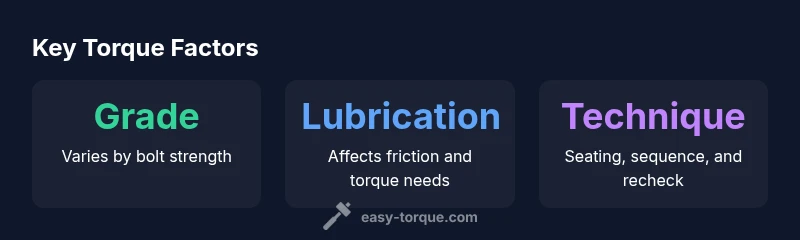
Several interrelated factors determine the exact torque you should apply to a 7/8 bolt. First, bolt grade matters greatly: a Grade 5 bolt behaves very differently from a Grade 8 or Grade 10.9 bolt in terms of friction, yield strength, and clamp potential. Second, lubrication changes the effective friction coefficient between threads; lubricated threads usually require less torque to achieve the same clamping force, but the exact adjustment depends on the lubricant type and the surface finish. Third, thread engagement length and engagement quality play a role: if threads are damaged or shortened engagement is insufficient, you must adjust and possibly avoid reusing the bolt. Fourth, environmental conditions—temperature, humidity, and corrosion—can alter both friction and material properties. Finally, assembly preloads and seating sequences influence the final clamping force; improper seating can leave joints loose even if the nominal torque matches the spec. In all cases, follow the manufacturer’s torque chart and perform a final recheck after initial seating to confirm a stable joint.
startLineHidden":false},
Step-by-step approach to determine the correct torque for a 7/8 bolt
- Identify the bolt grade and material from markings or documentation. 2) Locate the manufacturer’s torque chart for that bolt size and grade, noting whether the threads are dry, lubricated, or treated. 3) Check whether the joint involves two or more clamped plates and ensure the engagement length is standard. 4) If lubrication is used, apply the specified lubricant and adjust torque according to the chart’s lubrication row. 5) Use a calibrated torque wrench within its reliable range for the target setting, ensuring the tool is in good condition. 6) Tighten to the specified torque in the recommended sequence, then recheck after seating to account for elastic relaxation.
startLineHidden":false},
The physics behind torque: friction, grip, and clamping force
Torque is not a direct measure of clamping force; it is a controlled input aimed to achieve a desired preload in the bolt and joint. Friction between threads resists turning, so higher friction requires a higher input torque to reach the same preload. Lubrication reduces friction, which lowers the amount of torque needed; however, the relationship between torque and clamp is nonlinear and depends on thread pitch, diameter, and the coefficient of friction. The practical implication for 7/8 bolts is that a small change in lubrication or thread condition can shift the required torque by a noticeable amount. The best practice is to follow the official torque chart and to verify seating with a torque-recheck after initial tightening. Proper torque also helps prevent over-tightening, which can strip threads or yield the bolt head, and under-tightening, which allows movement and accelerated wear.
startLineHidden":false},
Practical scenarios: wheels, machinery, and structural bolts
Wheel studs and lug bolts of heavy-duty vehicles require precise torque to balance clamping force with rotor and hub integrity. Machinery bolts of 7/8 inch diameter are often subject to vibration; slight preload loss is common, so re-checks after a short run are prudent. Structural bolts used in anchorages demand stricter adherence to charts due to safety implications. In all scenarios, establish a sequence to apply torque gradually, then retorque after the bolt and parts have cooled or settled. This disciplined approach reduces the risk of loosening under dynamic loads and temperature swings. Easy Torque notes that the specific values will vary widely, so always consult the exact chart for your bolt grade and application.
startLineHidden":false},
Tools and best practices for torque accuracy
A calibrated torque wrench within a known torque range is essential for 7/8 bolts. Digital torque wrenches can offer live feedback, while click-type wrenches provide a tactile confirmation. Use clean, dry threads unless the chart specifies lubrication, and avoid thread doping that can contaminate the joint. Tools should be inspected regularly for accuracy, and calibration should be scheduled per the manufacturer’s recommendations or industry standards. When practical, perform a two-step tightening: seat firmly with a lower torque, then apply the final specified torque. Maintain a strict sequence and avoid cross-threading by aligning fasteners before tightening. Document any deviations from the chart and the reasons for them.
startLineHidden":false},
Quick-start checklist and maintenance tips
- Identify bolt grade and consult the exact torque chart.
- Verify thread cleanliness and lubrication state before tightening.
- Use a properly calibrated torque wrench within its effective range.
- Tighten in proper sequence and verify seating after initial torque.
- Re-torque after installation, vibration events, or temperature changes.
- Document torque values and any adjustments for future maintenance.
startLineHidden":false}
Typical torque guidance for 7/8 inch bolts by grade
| Bolt Size | Grade | Lubrication | Recommended Torque Range | Notes |
|---|---|---|---|---|
| 7/8 in | Grade 5 | Dry | varies by application | Consult manufacturer torque chart |
| 7/8 in | Grade 8 | Lubricated | varies by lubricant | Higher strength; verify with chart |
| 7/8 in | Grade 10.9 | Dry | consult chart | High-strength fastener; follow sequence |
Your Questions Answered
What does a 7/8 bolt torque mean for my project?
Torque indicates the input required to achieve a specific clamp preload on a 7/8 inch bolt. The exact value depends on bolt grade, lubrication, and engagement length, and must follow the manufacturer’s chart. Without the chart, you risk under- or over-tightening.
Torque shows how hard you turn to achieve a clamp. Always use the chart and recheck seating.
Is there a universal torque value for 7/8 bolts?
No. There is no single universal torque for 7/8 bolts. Values vary by grade, lubrication, thread condition, and the joint design. Always reference the manufacturer’s chart for your specific fastener.
There isn’t one value; check the chart for your bolt and application.
How does lubrication affect torque?
Lubrication reduces friction between threads, often lowering the required torque to reach the same preload. The exact change depends on the lubricant type and surface condition, so chart-based guidance is essential.
Lubrication lowers friction, which can reduce the needed torque. Always follow the chart.
Should I re-torque after wheel installation?
Yes. Re-torque after initial seating and again after a short drive or temperature change to compensate for settling and to ensure the joint remains secure.
Yes, recheck after seating and driving a bit.
What tools do I need to torque a 7/8 bolt?
A calibrated torque wrench within the bolt’s applicable range is essential. Depending on the scenario, you may also use torque sticks or digital torque wrenches for verification.
A good torque wrench is key; keep it calibrated.
What safety steps should I follow?
Wear protective gloves, use correct socket size, avoid cross-threading, and follow a proper tightening sequence. Stop and reassess if you feel binding or unusual resistance.
Gear up with the right tools and follow the sequence.
“Torque is just one piece of the puzzle; proper seating, thread cleanliness, and lubrication define real clamping force.”
Top Takeaways
- Always consult the manufacturer torque chart for 7/8 bolts.
- Lubrication changes the required torque; adjust accordingly.
- Check the seating after initial torque to ensure clamping.
- Use a calibrated torque wrench and proper technique.
- Document and re-torque after wheel installation or maintenance.