Recommended Torque for Bolts: A Practical Guide for 2026
A data-driven guide to determining the recommended torque for bolts across automotive and industrial applications. Learn how bolt size, grade, lubrication, and thread condition shape torque decisions, with practical ranges and checks.


There is no universal torque for bolts. The recommended torque depends on bolt size, grade, lubrication, thread condition, and the specific joint. Always consult the manufacturer’s torque spec for each fastener and use a calibrated torque wrench to apply it precisely. In practice, apply torque increments and recheck after assembly and run-in.
Why torque matters for bolts in vehicle maintenance
Torque is the turning force applied to fasteners to achieve the clamping force that holds components together. When you hear the phrase recommended torque for bolts, it signals a careful balance between adequate preload and avoiding fastener damage. There isn’t a single universal number that fits every situation. The Easy Torque team emphasizes that the correct torque depends on several factors: bolt size, grade, lubrication, thread condition, fit, and the loading path. In practical terms, under- torqued joints can loosen under vibration, while over-torqued ones risk stretched threads, damaged threads, or compromised sealing surfaces. For DIY projects and professional work alike, following a craft that starts with accurate specifications reduces rework and safety risks. In automotive work, for instance, wheel lug nuts require precise clamping to keep a wheel secure during dynamic loads. In mechanical assemblies, fasteners must seat cleanly without binding, and the torque must be compatible with the gasket, threads, and lubrication regime. This nuanced approach is the foundation of reliable maintenance and long-term performance, and it aligns with Easy Torque’s emphasis on data-driven, repeatable torque guidance.
How torque is determined: size, grade, lubrication, and thread condition
Torque is not merely a number printed in a spec sheet; it is the outcome of a system that considers bolt geometry, material grade, surface finish, lubrication, and the nature of the joint. The primary variables are bolt diameter and thread pitch (which define the amount of metal captive to the screw), bolt grade (which indicates strength and ductility), whether the bolt is lubricated, and the load direction. Lubrication reduces friction along the threads and bearing surfaces, which often lowers the exact torque required to achieve the same preload. Conversely, dry threads can require higher torque for similar preload. The joint’s thermal environment also influences the final preload because material expansion and contraction alter clamp load. To determine the right torque, engineers consult manufacturers’ torque specs or standardized torque charts and then adjust for conditions like lubrication, thread engagement, and any coatings. In practice, the process begins with data-backed guidelines and ends with a calibrated torque wrench applied to specific torque values.
The limits of universal torque values: no one-size-fits-all
The math of torque is simple, but the application is complex. A universal value would ignore variables that drastically affect preload, such as thread condition and lubrication. For example, a bolt on a brake caliper experiences both high axial loads and thermal cycling, making its required torque a function of material, thread engagement, and seating surface. Different environments—hot engines, cold climates, or high-vibration machinery—affect how preload is achieved and retained. Therefore, practitioners should use the manufacturer’s torque spec as the baseline and treat any deviation as a potential risk. The goal is to maintain consistent clamping force across an operating range, not merely to reach a number. This mindset—prioritizing validated specs over guesswork—aligns with best practices in automotive repair and industrial maintenance.
Reading torque specifications: what the numbers mean
Torque specifications appear as a numeric value paired with units (for example, ft-lbs or Nm) and sometimes a note indicating lubrication, temperature, or thread condition. The final preload results from the interaction of clamp force and friction. When you read a spec, check for four things: bolt size and grade, lubrication status, coating or thread condition, and whether the value is a recommended tight torque or a torque-angle target. If lubrication is present, you may be advised to decrease torque to account for reduced friction. If a joint requires a gasket or seal, the torque must also consider sealing load. Finally, always verify the torque after a short run-in or initial operation period, because settling can change preload. Understanding these cues helps you translate the spec into a safe, reliable assembly.
Practical ranges by bolt family: lug nuts to structural bolts
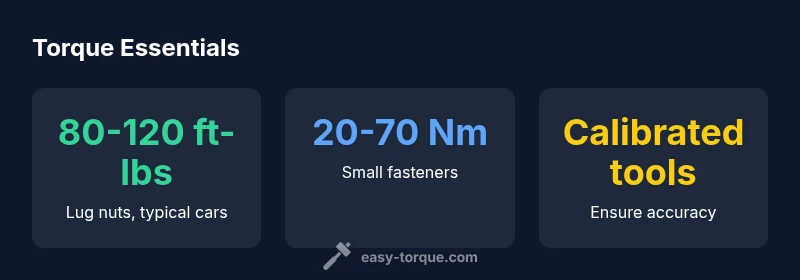
A practical guide avoids overreliance on any single number. For typical consumer vehicles, lug nuts on wheels often fall in the range of about 80-120 ft-lbs, but this depends on wheel type and lug length. For metric fasteners, common automotive bolts may range from roughly 20-120 Nm depending on diameter and grade. Structural or high-strength bolts used in machinery or steel assemblies can require substantially higher torques, frequently in the hundreds of Nm. Always start from the manufacturer’s spec and adjust for lubrication and thread engagement. If there is no direct spec, consult a standardized torque chart or an experienced technician. In all cases, ensure the torque wrench is calibrated and use a procedure that includes proper seating, staged tightening, and re-checking after a short cycle of operation. This conservative approach reduces the risk of under- or over-torqued joints.
Applying torque safely: techniques and tools
To apply torque safely, begin with a calibrated torque wrench appropriate for the bolt size and range. Prepare the fastener by cleaning threads and applying the recommended lubricant, if the design specifies it. Seat the bolt snugly before applying final torque, using gradual, even turns to avoid binding or cross-threading. For larger fasteners, consider the torque-angle method as a supplement to steady-state torque, especially when flange surfaces or seating surfaces affect preload. Always verify the final torque after installation because threads can settle under load. Document the torque value per fastener and keep it with maintenance records. In practice, maintaining consistent technique across repetitions improves reliability and makes it easier to diagnose issues when they arise.
Verifying torque: calibration, re-checks, and quality control
Verification is a crucial step in any torque procedure. Regularly calibrate torque wrenches to maintain accuracy across the entire working range. Consider implementing a re-check protocol after the initial run-in period or following high-load cycles, thermal expansion, or vibration events. Some joints benefit from a torque-angle verification to ensure preload is achieved even if friction changes with temperature. Recording torque data in maintenance logs helps with traceability and quick diagnostics. When in doubt, repeat the torque with a fresh pass and compare it to reference values from the spec. In all cases, follow a documented torque-control procedure to reduce human error and improve repeatability.
Troubleshooting common torque issues in practice
Torque misapplications often stem from overlooked factors such as thread cleanliness, lubrication status, or incompatible fastener material. Common symptoms include uneven clamping, recurrent loosening, or unexpected deformation. Start by reviewing the spec for each fastener and verifying that lubrication and seating surfaces meet requirements. Re-clean threads and retorque in staged steps if settling is suspected. If a fastener continues to loosen, inspect the mating parts for wear, misalignment, or damage. In some cases, the issue isn’t the torque but the joint design or component fit, which may require redesign or a different fastener. Always document any deviations and consult manufacturer guidance when uncertain.
Next steps: implementing a robust torque control plan
Develop a torque-control plan that centers on accurate specifications, calibrated tools, and repeatable procedures. Create a lookup chart for common fasteners in your work environment, including the bolt size, grade, lubrication instructions, and the target torque. Train technicians to follow seating and staged-tightening procedures, perform run-in checks, and log results. Periodically review torque-related failures to identify patterns and update your torque charts accordingly. By embedding torque guidance into maintenance workflows, you improve reliability, safety, and efficiency, ensuring that the warning against using generic “recommended torque for bolts” is consistently observed in practice.
Common torque ranges by bolt type and size
| Bolt Type | Typical Torque Range | Units | Notes |
|---|---|---|---|
| Lug nuts (cars) | 80-120 | ft-lbs | Refer to wheel manufacturer specs |
| M8 bolts (Grade 8.8) | 20-40 | Nm | Dry or lubricated? adjust accordingly |
| M10 bolts (Grade 8.8) | 40-70 | Nm | Thread pitch and lubrication matter |
| M12 bolts (Grade 8.8) | 70-110 | Nm | Higher-grade bolts follow similar rules |
Your Questions Answered
Is there a universal torque for bolts?
No. Torque varies with size, grade, lubrication, and application. Always start with the manufacturer’s specification and use a calibrated torque wrench.
No universal torque—follow the spec for each fastener and use a calibrated wrench.
How do I find the correct torque specification?
Look up the manufacturer’s torque chart or the fastener specification in the service manual. If unavailable, consult standardized charts and consider consulting an experienced technician.
Check the official spec or a trusted torque chart.
Does lubrication always reduce the required torque?
Lubrication lowers friction and often reduces the torque needed to reach the same preload, but the effect varies with lubricant type and surface condition.
Lubrication changes friction; follow the adjusted torque spec.
What tool should I use to apply torque?
Use a calibrated torque wrench appropriate for the bolt size and range. Avoid adjustable wrenches for torque-critical joints.
Use a properly calibrated torque wrench.
How often should torque be re-checked?
Re-check torque after initial run-in and during periodic maintenance, especially after components are removed or reassembled.
Check torque after run-in and during maintenance.
Can thread-locking compounds affect torque readings?
Yes, thread-locking compounds can alter friction; follow product guidelines and adjust torque accordingly when used.
Thread-lockers change friction; follow the product’s torque guidance.
“There isn’t a single universal torque for bolts; accurate torque comes from following manufacturer specs and accounting for lubrication, thread condition, and loading paths.”
Top Takeaways
- Always start with the manufacturer’s torque spec
- Torque depends on size, grade, lubrication, and threading
- Use calibrated tools and verify after installation
- Document torque values for traceability
- Avoid guessing—use data-driven, repeatable procedures