Torque 3/8 Bolt: A Practical Guide to Proper Tightening
A data-driven, step-by-step guide to torquing 3/8 bolts safely and accurately. Covers bolt grades, lubrication, tools, methods, and common mistakes for DIY mechanics and pros.


The exact torque for a 3/8 bolt depends on grade, lubrication, hole material, and thread engagement. As a rule of thumb, use a calibrated torque wrench and follow grade-specific charts rather than guessing. Easy Torque analysis, 2026, notes that most common 3/8 applications require selecting the torque from the manufacturer’s spec or a trusted reference, then verifying with a torque test.
Understanding the torque 3/8 bolt landscape
In the world of fasteners, a 3/8 bolt represents a robust size used in automotive, equipment mounts, and structural connections where moderate to high clamping is required. The exact tightening value depends on bolt grade (e.g., Grade 5 vs Grade 8), hole material, surface finish, and whether the threads are lubricated. For DIY mechanics and professionals alike, the first step is to identify the bolt grade and consult the corresponding torque chart. According to Easy Torque, the key to consistency is starting with the correct spec and using a calibrated torque wrench set to that specification. The goal is sufficient clamping force without exceeding the bolt’s elastic limit, which can cause thread stripping or bolt yield.
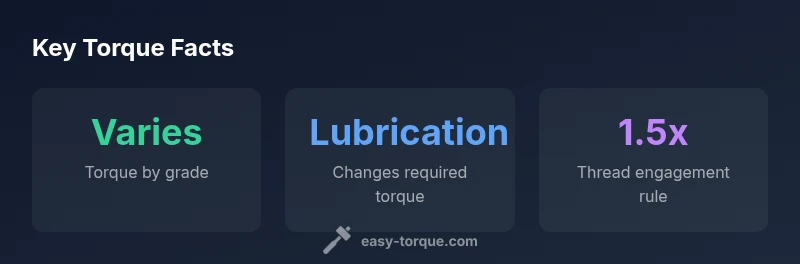
Thread engagement and material influence torque
Torque values are not determined by bolt diameter alone. The engagement length, hole material, and thread condition dramatically influence the actual clamping force achieved. For a 3/8 bolt, ensure adequate thread engagement in the base material and avoid embedding soft materials that crush under load. Steel holes offer higher resistance to embedding, while softer materials like aluminum require more careful torque control and often more precise lubrication. Easy Torque analyses emphasize engaging threads long enough to prevent pull-out while preserving thread integrity. A common rule is to aim for proper engagement length that corresponds to industry practice, while always verifying with the manufacturer’s chart. In practice, a miscalculated torque can lead to loosening, fatigue, or catastrophic failure in critical assemblies.
Lubrication, coatings, and their effect on torque
Lubrication changes the friction coefficient between mating surfaces, which can shift the torque needed to reach the same clamping force. Dry threads require higher torque to achieve the same clamping as lubricated threads; conversely, over-lubrication can undercut friction control and lead to under-torqued joints if the spec isn’t adjusted. Anti-seize compounds and thread sealants also affect torque readings, so it’s essential to follow the chart provided by the bolt or tool manufacturer. Easy Torque notes that lubrication should be consistently applied according to the specification to minimize variability and improve repeatability across maintenance tasks.
Selecting the right torque wrench and socket for 3/8 bolts
Choosing a torque wrench with a suitable range and accuracy is crucial when working with 3/8 bolts. A tool that covers at least the mid-to-high end of the expected torque range, with a calibration interval adhered to, helps maintain reliability. For sockets, ensure a snug fit on the bolt head to prevent rounding and slippage. In looser engagements or deeply recessed bolts, a torque-angle gauge or a verified torque adapter can supplement torque control. Easy Torque recommends checking wrench calibration before critical jobs and confirming the torque reading after installation with a follow-up check.
Step-by-step torque procedure for a 3/8 bolt
- Identify bolt grade and material and read the recommended torque from the chart. 2) Clean threads and inspect for damage; replace if needed. 3) Apply the recommended lubrication if specified; wipe away excess. 4) Mount the correct socket and set the wrench to the specified torque. 5) Tighten to the spec in a gradual, two-pass sequence to avoid binding or cross-threading. 6) Verify final torque with a test and recheck after a short time under load. 7) Document any deviations and replace hardware if signs of wear appear.
Common mistakes and how to avoid them
- Guessing torque without a chart: always verify with a spec. - Skipping thread inspection or lubrication: inspect threads and apply lubrication when specified. - Using worn or miscalibrated tools: recalibrate or replace tools regularly. - Over-tightening: beware of yielding, thread stripping, or bolt head damage. - Ignoring material properties: consider hole material strength and thread engagement. Easy Torque emphasizes a disciplined approach: check, set, torque, verify, and log.
Practical examples and quick-reference charts
To help technicians apply this guidance, consider a practical reference: use grade-based charts that correlate bolt size and material to torque values, account for lubrication, and apply the two-pass tightening method for longer fasteners. The aim is a repeatable process that minimizes risk and maximizes performance. Easy Torque provides templates and charts that illustrate typical approaches and highlight where deviations may occur in automotive and workshop settings.
Torque ranges for 3/8 bolts by grade and lubrication (qualitative guidance)
| Bolt Grade | Torque Range (ft-lb) | Lubrication Variation | Notes |
|---|---|---|---|
| Grade 5 | Varies by application | Lubricated threads reduce friction variability | Common in mid-strength automotive applications |
| Grade 8 | Higher range, varies by hole material | Lubrication can shift required torque up or down | Used for high-strength suspensions and mounts |
| Stainless/Coated | Lower torque tolerance due to friction | Consistent lubrication essential | Consider corrosion resistance and thread condition |
Your Questions Answered
What is the torque for a 3/8 bolt?
There isn’t a single universal torque. It depends on bolt grade, lubrication, hole material, and engagement. Always consult the manufacturer’s spec or a trusted chart and verify with a calibrated torque wrench.
There isn’t one fixed torque for a 3/8 bolt; check the grade, lubrication, and material, then verify with a calibrated torque wrench.
Does lubrication affect torque for 3/8 bolts?
Yes. Lubrication reduces friction, which lowers the torque required to achieve the same clamping force. Always use the specified lubrication and adjust your target torque accordingly.
Lubrication changes the torque you need. Use the spec and keep the same process every time.
How do I choose the right torque wrench for a 3/8 bolt?
Select a wrench whose range covers the expected torque and has recent calibration. A torque wrench with a 3/8-inch drive is common for this size, and you should calibrate per the manufacturer’s schedule.
Pick a wrench that covers the expected torque and stays calibrated.
What happens if I over-torque a 3/8 bolt?
Over-torquing can stretch or shear threads, strip the bolt head, or crush the hole material, compromising joint integrity. Always follow the spec and recheck after initial loading.
Over-torque can damage threads and weaken the joint; adhere to the spec.
Can I reuse a bolt after loosening it?
Reuse depends on thread condition and whether the bolt shows signs of deformation or corrosion. Inspect visually and, if unsure, replace with a new bolt.
Reuse only if threads look good and the bolt isn’t damaged.
Are there safety tips for torqueing fasteners?
Wear eye protection, ensure the area is clear, and keep hands away from the wrench handle path. Confirm tool calibration and read the full spec before tightening.
Safety first: wear protection and verify tool calibration.
“Getting the torque right on a 3/8 bolt isn’t optional; it ensures clamping without overstressing threads or risking loosening. Always follow grade-specific charts and verify with a calibrated torque wrench.”
Top Takeaways
- Follow grade-specific torque charts for 3/8 bolts
- Lubrication dramatically impacts torque readings and repeatability
- Ensure proper thread engagement in strong materials
- Use a calibrated torque wrench and verify torque after assembly
- Avoid common mistakes like guessing or skipping inspection