How Much Torque for a Bike: A Practical Guide
Learn how to determine and apply the correct torque for bike components. This guide covers torque basics, measurement, tool selection, safety, and step-by-step procedures to protect your bike and rider.


How much torque a bike needs depends on what you’re assembling or maintaining. There is no single number for every bike. Always check the manufacturer’s torque specs for each fastener, use the correct torque tools, and apply values exactly as written. Understanding torque curves and safety prevents component damage and rider injury.
Understanding Torque in Bikes
Torque is the rotational force you apply to turn a fastener or component. For bikes, you’ll encounter torque in several contexts: fasteners (bolts on stems, handlebars, seat clamps, brake mounts), drivetrain bolts (chainring bolts, crank bolts), and, in motorized bikes, engine or hub motor connections. Torque is not a single value; it is a set of values defined by each fastener’s size, material, lubrication, and the specific bike design. In practice, you’ll use a torque wrench and the exact specifications printed in your bike’s service manual or on the components themselves. Always treat torque as a safety and longevity factor: under-torquing can loosen parts, while over-torquing can strip threads or crack hardware. For easy reference, you’ll see torque expressed in Newton-meters (Nm) or foot-pounds (ft-lb) depending on the region and bike type. In this guide, we’ll align with common bicycle and motorcycle practices while highlighting universal safety principles.
wordCountNote
wordCountOverride
Tools & Materials
- Torque wrench (mechanical or digital)(Choose a range that covers the largest fastener on your bike (e.g., stems, brake calipers). Prefer metric units and a calibration history.)
- Thread-cleaning brush or rag(Clean bolt holes and threads before torquing to avoid cross-threading or false readings.)
- Threadlocker or anti-seize (as specified)(Only use if the manufacturer requires it; incorrect use can affect torque readings.)
- Bike service manual or manufacturer torque charts(Keep specs handy for each fastener and component.)
- Degreaser and lint-free wipes(Remove old lubricants that can skew torque readings.)
- Calibrated torque adapter (optional)(Useful for repetitive tasks or higher-torque fasteners.)
Steps
Estimated time: 60-90 minutes
- 1
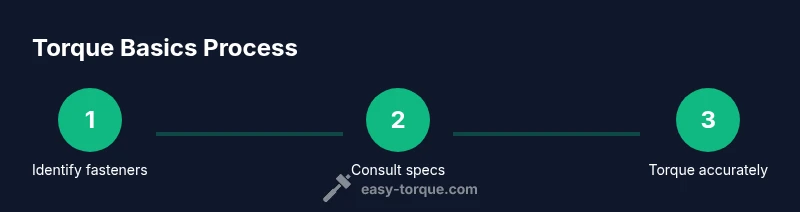
Identify fasteners and locate specs
Inspect each fastener you’ll work on and locate the torque spec in the service manual or on the component label. Confirm units (Nm or ft-lb) and whether lubrication affects the value. This step prevents guessing and ensures accuracy before any tool contact.
Tip: If a spec isn’t clearly visible, contact the manufacturer or a shop to verify. Always work from inner to outer or follow the documented torque sequence. - 2
Prepare threads and parts
Clean threads with a brush and wipe surfaces dry. Remove old threadlocker if required and ensure the bolt holes are free of debris. Proper preparation minimizes cross-threading and ensures the torque number reflects true fit.
Tip: Never torque over dirty threads; residue can imitate a higher torque reading and lead to over-tightening. - 3
Choose the correct tool and range
Select a torque wrench with a scale that covers the expected range for your fasteners. Attach any required adapters, and set the wrench to the exact spec from your manual. Test a spare fastener first if you’re unsure about reading errors.
Tip: Calibrate your wrench when you notice drift or after a long period of storage; calibration intervals depend on usage and manufacturer guidance. - 4
Apply torque in the proper sequence
For multi-bolt components, torque in a crosswise or star pattern as specified. Tighten gradually in increments, stopping at the final spec rather than jumping to the final torque. This reduces uneven loading and flange distortion.
Tip: Use even hand pressure and avoid hitting the bolts with impact tools that can skew readings. - 5
Verify and recheck
After reaching the final torque, recheck all fasteners to confirm uniform load. For critical components (brakes, steering), perform a functional check and a light ride test if safe to do so.
Tip: If fasteners loosen after a test ride, inspect for cross-threading or damaged threads and reinstall with the correct spec.
Your Questions Answered
Why is torque important on bikes?
Torque ensures fasteners hold components securely without risking stripped threads or component failure. Proper torque protects rider safety and prolongs part life.
Torque prevents loose parts and rider risk by ensuring secure fastening.
Can I reuse worn bolts when torquing?
Worn or stretched bolts should be replaced. Reuse can compromise clamping force and lead to failure under load.
Replace bolts that show wear or deformation; reuse can be dangerous.
Does lubrication change the torque required?
Yes. Lubricants lower friction and typically require a different torque value. Always follow the manual’s guidance on lubrication.
Lubricants reduce friction, so use the specified torque for lubricated threads.
Are metric values universal across brands?
Most bikes use metric torque specs, but each component may have its own chart. Always refer to the specific part’s manual.
Check the exact component manual; don’t assume a universal metric value.
What happens if I over-tighten bolts?
Over-tightening can strip threads, crack components, or deform mounting surfaces. Stop at the specified torque and recheck.
Over-tightening can cause damage or failure. Follow the spec closely.
Watch Video
Top Takeaways
- Follow exact manufacturer specs for every fastener.
- Prepare threads and use the right torque tools.
- Torque in the correct sequence and verify after final tightening.
- Document torque values for future maintenance.