SAE Bolt Torque Chart: Reading, Applying, and Verifying Tightening Torque
Learn to use SAE bolt torque charts to determine proper tightening torque by bolt size, grade, and lubrication. Practical steps, common pitfalls, and data-backed guidance for DIY, technicians, and enthusiasts.


A SAE bolt torque chart is a reference guide that translates bolt diameter, thread pitch, grade, and lubrication into the recommended tightening torque. By aligning fastener class with torque values, technicians can predict clamping force and avoid under- or over-tightening. For automotive applications, charts cover common lug nuts, exhaust bolts, and engine fasteners.
Why SAE bolt torque charts matter
Torque charts are more than reference numbers; they are practical tools that connect theory to real-world tightening. In the simplest terms, a chart maps bolt size, grade, and lubrication to a target torque. This means technicians can anticipate clamping force without relying on feel alone, which is especially valuable when surfaces are dirty, coatings are present, or working in tight spaces. A reliable chart reduces guesswork, minimizes retorque cycles, and helps ensure consistency across maintenance tasks—from lug-nut replacements on a weekend project to engine rebuilds in a shop. According to Easy Torque, using a chart fosters repeatability and traceability: you can document the specific values used for each fastener and defend your approach if a repair later fails. For DIYers, this translates into safer, more dependable results and a higher level of confidence when tackling unfamiliar fasteners. The practical payoff is clear: fewer surprises during disassembly and a lower risk of damaging threads or components.
How to interpret bolt size, grade, and lubrication on charts
Torque charts typically break down fasteners by nominal size (diameter), thread pitch, and material grade. The size determines the base torque; the grade indicates the strength and the corresponding torque ceiling; lubrication influences the friction coefficient, which can shift the required torque by a meaningful margin. When you read a chart, start by locating the bolt size (for example, 1/4 in or M8) and then match the grade (Grade 5 vs Grade 8 or 8.8 vs 10.9 in metric systems). Finally, apply the lubrication note. If the chart specifies a lubricated vs dry condition, you must use the corresponding torque value. Remember that the same size bolt can require different torque values depending on whether you’re working in steel, aluminum, or another substrate, and whether you coat the bolt with anti-seize or a thread lubricant.
Reading the chart by common SAE bolt families
SAE fasteners commonly fall into families such as lug nuts and engine bolts. For lug nuts, the chart often lists sizes like 1/2-20 or 9/16-18, with different grades and friction conditions. Engine-related fasteners may be in the same imperial system but with more stringent torque targets due to critical clamping. When reading, verify: (1) size and pitch, (2) grade, (3) lubrication state, and (4) whether the application is critical (e.g., powertrain vs accessory). In practice, you’ll use the chart as a baseline and then fine-tune based on additional manufacturer or service-information data. Where charts disagree, prioritize the most specific source for your bolt and application, and consider performing a torque verification test with caution.
Common mistakes and how to avoid them
Common pitfalls include assuming dry-tastings apply to lubricated fasteners, mixing chart references from different standards, and failing to account for threadlocking compounds. Another error is tightening to a number without checking the surface condition—rusted or dirty threads can alter friction dramatically. Always confirm the chart corresponds to the bolt’s material and coating, ensure clean threads, and use the correct lubricant if required. When in doubt, start at the lower end of the range and verify clamping through a controlled test, rather than pushing to the upper end right away. Regularly review and update charts as lubricants or coatings evolve in your shop.
Step-by-step: applying an SAE bolt torque chart to a repair
- Identify the bolt size and pitch using a caliper or thread gauge. 2) Determine the grade and whether the bolt is dry or lubricated. 3) Locate the chart entry that matches those attributes. 4) Apply the recommended torque with a calibrated torque wrench, using a clean, dry surface. 5) Recheck after a short test run or functional check to confirm proper clamp. 6) Document the values used for future reference and avoid cross-applying values from different bolt families.
Best practices for accuracy and maintenance
Keep your torque charts up to date by validating them against manufacturer specifications or service bulletins. Use clean threads and approved lubricants, and verify instrument calibration regularly. Create a standard operating procedure to ensure everyone in your shop follows the same process, including lug nuts, exhaust bolts, and engine fasteners. When replacing critical fasteners, cross-check with torque-to-yield data if available, and favor charts from reputable sources. Finally, train technicians to recognize when a chart may not apply due to material changes, coatings, or environmental conditions.
Sample reference table for common SAE bolt sizes and torque ranges
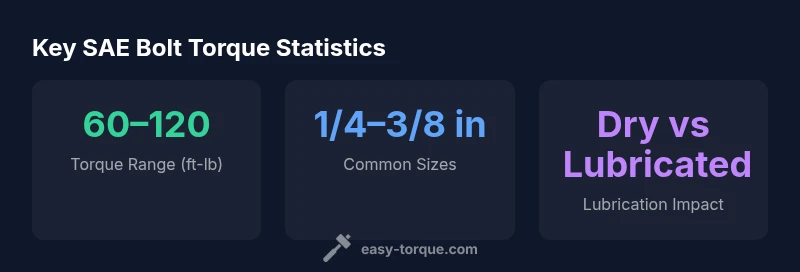
| Bolt Size (SAE) | Grade | Lubrication | Torque Range (ft-lb) |
|---|---|---|---|
| 1/4 in | Grade 2 | Dry | 7–9 |
| 1/4 in | Grade 5 | Lubricated | 7–9 |
| 5/16 in | Grade 8 | Dry | 20–25 |
| 3/8 in | Grade 5 | Lubricated | 25–35 |
Your Questions Answered
What is a SAE bolt torque chart?
It's a reference that maps bolt size, grade, and lubrication to a target torque. It helps ensure proper clamping and prevent under- or over-tightening.
A torque chart shows exact numbers for your bolt size and lubrication so you can tighten it correctly.
Does lubrication always increase torque requirements?
Lubricants reduce friction and usually increase the torque needed to achieve the same clamping force, though the exact change depends on the lubricant and surface.
Lubrication lowers friction, so you may need more torque to reach the same clamping.
Can I use metric charts for SAE bolts?
No; SAE charts are for imperial-size bolts and may not match metric fasteners precisely. Use the chart that corresponds to your bolt type and standard.
Use the chart that matches your bolt, size, and standard.
What about pitch and lubrication when using torque charts?
The chart uses size and grade; accurate pitch and lubrication data are essential. If in doubt, consult manufacturer specs.
Make sure you know the bolt’s pitch and lubricant to get the right torque.
What should I do if no chart matches my bolt?
Estimate using the closest size and grade and verify with a torque wrench within a safe range, then re-check.
If there’s no chart, use the nearest size and test.
“A SAE bolt torque chart provides a data-driven baseline for fastener tightening, helping technicians avoid guesswork and over-tightening.”
Top Takeaways
- Match torque values to bolt size, grade, and lubrication.
- Account for lubrication to avoid under-tightening.
- Verify torque with a calibrated torque wrench.
- Consult the chart for lug nuts and engine bolts.
- Update charts when lubricant or coating changes.