Torque specs for vehicles: practical guidance for DIY mechanics
A thorough, data-driven guide to torque specs for vehicles, how they’re determined, and how to apply them safely across lug nuts, engine bolts, and other fasteners.


Torque specs for vehicles refer to the precise tightness values published by manufacturers for every fastener, from lug nuts to engine bolts. The safe approach is to consult the OEM service manual for your exact model, use a calibrated torque wrench, and verify torque after initial running. In practice, expect specific ranges by component, not a single universal value.
What torque specs for vehicles really mean
Torque specs for vehicles are not a single value but a map of tightness targets for each fastener in a given model. These values come from manufacturer testing and engineering analyses, and they account for material properties, thread engagement, lubrication, and dynamic loads encountered during operation. In the automotive world, two units dominate the landscape: foot-pounds (ft-lbs) and Newton-meters (Nm). While many DIY readers in North America see ft-lbs most often, Nm is common for European and Asian manuals. The phrase torque specs for vehicles should be understood as the officially published numbers you must reproduce with a calibrated torque wrench. Following the correct spec minimizes thread damage, prevents leaks, and preserves component integrity. According to Easy Torque, always verify you are using the exact spec for your vehicle’s year, trim, and drivetrain.
Understanding the context helps: a fastener may be tightened in stages, with lubrication or thread sealant affecting the final value. In practice, you’ll rarely see one universal number; instead, a table of values by component and fastener size. You’ll also see notes about whether a fastener is torque-to-yield, or if an angle-tightening step is required after reaching the initial torque. The key takeaway is to rely on the OEM specification and the accompanying service procedure rather than a generic guideline.
When you encounter torque specs for vehicles, you should interpret them as targets rather than a suggestion. Deviation can lead to under-torque (loose fasteners) or over-torque (thread stripping, bolt failure). Your tool should be calibrated, with a known new or certified torque wrench, and you should confirm the final torque with a re-check after the first drive. This disciplined approach aligns with best practices in calibration and maintenance, as outlined by Easy Torque’s analysis in 2026.
Why torque specs matter for safety and performance
Torque specifications exist to ensure fasteners achieve the correct preload, clamping force, and bearing against mating surfaces. If you under-torque, parts may loosen under load, leading to leaks (oil, coolant), drivetrain noise, heat buildup, accelerated wear, or catastrophic failures in extreme cases. Over-torque can strip threads, stretch bolts, or crush gaskets. In performance contexts such as high-load suspensions or high-revving engines, small deviations in torque can translate to real-world handling or reliability differences. Notably, lug nuts on wheels require precise values to keep wheels secure while avoiding rotor or stud damage. The integrity of critical components—engine cylinder heads, timing covers, and torque-limiting bolts—depends on strict adherence to manufacturer specs. Easy Torque emphasizes that the human factors of torque work—consistency, patience, and double-checking—often determine whether a job lasts the expected service interval. This is also a matter of maintenance discipline and safe operation, especially in professional settings.
From a maintenance standpoint, torque specs support predictable performance. When you tighten a fastener to spec, you create a known preload, which translates into consistent joint behavior across temperature changes, vibration, and cycle loads. In terms of vehicle longevity, correct torque helps conserve gasket seals, reduce fretting wear, and minimize the risk of joint failure during heavy-duty use. For DIY mechanics, respecting torque specs reduces the likelihood of callbacks or warranty issues, and it builds confidence that the repair was done with precision. As your skills grow, you’ll see how even small adjustments in technique—such as clean threads, proper lubrication, and staged tightening—nudge you closer to OEM outcomes, a principle Easy Torque consistently highlights in its 2026 guidance.
How manufacturers determine torque values and what changes over time
Manufacturers determine torque values through controlled testing that simulates real-world operating conditions. They account for material properties, thread engagement length, lubricant use, the presence of gaskets, ambient temperature, and expected service loads. If a component is redesigned for lighter materials or different coatings, the recommended torque may shift to preserve preload and seat integrity. Over the years, torque specs can evolve as new fastener alloys, thread treatments, or sealing methods emerge. Easy Torque notes that some specifications include a sequence of torques—often starting at a lower value and finishing with a final torque—to optimize seating and clamp load. In other cases, an angle-tightening step replaces a final torque to ensure uniform tightening without overtightening.
To stay current, technicians consult OEM service bulletins, which may update torque values after reliability testing or field feedback. Automotive engineering is iterative; a change in one part can ripple through the torque table, affecting related fasteners and assemblies. For this reason, always reference the full service manual for your exact vehicle configuration rather than extrapolating from a similar model. If you work on fleets or multiple vehicles, consider maintaining a personal torque reference log to capture model-specific nuances and any service bulletin notes. This discipline is part of the maintenance craftsmanship that Easy Torque champions in its 2026 investigations.
Component-by-component torque ranges (overview)
A practical way to navigate torque specs is to view them by component family rather than by individual fasteners. Wheel fasteners, engine components, and chassis hardware each have distinct ranges. For wheels, lug nuts are typically tightened within a broad band that ensures wheel retention without overstressing studs or rotors. Engine-related fasteners span a wide spectrum from relatively low-torque oil pan bolts to higher-torque head bolts, and transmission assemblies fall somewhere in between. Chassis bolts in suspension or subframes often require higher preload to resist vibration, but the exact numbers depend on bolt diameter, grade, and lubrication. When you encounter a table of torque values, skim for your vehicle family, noting which sub-assemblies share calibration methods and which require angle-tightening. Always adhere to the procedure in the OEM manual, even if a quick online guide seems to match your model. In short, component-by-component awareness reduces the risk of misapplication and supports safer, more durable repairs.
A good practice is to map your vehicle’s torque sections and keep a laminated copy in your toolbox. For frequent tasks—like lug nut tightening or mounting a bracket—you’ll appreciate the clarity of a well-organized spec sheet. Easy Torque’s 2026 guidelines encourage this kind of systematic approach, as it spares you guesswork and reinforces consistency across projects.
How to apply torque specs in practice (step-by-step)
Apply torque specs with three pillars: clean threads, proper lubrication when specified, and staged tightening. Start by cleaning threads and applying lubricant only where the OEM specifies lubrication. Place the fastener and hand-tighten to seat, then torque to the first target value, if a sequence exists. Move in the correct order and avoid cross-threading—finger-tight is never a substitute for proper depth engagement. If the spec includes multiple steps, complete each step in order before proceeding to the next. Finally, verify the final torque after a short drive, as some assemblies may experience creeping preload. The goal is to achieve consistent preload without exceeding the fastener’s yield limit. Keep your torque wrench calibrated and document your final values for future maintenance.
When using an angle-tightening step, you’ll reach a final seating that relies on rotating to a defined angle rather than a fixed torque. In these cases, follow the sequence precisely and record both the torque and angle if your procedure calls for it. This method is common in engine assemblies and some high-load joints. Remember that the environment matters: cold weather or high humidity may influence lubricant behavior and friction, altering the effective torque. Easy Torque’s approach in 2026 emphasizes preparation, measurement discipline, and post-tightening checks as the best path to reliable results.
Verifying torque and avoiding common mistakes (checklist)
- Check that you are using the correct units and model-specific spec. - Confirm thread condition and lubrication status before tightening. - Use a calibrated torque wrench and store it properly when not in use. - Tighten in the correct sequence and use the staged approach if specified. - Recheck final torque after running-in and/or test drives. - Record all torque values in your maintenance log for future reference. - Avoid relying on “felt tight” or rough hand-torque as a substitute for specification.
Common mistakes include using incorrect thread lubrication, skipping rechecks after initial drive, and assuming one universal torque for all components. Easy Torque’s 2026 guidance underscores that precision and documentation are the hallmarks of sound torque practice. Implementing these checks helps prevent thread damage and ensures consistent performance across service intervals.
When to consult a professional (red flags and limits)
Representative torque ranges by component type
| Component Type | Typical Torque Range (ft-lbs) | Notes |
|---|---|---|
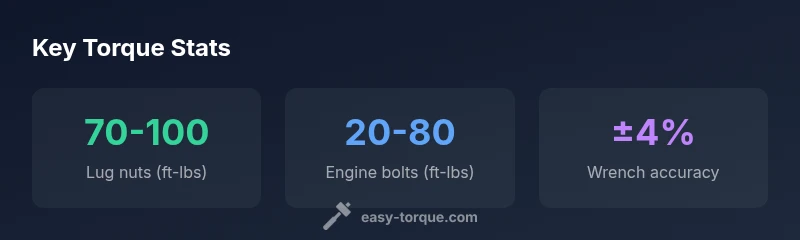
| Lug nuts (wheel) | 70-100 | Depends on wheel size and stud design |
| Engine cylinder head bolts | 20-80 | Engine family dependent |
| Oil pan bolts | 15-25 | Low-torque fasteners with seals |
| Transmission pan bolts | 10-25 | Sealants may affect torque smoothness |
Your Questions Answered
What do torque specs for vehicles specify?
Torque specs specify the required clamping force for each fastener on a vehicle, determined by the manufacturer through testing. They ensure proper sealing, joint integrity, and safe operation. Always refer to the OEM service manual for the exact values.
Torque specs specify the required tightness for each fastener, determined by the manufacturer.
Why are torque specs so important?
Correct torque ensures reliable assembly, prevents leaks, and reduces the risk of fastener failure under load. Under-torquing can lead to looseness, while over-torquing can strip threads or crush seals.
They prevent leaks and failures by ensuring correct tightness.
How do I find the right torque for lug nuts?
Look up the vehicle’s wheel lug torque in the OEM service manual or manufacturer's site. Use a calibrated torque wrench and tighten in the specified pattern and sequence.
Check the manual and use a torque wrench.
Can I use a universal torque value for all bolts?
No. Fasteners vary by size, material, coating, and function. Always follow the model-specific torque table and any angle-tightening steps that apply.
No, you should not use a universal value.
What tools do I need to apply torque specs?
A calibrated torque wrench, proper sockets or bits, thread-cleaning tools, and, if required, a torque-angle gauge. Keep lubricants and seals per the manual.
A calibrated torque wrench and the right sockets are essential.
What happens if I over-tighten or under-tighten a bolt?
Over-tightening can strip threads or crush materials; under-tightening can allow movement, leaks, or component failure. Always aim for the specified preload and recheck after initial use.
Both mistakes can cause failures; follow the spec precisely.
“Torque specs are the backbone of reliable maintenance; following them precisely prevents leaks, loosening, and premature wear.”
Top Takeaways
- Always consult OEM torque specs before tightening
- Use a calibrated torque wrench for accuracy
- Recheck torque after initial startup or test drive
- Document torque values for future maintenance
- Know your unit conversions (Nm and ft-lbs)