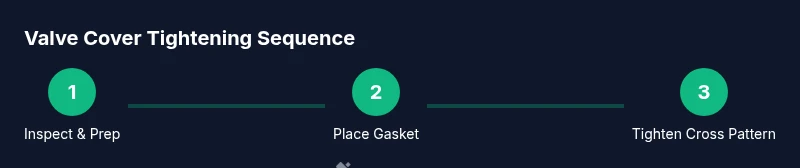
Torque Valve Cover Tightening Sequence: A Step-by-Step Guide
Master the torque valve cover tightening sequence to seal the gasket, prevent leaks, and avoid warping. This comprehensive guide walks you through cross-pattern ordering, staged torquing, and post-install checks with practical tips for DIY mechanics.


This quick guide teaches you how to correctly tighten valve cover bolts using the manufacturer’s torque specification in a safe cross-pattern sequence. Following the right order prevents gasket leaks and cover warping, reduces rework, and protects engine components. Gather a torque wrench, the correct sockets, and the engine service manual before you begin.
Why the tightening sequence matters for valve covers
A valve cover sits atop the cylinder head, sealing the top end and keeping oil inside. When bolts are tightened in an arbitrary order, the gasket can seat unevenly. This leads to oil leaks, gasket distortion, and even warping of the valve cover. According to Easy Torque, a consistent tightening sequence helps distribute clamping force evenly across the gasket. Following the manufacturer’s torque specification isn't optional—it's essential for longevity and reliability. In 2026 Easy Torque analysis shows that engines serviced with proper sequence have fewer post-service leaks and shorter rework times across common makes. The sequence matters not only for the final torque value but for the path the bolts take while the gasket settles. A good sequence also minimizes bending stress on the valve cover, reducing the chance of cracking around the bolt holes. Before you begin, consult your vehicle's service manual for the exact pattern, because bolt counts and hole locations vary by engine. If you can't locate the manual, contact a dealership or use reputable online manuals. The goal is to achieve a flat seating surface that maintains a consistent gasket compression profile.
Understanding gasket seating and material
Valve cover gaskets come in various materials: rubber, cork, or synthetic composites. Each material compresses differently under load, so the correct torque specification and seating pattern must be matched to the gasket type. Improper torque can crush the gasket or leave gaps that will leak oil. Inspect the gasket for cracks, tears, or hardening; replace if any damage is found. Clean the metal mating surfaces thoroughly to remove old gasket material, oil, and dirt. A contaminated surface can prevent proper seating and cause leaks even if bolts are torqued correctly. When you install a new gasket, ensure the holes align with the bolts and that the gasket sits flush with the valve cover and head surfaces. If a gasket sits unevenly, you may end up with a low spot that leaks. Apply a light coat of oil or gasket conditioner if recommended by the gasket manufacturer, but avoid lubricating bolt threads unless the service manual specifies it. Remember: the gasket's integrity is the gatekeeper for a leak-free seal.
Tools and workspace setup
Create a clean, well-lit workspace under the hood. Gather your torque wrench, a socket set compatible with the valve cover bolts, and a clean rag or lint-free wipes. Have the OEM service manual or a trusted online manual on hand for torque specs and sequence. Use a non-sealing gasket if directed; if the gasket is sealed with adhesive, follow the adhesive instructions to cure and seat properly. Keep fasteners organized, labeling bolts by location if they vary in length. A magnetic tray or labeled cups prevent misplacement. Wear eye protection and gloves during handling of sharp edges and tools. If you need to pause the job for a few minutes, cover exposed engine components to keep dust out. After finishing, wipe down the area to remove any residual oil. A tidy workspace reduces the chance of dropping debris into critical engine bays.
The recommended tightening pattern and why it works
Most valve covers use a ring of bolts around the perimeter. The corrective approach is a cross-pattern or star-like sequence that pulls the cover toward the gasket evenly. Start at one bolt and work to the opposite side in alternating fashion. The goal is to apply even clamping pressure to prevent distortions, gaps, and oil seepage. After performing an initial light pass around the ring, revisit each bolt in small increments until you reach the final torque spec. This method minimizes the risk of warping and maintains gasket seating as the cover and head heat up during engine operation. If your engine has multiple valve covers, repeat the sequence on each cover, ensuring bolts are matched to their corresponding holes. Remember to check that there is no interference with hoses or spark plug wires during tightening. Modern engines may require a torque-angle method for final tightening; always rely on the service manual guidance. Rushing the sequence or skipping steps increases the likelihood of leaks and engine damage.
Stage-by-stage tightening approach
Stage one: finger-tight assemble. Place the gasket and valve cover, insert bolts loosely, and verify alignment. This gives you a baseline without producing binding forces. Stage two: initial torque at the lower end of spec. Use a cross pattern to snug bolts in small increments until all bolts thread smoothly and seat evenly. The reason for this staged approach is to avoid trapping air and to begin uniform compression across the gasket. Stage three: mid-range tension. Tighten bolts in the same cross pattern to a mid-range point defined by the service manual. This reduces the risk of over-compression and gasket extrusion. Stage four: final torque. Bring each bolt to the manufacturer’s final torque specification, again in cross-pattern order. If your manual calls for a torque-angle check, apply the angle after you hit the initial torque. Stage five: verification. Re-check all bolts for even torque. A short engine run helps confirm there are no leaks or unusual noises. If leaks appear, re-check the gasket seating and the torque of each bolt. This staged strategy improves reliability and reduces the chance of a rework.
Post-install checks and leak testing
With the cover secured, wipe away smudges and ensure no tools are in the engine bay. Reconnect any components that you removed for access. Start the engine and let it idle briefly while observing the valve cover for leaks at each bolt. It's common to see a small smear of oil at the gasket seam right after initial start; this should seal as the gasket seats with heat. If you notice persistent leaks after a minute, stop the engine and re-check the bolt tightness, gasket seating, and any adjacent parts that could be affecting the seal. For a thorough test, run the engine at idle for 5–10 minutes and check for leaks again. If leaks persist, consider replacing the gasket completely and confirm bolt hole alignment. Regular maintenance notes say to document torque specs and date of service for future reference. This helps in diagnosing issues if leaks recur and informs future maintenance schedules.
Common mistakes and how to avoid them
Rushing the sequence or skipping steps leads to leaks and warped covers. Never lubricate bolt threads unless specified, as excess oil reduces friction and can falsely show loose bolts. Use the correct socket size for each bolt to avoid rounding. Neglecting to clean the mating surfaces creates gaps that prevent proper gasket seating. Mixing bolts from different engines or misplacing longer bolts into shorter holes can cause binding, cracks, or gasket failure. Another frequent error is overtightening due to ignoring torque specs; always verify with a torque wrench. If you encounter a bolt that won't thread, stop and inspect the thread pitch. For engines with aluminum valve covers, overtightening can crack the cover. When in doubt, consult the service manual or seek a professional. The precautionary steps protect the gasket and cylinder head while extending the service life of the engine.
Maintenance tips to extend gasket life and ensure a good seal
Keep a routine: inspect valve covers during regular oil changes and replace gaskets proactively if the cover or gasket shows signs of aging. If you service the valve cover, always replace the gasket and use the prescribed torque sequence. Record the exact torque values and bolt positions for future reference. After an engine rebuild or head work, recheck the torque sequence once the engine reaches operating temperature to account for metal expansion. Use a torque wrench that is calibrated regularly and store it properly to maintain accuracy. Avoid using high-friction lubricants on the bolt threads unless the vehicle manual explicitly requires it. Keep the engine bay clean and dry because dust and debris can hide leaks. If you’re uncertain about the correct torque spec, consult the vehicle’s service manual or a trusted Easy Torque torque guide. Regular checks save time and reduce the risk of oil leaks between oil changes.
Tools & Materials
- Torque wrench (digital or beam)(Ensure measurement range covers the engine’s spec; calibration is ideal)
- Socket set compatible with valve cover bolts(Keep a variety of sizes; short sockets can help in tight spaces)
- New valve cover gasket or gasket kit(Inspect or replace if damaged; do not reuse a cracked gasket)
- Rag, solvent, and lint-free wipes(Clean mating surfaces thoroughly to ensure seal)
- OEM service manual or trusted torque specs(Precise bolt count, pattern, and final torque values vary by engine)
- Torque-angle gauge (optional)(Use if manual requires angle tightening after torque)
- Magnetic tray or labeled storage for bolts(Helps keep bolts organized by location)
Steps
Estimated time: 60-120 minutes
- 1
Prepare and inspect
Ensure the engine is cool, the area is clean, and the valve cover surface is free of old gasket material. Inspect the gasket and cover for damage. This sets a solid foundation for sealing.
Tip: Wear gloves and eye protection; a clean workspace reduces misplacements. - 2
Position gasket and cover
Place the gasket correctly into the valve cover groove and align bolt holes with the engine head. Avoid pinching or misalignment that would cause leaks.
Tip: Use a light lubricant only if recommended by the gasket manufacturer to help seating. - 3
Start with finger-tight bolts
Insert all bolts a few threads, then snug them with light, even pressure. This helps prevent cross-threading and ensures proper seating.
Tip: Keep bolts in their respective holes to avoid mismatches. - 4
Cross-pattern initial torque
Tighten bolts in a cross or star pattern to the lower end of the spec. Do not fully tighten—just snug to start seat.
Tip: Use the same sequence for every pass to maintain even load. - 5
Mid-range tightening
Revisit bolts in the same pattern and bring them to mid-range as defined by the manual. This helps evenly distribute clamping force.
Tip: If a bolt binds, back it out and re-seat before trying again. - 6
Final torque
Apply final torque to spec in the cross pattern. If your manual specifies a torque angle, add that after the initial torque is reached.
Tip: Do not skip the final pass; consistency matters for seal longevity. - 7
Verification and test
Recheck each bolt for uniform feel and torque. Run the engine briefly and inspect for leaks around the gasket seam.
Tip: Address any leaks immediately to prevent engine damage. - 8
Reinstall components and finalize
Reconnect any removed components, tidy the bay, and note torque values and bolt locations for future maintenance.
Tip: Document the service for quick reference next time.
Your Questions Answered
Why must valve cover bolts be tightened in a specific sequence?
A defined sequence ensures even clamping pressure, preventing leaks and warping of the gasket and cover.
Using a specific sequence ensures even clamping pressure and helps prevent leaks.
Can I reuse a valve cover gasket?
Most valve cover gaskets should be replaced when the valve cover is removed. Inspect for cracks or hardening and install a new gasket if damaged.
Usually you should replace the gasket when removing the cover to ensure a proper seal.
What happens if I tighten bolts in the wrong order?
Tightening out of sequence can lead to leaks, uneven gasket compression, and possible cover warping.
Tightening out of order can cause leaks and warping.
Do I need to re-torque after running the engine?
Yes. After the engine reaches operating temperature, re-check the bolts to account for material expansion.
Yes, recheck the bolts after it reaches operating temperature.
Is gasket sealant ever recommended?
Sealant is only advised if specified by the gasket manufacturer or service manual.
Sealant should only be used if the manual says so.
What if a bolt threads badly or is cross-threaded?
Stop, inspect the thread, and repair as needed. For aluminum covers, overtightening can crack the housing.
If a bolt cross-threads, stop and inspect the thread; repair as needed.
Watch Video
Top Takeaways
- Follow the OEM torque spec exactly.
- Tighten bolts in a cross-pattern sequence.
- Check gasket seating before final torquing.
- Re-torque after initial start and verify no leaks.
- Document torque values and bolt locations for future service.