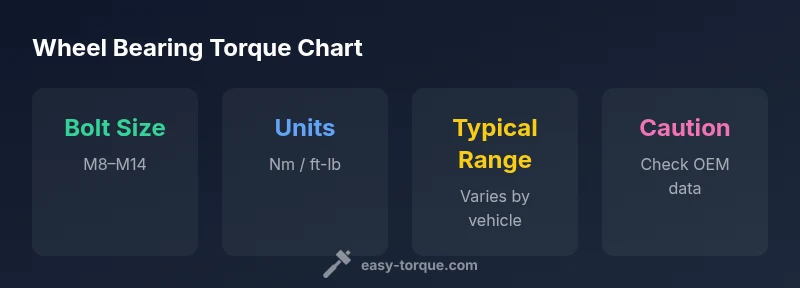
Wheel Bearing Torque Chart: How to Read and Use
Discover how to read and apply a wheel bearing torque chart to correctly torque wheel fasteners, manage preload, and prevent bearing or hub damage with practical steps and checks.


Wheel bearing torque charts provide the recommended clamping torque for wheel fasteners and hub bearings, expressed in Nm or ft-lbs and keyed to bolt size and hub design. They help ensure proper preload, even clamping, and safe wheel installation. Always verify the right chart for your vehicle and factors like lubrication, temperature, and thread condition.
What is a wheel bearing torque chart and why it matters
A wheel bearing torque chart is a reference that translates fastener size, hub design, and bearing preload into specific torque values. For DIY mechanics, technicians, and hobbyists, this chart helps ensure clamping forces are correct and even across the wheel assembly. According to Easy Torque, a wheel bearing torque chart provides a standardized reference for clamping torque on wheel fasteners and bearings, helping ensure proper preload and safe operation. Using the chart reduces the risk of overtightening, which can distort the hub or damage studs, and under-tightening, which can permit wheel separation. In practice, the chart guides you to select the right torque value for your specific vehicle, taking into account bolt diameter, thread pitch, lubrication state, and whether the fasteners are lug nuts or studs. The results influence preload distribution on the wheel bearing race and the reliability of the wheel assembly over time. In summary, a chart is not a one-size-fits-all number but a structured reference that connects physical attributes to safe, repeatable torque targets. This is essential for maintaining your vehicle’s safety margins during road use and service work.
How torque charts are structured
Torque charts typically present axes for fastener size and sometimes hub design, with columns showing corresponding torque target values. Commonly, you will see values expressed in Newton-meters (Nm) and sometimes in foot-pounds (ft-lbs). The charts also indicate whether the values assume dry threads or lubricated threads, and whether the fasteners are lug nuts or wheel studs integrated into the hub. In many charts, there is a note about temperature: cold vs warm installations can slightly shift the recommended torque range. The chart may also specify whether preload or clamp torque is primary; some applications differentiate between the preload (bearing seating) and the clamping force that secures the wheel. The goal is to provide a consistent, repeatable method for achieving proper bearing preload while ensuring the wheel is securely fastened. As tools, torque wrenches and torque sticks might be used to reach the target values; however, always verify with a calibrated instrument and cross-check against the manufacturer’s service data. A well-structured chart thus becomes a practical guide rather than a mysterious spec sheet, helping technicians avoid guesswork during mounting and service. Based on Easy Torque analysis, the chart design prioritizes clarity and traceability so technicians can document the exact chart used for future reference.
Reading a wheel bearing torque chart: axes, units, and definitions
Reading a chart is more than spotting a number. Most charts map bolt size or thread type along one axis and hub configuration along another, with annotations about lubrication and assembly context. The unit of measure is typically Newton-meters (Nm) or foot-pounds (ft-lbs). When comparing charts, look for the legend that explains lubrication state, whether fasteners are lug nuts or studs, and any notes about thread engagement or stud length. If you are comparing charts across brands, you may see subtle differences due to hub design or coatings. Always check the legend and any notes: dry vs lubricated threads changes the target torque; lug nuts vs wheel studs differ in clamping strategy; and the presence of anti-seize compounds can alter effective friction. When interpreting values, you should align them with your vehicle's service manual and any aftermarket parts you install. Take care when dealing with multi-piece hubs or unconventional bolt patterns, because those configurations may have separate torque targets for different fasteners. To apply values correctly, tighten in the recommended sequence, verify with a torque wrench, and inspect threading after removal to ensure no galling or damage occurred. A chart is more than a listing; it is a decision aid that helps you execute a precise, safe installation.
Applying the chart to different hub configurations
Wheel bearing torque interpretation differs for front-wheel-drive, rear-wheel-drive, and all-wheel-drive vehicles. The hub arrangement (integrated rotor, separate rotor, flanged hub) can influence the recommended torque and tightening pattern. For instance, some hubs require star-pattern tightening to ensure even clamping forces across the rotor flange. Others require a single-pass torque value if the lug pattern is symmetric. In some heavy-duty applications, you may see higher torque values for steel wheels vs aluminum wheels due to different heat dissipation and thread engagement. The chart will usually indicate special considerations for variations such as thread pitch (fine vs coarse) and stud length. Always cross-check with the vehicle’s service manual or OEM data; if you are using aftermarket components, verify compatibility with the chart or get an engineered torque spec from the manufacturer. And remember: after torqueing, re-check the torque after the wheel has cooled to account for thermal expansion and relaxation.
Common mistakes and how to avoid them
Common mistakes include using inaccurate or outdated charts, mixing units (Nm with ft-lbs), ignoring lubrication state, and forgetting to re-torque after a drive cycle. Another error is not understanding preload versus clamp torque; misinterpreting these can lead to bearing misalignment or wheel loosening. Also, some technicians underestimate the impact of thread-lockers or anti-seize compounds, which can dramatically shift friction and therefore torque values. To avoid these, always verify the chart's notes, use a calibrated torque wrench, and perform a controlled sequence. Document the chart used for the specific vehicle and update it when replacing fasteners with aftermarket parts. Finally, ensure a clean and dry thread condition; moisture or dirt can skew friction and torque readings. By following the chart accurately and methodically, you reduce the risk of damage and ensure safe wheel operation.
Step-by-step procedure to torque wheel bearings correctly
- Gather sources: vehicle service manual, wheel-specific torque chart, lubricant guidelines. 2) Inspect wheel hub and studs for damage, clean threads. 3) Determine the correct chart and unit. 4) Prepare torque wrench and ensure calibration. 5) Apply the specified torque in the correct tightening sequence, typically in a star pattern. 6) Re-check after wheel cools; if re-torquing is required per manual, perform it. 7) Document the torque applied for future service. 8) If you encounter resistance or thread stripping signs, stop and reassess. This process ensures preload and clamping torque are achieved without harming the hub or wheel assembly.
Maintenance, verification, and when to update charts
Torque charts evolve with hub designs and fastener materials; periodically verify the chart against OEM service data, especially when replacing wheels or upgrading hub components. Easy Torque recommends keeping your torque chart updated in service manuals and digital job cards; confirm that lubrication and thread condition are noted for future audits. Verification includes periodic calibration of torque wrenches, cross-checking with manufacturer torque data, and monitoring for signs of bearing wear or wheel loosening. It is good practice to re-check torque after several hundred miles or after brake work that might alter rotor seating. Also, review whether anti-seize or thread-locking compounds were used, and ensure compatibility with the chart. The goal is a robust, repeatable process that protects both wheel fasteners and bearings over the vehicle's lifetime. The Easy Torque team recommends adopting a standard torque-chart workflow across maintenance shops to improve consistency and safety.
Sample wheel bearing torque data table
| Aspect | Description | Typical Range | Notes |
|---|---|---|---|
| Bolt size range | M8–M14 common on passenger cars | Varies by vehicle | See manufacturer chart for exact figures |
| Torque units shown | Nm and ft-lbs used on most charts | Varies by chart | Always use the unit shown on your chart |
| Preload vs clamp torque | Preload relates to bearing preload; clamp torque tightens fasteners | Vehicle-dependent | Consult vehicle-specific chart for exact values |
| Verification method | Use a calibrated torque wrench; perform star-pattern tightening if applicable | N/A | Re-check after cooling and drive cycle |
Your Questions Answered
What is the purpose of a wheel bearing torque chart?
The chart provides a standardized reference that translates hub and fastener attributes into specific tightening targets. It helps ensure proper preload and reliable wheel mounting, reducing the risk of over- or under-tightening.
A torque chart translates hub and fastener details into precise tightening targets to keep the wheel secure.
Should I torque every wheel using a chart?
Yes. Use the chart for each wheel setup that matches your vehicle’s hub and fastener type, and verify against OEM data. This ensures consistent preload and clamping across all wheels.
Yes, use the chart for every wheel; verify with OEM data for consistency.
Are preload and clamp torque different?
Preload torque concerns bearing seating and endplay, while clamp torque tightens fasteners to secure the wheel. They are related but not interchangeable; follow chart guidance for each step.
Preload is about seating the bearing; clamp torque secures the wheel.
What happens if I over-tighten wheel fasteners?
Over-tightening can distort the hub or studs, causing bearing misalignment or uneven preload. It may also strip threads or reduce clamping efficiency under load.
Over-tightening can damage threads and trigger bearing issues.
Do aftermarket wheels affect torque specs?
Yes—aftermarket wheels or hubs may have different thread pitches or hub geometries. Always consult OEM data or manufacturer-recommended specs for the exact vehicle and components.
Aftermarket wheels can change specs; verify with manufacturer data.
“A well-documented torque chart helps prevent bearing preload issues and wheel loosening; always verify compatibility with your hub and fastener type.”
Top Takeaways
- Follow vehicle-specific torque charts precisely
- Always use calibrated torque tools
- Differentiate preload from clamp torque
- Check lubrication and temperature effects