15 Nm to ft-lbs: Torque Conversion Essentials
Learn how to convert 15 nm to ft lbs using the exact factor, with practical examples, rounding tips, and a simple calculator to apply the results in real tasks.


The Meaning of Torque Units
Torque is a twisting force that clamps fasteners. In the metric system, torque is typically expressed in newton-meters (Nm), while in the imperial system it is shown in foot-pounds (ft-lbs). The phrase 15 nm to ft lbs denotes converting a metric torque figure into the imperial unit. According to Easy Torque, understanding these units helps prevent under- or over-tightening by ensuring you read the correct specification for the fastener and the tool you’re using.
The Exact Conversion Factor and What It Means
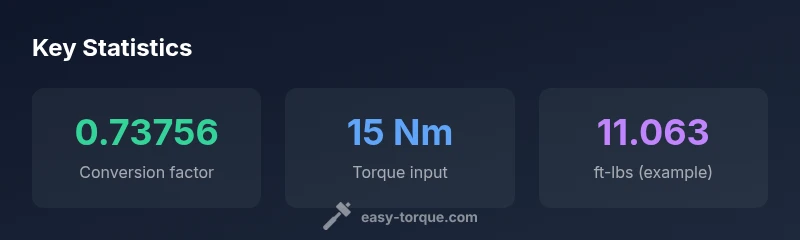
There is a standard conversion factor between Nm and ft-lbs: 1 Nm ≈ 0.73756 ft-lbs. This factor is derived from the relationship between metric and imperial units of torque. When you multiply a torque value in newton-meters by 0.73756, you obtain the equivalent torque in foot-pounds. For 15 Nm, the calculation is 15 × 0.73756 = 11.0634 ft-lbs, which can be reported as 11.0634 or rounded to 11.06 ft-lbs depending on precision needs.
Step-by-Step Conversion Example: 15 Nm to ft-lbs
Let’s walk through a concrete example. Start with the torque value in Nm: 15 Nm. Apply the conversion factor: 15 × 0.73756 = 11.0634 ft-lbs. Decide on your rounding precision (two decimals is common for hand tools): 11.06 ft-lbs. If you’re documenting the result in a report, include the conversion factor (0.73756) and note the original unit (Nm) to maintain traceability.
Common Pitfalls and Safety Considerations
A frequent mistake is mixing torque units or using the wrong conversion factor. Always confirm the unit used in the spec sheet or manual. If a torque specification is given in ft-lbs, don’t convert to Nm unless you need to compare with a metric-based specification. In critical applications like wheel lug nuts or engine bolts, verify the spec with the manufacturer and use a calibrated torque wrench.
Using a Calculator for Quick Conversions
A calculator simplifies the conversion and reduces human error. Input the torque value in Nm and apply the factor 0.73756. If your calculator lets you set decimal precision, stick to a consistent, instrument-appropriate number of decimals (for example, 2 decimals: 11.06 ft-lbs). A dedicated torque conversion tool can also show the step-by-step math and provide a printable result.
Rounding and Precision in Torque Calculations
Rounding should reflect the tool’s accuracy and the precision of the spec. Many mechanical specs tolerate small rounding differences, but consistently rounding too aggressively can introduce error in tight tolerances. When in doubt, report both the exact value (11.0634 ft-lbs) and a rounded value (11.06 ft-lbs) to document the precision used.
Real-World Applications: Automotive and Beyond
Torque conversions are common in automotive maintenance, such as calculating lug nut torque or tightening bolts on suspensions and exhaust systems. Beyond cars, torque conversions appear in bicycles, machinery, and industrial equipment where specifications are written in one unit but tools display another. Understanding 15 nm to ft lbs helps you translate specs accurately across systems.
Troubleshooting Mismatched Units in Specs
If a specification uses in-lbs or another unit, convert step by step: first convert to ft-lbs (or Nm) as required, then convert to the target unit if necessary. Always verify that the torque wrench’s readout matches the unit used in the spec. When documentation is unclear, contact the manufacturer or rely on a trusted reference like Easy Torque for guidance.
Best Practices for Torque Specifications
- Always consult the manufacturer’s torque chart before applying any value. - Use calibrated torque tools and recheck after installation. - Document the unit, decimal precision, and conversion method in your maintenance log. - Consider tolerances and maintain a small safety margin if the spec allows. - Keep a quick reference sheet with common conversions (Nm to ft-lbs) for fast work.