8 Nm to ft-lbs: Torque Conversion Guide
Learn how to convert 8 nm to ft lbs and master torque conversions. This educational guide covers the math, practical tips, and a calculator to ensure precise, actionable results for DIY mechanics.


Why Torque Units Matter
In automotive and mechanical work, torque is often specified in both metric and imperial units. Understanding how to translate between these systems is essential for accurate fastener installation and safe maintenance. The phrase 8 nm to ft lbs is a common shorthand that signals you’re converting a metric torque value to the imperial unit used on many US-made tools. Mastery of these conversions reduces the risk of under- or over-tightening critical components and helps you interpret service manuals with confidence. The Easy Torque approach emphasizes clear unit awareness, consistent rounding, and checking the final value against the torque spec provided by manufacturers. When you see a value in newton-meters, knowing how to convert to ft-lbs keeps your project on track and reduces guesswork.
The Core Conversion: Nm to ft-lb
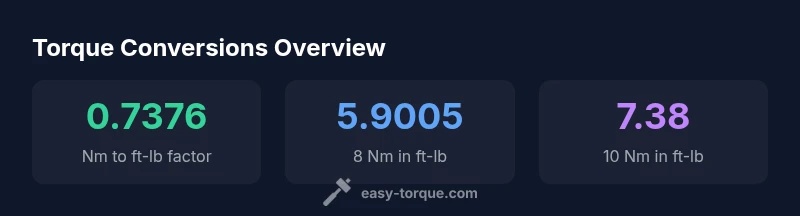
Torque in newton-meters (Nm) is a direct measure of rotational force, while foot-pounds (ft-lbs) measure the same concept in the imperial system. The exact conversion factor is 1 Nm = 0.737562 ft-lb. Therefore, to convert any Nm value to ft-lb, multiply by 0.737562. For example, 8 Nm × 0.737562 = 5.900496 ft-lbs, which you can round to 5.90 ft-lbs for practical use. This relationship is the mathematical backbone behind the common shorthand 8 nm to ft lbs, and it applies consistently across torque specs in manuals, tool settings, and calibration charts.
Practical Applications in Automotive Work
Torque specifications are everywhere in vehicle maintenance—from lug nuts to axle bolts and timing components. Knowing how to convert between Nm and ft-lbs lets you verify that the factory spec aligns with the torque wrench you own. For instance, many DIYers encounter values in Nm while their tool is labeled in ft-lbs. By using the Nm to ft-lb conversion, you can set your torque wrench accurately, avoiding under-torque (loose fasteners) or over-torque (stripped threads or damaged components). In practice, keep a reference chart handy and use a calculator when dealing with non-round numbers.
Common Pitfalls and Mistakes
Without careful attention, easy mistakes creep in. Some common issues include assuming a fixed conversion factor without checking for device-specific tolerances, rounding too aggressively (which can drift the final torque), and mixing units without converting both directions. Another pitfall is ignoring the impact of thread pitch and fastener material, which can alter the effective torque needed. Always cross-check conversions against the manufacturer’s torque specification and, when in doubt, use a calculator to maintain consistent precision across multiple fasteners.
How to Use a Torque Calculator
Using a torque calculator to convert 8 nm to ft lbs and other values streamlines the process. Enter the Nm value, choose how many decimal places to round to, and the calculator will display the corresponding ft-lbs value. Modern calculators also let you save commonly used values and automatically convert back if you need to verify consistency. When you’re performing maintenance on critical assemblies, relying on a calculator reduces arithmetic error and provides a transparent audit trail for your work.
Quick Reference Examples and Edge Cases
Here are a few quick conversions to illustrate the range: 1 Nm ≈ 0.7376 ft-lb; 5 Nm ≈ 3.6878 ft-lb; 8 Nm ≈ 5.9005 ft-lb; 10 Nm ≈ 7.3756 ft-lb. For non-integer values, round to the desired precision (e.g., two decimals yields 1 Nm ≈ 0.74 ft-lb). These examples show how small changes in Nm translate into noticeable changes in ft-lbs, underscoring the importance of precise calculation in real-world tasks.
Real-World Tips for Consistency
- Always verify the unit on your torque wrench before tightening.
- Use a consistent rounding rule (e.g., two decimals) to avoid drift across fasteners.
- Keep a small conversion cheat sheet in your toolbox for quick checks.
- When using fractional Nm values, rely on a calculator for exact ft-lb results.
Safety and Best Practices
Improper torque can lead to component failure or safety risks. Never guess when torque specs are provided by the manufacturer; always use the correct Nm or ft-lb value and calibrate your tools regularly. If you’re unsure, consult the vehicle’s service manual or reach out to a trusted technician. Precision in torque conversions translates to safer, more reliable repairs.