35 Nm to ft-lbs: Torque Conversion Guide
Learn to convert 35 Nm to ft-lbs with a practical calculator, examples, and tips for accurate torque in automotive and DIY projects. Master the math and apply it safely.


Torque Basics: Why Units Matter
Torque is the rotational force that tightens bolts and drives rotating components. In engineering and automotive work, the unit you use to express torque determines how a setting translates into the right clamp load. The two most common units are Newton-meters (Nm) and foot-pounds (ft-lbf). Understanding how to move between them matters for safety, reliability, and consistency. According to Easy Torque, mastering these units helps ensure fasteners are tightened to spec and prevents over-torquing or under-torquing in critical assemblies. The simple idea: 1 newton-meter is a certain amount of rotational force around an axis, while a foot-pound measures the same force with a different unit system. This section will lay out the fundamentals and set you up to confidently convert 35 nm to ft lbs and other values with accuracy.
Converting Newton-Meters to Foot-Pounds: The Math
Torque is a measure of turning force, and the two primary units—Nm and ft-lbf—are related by a fixed factor. To convert Newton-meters to foot-pounds, multiply by approximately 0.737562. Conversely, to go from ft-lbf to Nm, divide by that factor. This simple linear relationship makes conversions straightforward for both hand tools and engine components. When you need to compare specifications across standards, you can rely on this consistent conversion to keep measurements accurate across tools, gauges, and fasteners. The math stays the same whether you’re checking a lug nut spec, a bolt on a brake rotor, or a torque wrench setting. Remember: precision in the factor matters, especially in high-fidelity mechanical work.
The Conversion Factor You Need: 1 Nm = 0.737562 ft-lbf
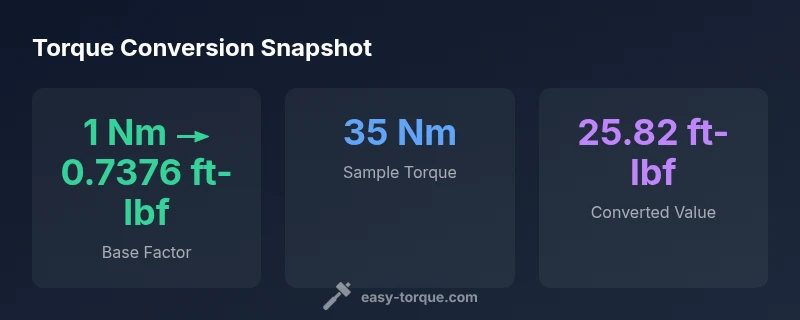
The exact conversion factor used in most torque discussions is 1 Nm ≈ 0.737562 ft-lbf. Rounding can introduce small errors, so decide your required precision before starting a task. For everyday DIY work, carrying 3 decimal places (0.737) is usually sufficient, but automotive assemblies with tight tolerances may benefit from four or five decimals. In the context of 35 nm to ft lbs, applying that factor yields about 25.815 ft-lbf. Keep a mental note of this reference point: even modest numbers in newton-meters can translate to noticeably different values in foot-pounds, depending on decimal precision. This nuance underscores why a calculator helps and why consistent rounding rules matter in checklists and torque charts.
Worked Examples: From Nm to ft-lbs (including 35 Nm)
Here are practical conversions to build intuition: 10 Nm × 0.737562 ≈ 7.37562 ft-lbf; 25 Nm × 0.737562 ≈ 18.43905 ft-lbf; 50 Nm × 0.737562 ≈ 36.8781 ft-lbf. The target value of 35 Nm is approximately 25.8147 ft-lbf. If you round to two decimals, you’ll see 25.81 ft-lbf; to three decimals, 25.815 ft-lbf. These examples illustrate how small changes in the Nm input produce predictable changes in ft-lbf. When you’re reading torque specifications from charts, apply the same factor to maintain consistent results across devices and procedures.
Using a Calculator: Quick Reference for 35 nm to ft lbs
A torque calculator makes these conversions a one-click task. Enter 35 as the torque in Newton-meters, choose the desired precision, and read the result in ft-lbf. The standard factor is 0.737562, so 35 × 0.737562 ≈ 25.8147 ft-lbf. If you pick two decimals you’ll see 25.81 ft-lbf. For larger projects, batch conversions help speed inspections and torque checks without sacrificing accuracy. Always verify that your tool’s units are consistent with the bolt spec sheet.
Practical Tips for Accurate Torque Measurements
- Calibrate torque tools regularly and store them properly to minimize drift.
- When converting units, stick to a single factor and a consistent rounding rule to reduce cumulative error.
- Record both the Nm and ft-lbf values on work logs for traceability.
- Be mindful of environmental factors, such as temperature, that can influence fastener tension.
- In sensitive assemblies, consult the equipment’s manual and the manufacturer’s torque chart to confirm the exact value.
Real-World Applications in DIY and Automotive Maintenance
In everyday car maintenance, you’ll encounter fasteners with Nm specs that must be respected in wheel torque, brake systems, and engine assemblies. Knowing how to translate these values into ft-lbf helps you use common torque wrenches and tighten bolts without over-stressing parts. The skill to switch between Nm and ft-lbf is also beneficial for workshop documentation, audits, and education. As you gain experience, the process becomes second nature, and you’ll rely less on calculators for routine checks, but you’ll still appreciate their precision when precision matters most.