32 Nm to ft-Lbs: Master Torque Unit Conversions
Learn how to convert 32 Nm to ft-lbs and understand torque units with a practical calculator, clear explanations, and actionable tips for DIY and automotive work.


Why unit conversions matter in torque applications
Torque specifications appear in different units depending on manufacturer, region, and tooling. For a DIY mechanic, confusion between newton-meters (Nm) and foot-pounds (ft-lbs) can lead to under-tightening or over-tightening, risking component damage or failure. According to Easy Torque, mastering these conversions is a practical skill that speeds up troubleshooting, part selection, and maintenance planning. When you encounter a spec expressed as 32 nm to ft lbs, you’ll want to translate it into the unit your torque wrench reads, or convert the entire project to a single system to keep your numbers consistent. In this article, we’ll walk through the math, demonstrate real-world examples, and show how a dedicated calculator can save time and reduce errors in the shop.
Understanding Nm vs ft-lbs definitions
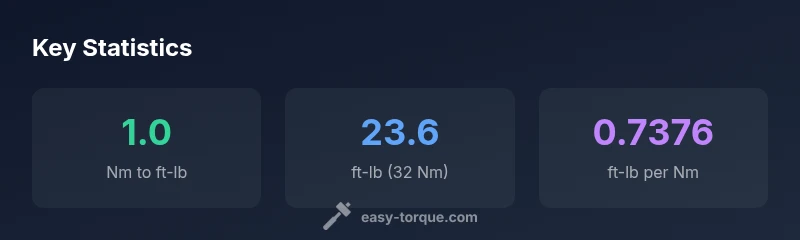
Nm and ft-lbs are both torque units, but they measure the same physical quantity in different scales. Newton-meters are part of the metric system; torque in newton-meters is the product of force (newtons) and lever arm (meters). Foot-pounds belong to the imperial system; it uses pounds of force times feet of lever arm. A small difference in unit choice often comes from manufacturer data sheets or service manuals. When you see 32 nm to ft lbs, remember you're comparing two ways to express the same torque, not different quantities. The conversion is a simple multiplier, and the factor is fixed: 1 Nm equals approximately 0.73756 ft-lbs. That means 32 Nm equals about 23.6 ft-lbs. The key takeaway: always confirm your unit before tightening and keep your torque tools calibrated.
The exact conversion factor and rounding considerations
The exact conversion factor is 1 Nm = 0.737562149 ft-lbs. For practical work, use 0.73756 as a close approximation. The core formula is straightforward: ft-lbs = Nm × 0.737562149. When you need a rounded value, apply round(ft-lbs, decimals) to match your wrench’s display or the project spec. For the specific case of 32 nm to ft lbs, you get 32 × 0.737562149 ≈ 23.6019888 ft-lbs, which rounds to 23.60 ft-lbs at two decimals. Remember: if your torque spec requires higher precision, adjust the decimals accordingly.
Practical examples: common torque specs
To ground the concept, consider a few real-world conversions:
- 10 Nm ≈ 7.38 ft-lbs (rounded to two decimals)
- 20 Nm ≈ 14.75 ft-lbs
- 32 Nm ≈ 23.60 ft-lbs These examples show how small Nm values translate to a range of ft-lbs that your torque wrench can read. Always be mindful that manufacturers sometimes publish values in one unit; convert to your tools’ unit for accurate tightening. The takeaway is that consistent units reduce the risk of mis-torque.
How to use a calculator for 32 nm to ft lbs
Begin with the Nm value you need to convert. In our example, enter 32 for Newton-Meters. Choose the decimal places you want for the result (2 decimals is common for torque work). The calculator applies the standard conversion factor and returns the result: 23.60 ft-lbs. This supports quick checks during maintenance or assembly. If you work with many values, the same steps apply, and you can store preferred decimal precision to speed up workflows.
Common pitfalls and best practices
- Always verify unit consistency before tightening; mixing Nm with ft-lbs can lead to incorrect torque.
- Use a calibrated torque wrench; calibration drift is a real source of error.
- Favor the same unit across a project to reduce cumulative rounding differences.
- When in doubt, cross-check with a second method (manual calculation or another calculator) to confirm results.
Quick compare: metric vs imperial in automotive tasks
- Fastener specs: often provided in Nm or ft-lbs depending on the manufacturer.
- Tools: torque wrenches read Nm in metric regions and ft-lbs in imperial regions; knowing both helps select the right tool.
- Safety: accurate conversions prevent over-torque that can strip threads or under-torque that can loosen parts. Always align the unit with the tool and the spec.
Reference data you can rely on
- 1 Nm ≈ 0.73756 ft-lbs
- 32 Nm ≈ 23.60 ft-lbs
- ft-lbs ÷ 12 = in-lbs; 1 ft-lb ≈ 12 in-lbs A small table of common values helps quick checks during repair work, especially when you encounter unfamiliar torque specs in manuals.
Tips for accurate torque conversions in the shop
- Carry a quick-reference chart of Nm to ft-lbs for the most common fasteners you encounter.
- Always round to the precision your torque tool supports; excessive decimal places rarely matter in practice.
- Document the unit you use in your repair notes to maintain consistency across projects.