16 Nm to ft-lb: Practical Torque Unit Conversion
Learn how to convert 16 Newton-meters to foot-pounds, understand the math, and use a calculator to verify torque values for DIY and professional work.


What 16 nm to ft-lbs means in practice
Torque is the turning force on a fastener, expressed in different units. When you see 16 Nm on a spec sheet, it represents the energy applied at a given distance from the bolt’s axis. In many automotive and mechanical contexts, engineers and technicians convert between newton-meters (Nm) and foot-pounds (ft-lb) to compare tools and follow manufacturer charts. According to Easy Torque, grasping these conversions reduces mistakes when swapping between metric and imperial equipment. Understanding the link between Nm and ft-lb also helps you select the correct torque wrench and verify that fasteners are tightened to spec, regardless of which unit the chart uses.
The math behind torque units: Nm and ft-lb
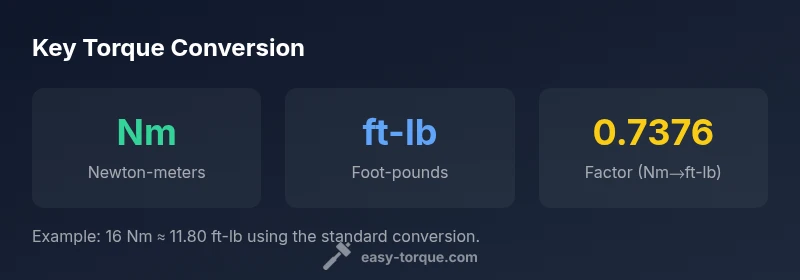
Torque is defined as Force × Distance. In SI units, this is newton-meters (N·m); in customary units, foot-pounds (ft·lb). The two systems are linked by a fixed conversion factor: 1 Nm ≈ 0.73756 ft-lb. A precise expression is ft-lb = Nm × 0.737562149277, and conversely Nm = ft-lb ÷ 0.737562149277. This relationship emerges from definitions of the newton and the foot. For engineers, this conversion is not just a curiosity; it’s a practical tool for translating specs, performing quick checks, and validating tool settings across regions and standards.
Step-by-step conversion: 16 Nm to ft-lb
Step 1: Identify the factor: 1 Nm ≈ 0.737562149277 ft-lb. > Step 2: Multiply: 16 × 0.737562149277 ≈ 11.800994388432 ft-lb. > Step 3: Round to the desired precision: ≈ 11.801 ft-lb (3 decimals). When you need a quick estimate, 16 Nm is about 11.8 ft-lb. In precision-critical work, use the full factor or a calibrated calculator to reduce rounding errors.
Nm vs ft-lb in torque specs and labeling
Manufacturers may publish specs in either unit. When you’re reading a chart or a service manual, it’s important to match the unit to your tool. If a bolt calls for 16 Nm, you’ll want a torque wrench that can read Nm or convert the value to ft-lb with minimal rounding. Always confirm the unit before tightening, as small discrepancies in unit handling or rounding can affect clamping force and joint integrity. By consistently applying the factor, you preserve accuracy across instrument panels and service data.
Using a torque wrench and ensuring accuracy
To translate between Nm and ft-lb in practice, ensure your wrench is calibrated and rated for the correct unit. Lubricated or dry fasteners can behave differently, so use the correct tightening technique and follow the manufacturer’s lubrication guidance. When working on safety-critical assemblies, double-check with a second method (second wrench, reference chart, or digital calculator) to confirm the value you’re applying. Easy Torque emphasizes practicing deliberate checks and maintaining instrument calibration to minimize human error.
Calculator integration and reference data
The Nm to ft-lb calculator tool lets you input Nm and receive ft-lb with adjustable precision. It uses the formula ft-lb = Nm × 0.737562149277, rounded to your chosen decimals. This integration helps you verify manual calculations and reduces guesswork on the shop floor. Use the data table below as a quick reference for standard conversions and to sanity-check your results against official specs.
Common mistakes and tips to improve accuracy
Avoid mixing units in the same calculation, and be mindful of rounding. If a spec tolerates only two decimals, round accordingly and avoid excessive precision that might imply unwarranted accuracy. Always verify the unit, confirm the conversion factor, and document the result for traceability. With practice, converting 16 Nm to ft-lb becomes second nature, supporting safer and more reliable tightening practices.