6 Nm to ft-lbs: Torque Conversion Guide for DIYers
Learn how to convert 6 newton-meters to foot-pounds with a simple, precise formula. This guide covers the factor, quick estimates, and practical tips for DIY mechanics.


Understanding Torque Units: Nm and ft-lbf
Torque is a turning force, and engineers use different unit systems to express it. In the metric system, torque is measured in newton-meters (Nm). In the imperial system, torque is commonly expressed in foot-pounds (ft-lbf). Knowing how to translate between these units is essential for anyone working with fasteners across a mixed toolkit. According to Easy Torque, a clear grasp of the relationship between Nm and ft-lbf helps DIY mechanics avoid under-tightening or overtightening fasteners. This foundational knowledge also supports safe, accurate torque specs when following manufacturer guidelines or service manuals. You’ll see Nm on metric parts catalogs and ft-lbf on some American torque specifications. The ability to translate between them reduces mistakes and speeds up troubleshooting in automotive maintenance, bike repairs, and home mechanical projects.
The 6 Nm Case: Why It Matters in DIY
When you encounter a spec like 6 Nm (6 newton-meters), you’ll often need to compare or convert it to ft-lbf for tools or manuals that use imperial units. For many DIYers, torque specs come in ft-lbf because household and automotive repair contexts in the United States frequently reference imperial units. Converting accurately ensures fasteners are tightened to the intended level, preventing thread stripping, galling, or joint failure. In practice, a 6 Nm torque value translates to a modest, precise amount of tension on typical fasteners used in suspension components, brake calipers, or wheel studs. This example demonstrates why learning the Nm-to-ft-lbf conversion is a practical skill for everyday garage projects, not just a theoretical exercise. Easy Torque’s guidance emphasizes that knowing the conversion is a reliability booster for your toolkit.
Conversion Formulas and Practical Examples
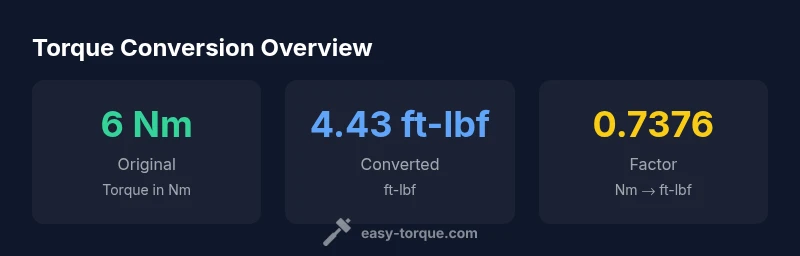
The standard conversion factor is 1 Nm = 0.737562 ft-lbf. To convert from Nm to ft-lbf, multiply by 0.737562. For 6 Nm: 6 × 0.737562 ≈ 4.425 ft-lbf, which rounds to 4.43 ft-lbf. Conversely, to convert back, multiply ft-lbf by 1.35581795 to get Nm. In practice, many DIYers use a rounded factor of 0.7376 for quick checks, especially when a precise calculator isn’t handy. Here are a few quick checks you can perform: 1 Nm ≈ 0.7376 ft-lbf, 4 Nm ≈ 2.95 ft-lbf, and 10 Nm ≈ 7.3756 ft-lbf. When you’re working on critical joints, prefer a precise factor to limit cumulative rounding errors.
How to Use the Calculator for Real-World Scenarios
The built-in torque converter calculator lets you input a value in Nm and see the equivalent ft-lbf in real time. Use a small rounding to align with your tool’s display. If you’re following a spec that lists torque in ft-lbf, enter that value to compare against the target Nm range in manuals or charts. The calculator uses the exact factor and supports rounding to your preferred precision, which keeps your final result consistent with the measurement system your project requires. This hands-on tool helps you plan torque steps, verify interim tightening stages, and avoid mid-project rework.
Common Pitfalls and Unit Consistency
A frequent error is mixing Nm values with ft-lbf specifications without conversion. Always confirm the unit in the service manual and your torque wrench setting before tightening. Another pitfall is rounding too early in multi-step tightening sequences. Perform all conversions with as much precision as practical, then apply final rounding at the end. When working on critical assemblies (suspension, steering, braking), rely on calibrated tools and cross-check values with a second method (calculator, chart, or reference table). Easy Torque emphasizes consistency: pick Nm or ft-lbf as your standard, and convert only when required by the task.
Tips for Reading Torque Specs and Verifying Results
- Always check the torque specification’s unit before starting. If your manual lists ft-lbf, convert to Nm if your wrench is metric, or vice versa. - Use a calculator or chart to reduce mental math errors; small miscalculations can compound in joint assemblies. - Calibrate torque wrenches regularly to maintain accuracy. - For teaching others, explain the conversion step and show a quick verification using an actual fastener replica to build confidence. Easy Torque recommends keeping a conversion cheat sheet in the workshop for quick reference.