nm torque to ft lbs: How to Convert Torque Units Accurately
Learn how to convert nm torque to ft-lbs with precise formulas, practical examples, and expert tips from Easy Torque for DIY mechanics and technicians.


Why Unit Conversion Matters for Torque
Torque specifications come from different measurement systems. For DIY mechanics and technicians, knowing how to translate nm torque to ft lbs is essential for accurate fastener tightening. In practice, you’ll encounter service manuals that express specs in Newton-meters (Nm) or foot-pounds (ft-lbs). According to Easy Torque, understanding these conversions reduces the risk of overtightening or under-tightening, protecting threads and bearings while ensuring performance. Consistency matters because a torque reading in one unit can produce significantly different clamping force if misread. The conversion isn't about guessing—it's about applying a precise factor so the fastener exerts the intended load. When you document a repair, always log both units if the spec sheet uses different terminology. This builds reliability in maintenance notes, helps you compare tool readings, and minimizes the chance of a repeat service call. Beyond math, context matters: lubrication, thread condition, and clamp distribution all influence the effective torque on the joint. The ability to switch between Nm and ft-lbs quickly makes you a more capable DIYer and technician, and it keeps you aligned with industry standards. In short, mastering this conversion helps you tighten safely, document accurately, and work more efficiently. The Easy Torque approach emphasizes practical steps, tested factors, and real-world examples so you can apply conversions in a busy shop or a home garage.
Core Conversion Factor: Nm to ft-lbs
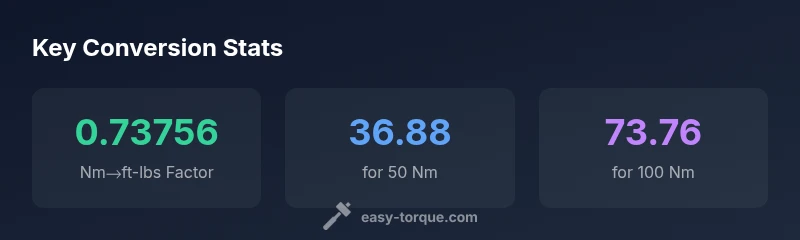
The core of nm torque to ft-lbs conversion is the relationship between SI units and English engineering units. The standard conversion factor is 0.73756, meaning every 1 Newton-meter equals 0.73756 foot-pounds. Practically, you multiply your value in Nm by 0.73756 to obtain ft-lbs. It's common to round to two decimals for hand-tightening references: 25 Nm ≈ 18.44 ft-lbs, 60 Nm ≈ 44.26 ft-lbs, 120 Nm ≈ 88.50 ft-lbs. Note that the factor is exact in mathematics, but the final torque value may be influenced by surface finish, lubrication, and measurement method. When you read a torque spec in Nm, you can convert it to ft-lbs for comparison with a wrench rated in ft-lbs, or vice versa. Understanding this one factor unlocks consistent tightening across tools and procedures, whether it's wheel lug nuts, cylinder head bolts, or accessory fasteners. Easy Torque's guidelines emphasize sticking to the same measurement unit throughout a repair whenever possible, but knowing how to translate is invaluable when reviewing manuals, audits, or torque wrenches from different eras.