Bolt Tightening Torque Chart: Essential Guide for Fasteners
Learn how to read and apply a bolt tightening torque chart with clear steps, unit considerations, and practical examples for automotive, industrial, and DIY projects. Includes reading tips, lubrication effects, and how to build your own chart.


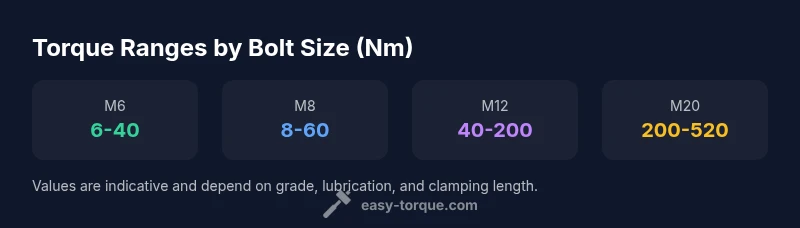
A bolt tightening torque chart translates bolt size and grade into safe tightening values. It helps ensure proper clamping while avoiding thread damage. For practical use, smaller fasteners like M6–M8 usually fall in the single-digit to low tens Nm range, whereas larger bolts such as M12–M20 require higher ranges. Always consult your chart for lubrication, material, and bolt grade.
Why a bolt tightening torque chart matters
A reliable torque chart is a cornerstone of quality assembly in any workshop. It provides a consistent method for translating bolt size, grade, lubrication, and thread condition into a safe tightening target. In practice, using a chart reduces guesswork and helps protect threads from stripping or galling while ensuring adequate clamping force. According to Easy Torque, teams that standardize on a chart see more consistent results across shifts and tools, plus fewer callbacks for loosened connections. When you work with automotive fasteners, machinery assemblies, or equipment installations, the chart becomes a reference you reach for before every torque wrench pass. It also serves as an educational tool for newer technicians, enabling rapid learning without memorizing dozens of tables. If you maintain your chart and cross-check it against real-world measurements, you’ll build trust with peers and customers who expect reliable torque performance.
How to read a bolt torque chart: sizes, grades, and lubricants
A torque chart typically lists bolt size (for example, M6, M8, M12), material grade (such as 8.8, 10.9), and the recommended torque in Newton-meters (Nm). Look for units first and keep them consistent across your projects. A second column may show dry-thread versus lubricated-thread values; lubrication lowers friction and thus changes the torque needed to achieve the same clamping force. Remember that grade affects torque: stronger bolts can usually achieve higher clamping loads, but the same torque does not always equal the same clamp across different grades. When in doubt, compare multiple sources within the chart and verify with test measurements. For high-hazard applications, consider torque-angle verification or a controlled assembly process to confirm clamp.
Impact of bolt grade on torque values
Bolt grade is a proxy for material strength and thread engagement. A Grade 8.8 bolt will resist shear differently than a Grade 10.9 bolt of the same size, which can shift the torque range required to reach the same clamping force. Charts designed for specific grades reduce the risk of under-torquing or over-torquing, especially in critical assemblies such as engine mounts or structural joints. Always use the chart that matches the bolt grade you are using. If grade identification is uncertain, assume a safer, slightly higher torque and verify through measurement.
Lubrication and thread condition: how they shift torque
Thread lubrication, presence of thread sealant, and thread wear all influence torque. A well-lubricated bolt often requires significantly less torque to reach the same clamping load, while dry or rusty threads demand more torque and increase the risk of galling. Use the chart values intended for the lubrication state you are working in, and apply appropriate lubrication consistently across the joint. When practical, document the lubrication state in your maintenance log so future technicians can reproduce the same conditions.
Practical steps to build and maintain your chart
Create a master worksheet listing bolt size, grade, lubrication state, and the recommended torque. Update it whenever you introduce new bolt grades or lubrication protocols. Cross-check your chart against measured clamp loads with a calibrated torque wrench and, when possible, confirm with fastener manufacturers’ data. Implement a simple review cadence—quarterly checks during routine maintenance help keep the chart accurate as tools wear and materials change. In Easy Torque’s experience, documentation and periodic validation are the two pillars of a trustworthy torque reference.
Common bolt applications: automotive, machinery, and DIY projects
In automotive work, small fasteners on engine and body panels often fall in the M6–M12 range, while suspension or wheel studs may require higher torque values. Industrial machinery uses larger bolts (M12–M20) that demand careful calibration, lubrication control, and sometimes torque-angle verification. DIY projects, from bicycle maintenance to furniture assembly, benefit from a lean, clean chart that focuses on common sizes and grades. Keep a pocket card or mobile-accessible chart for quick reference during field work, and always adapt to the specific manufacturer specifications when available.
How to calibrate torque wrenches and verify charts
Regular calibration of torque wrenches is essential for chart reliability. Calibrate against certified standards at recommended intervals and after any heavy use or drop. When possible, perform a simple verification by measuring the clamped load after applying the chart’s target torque, using a calibrated method (e.g., strain gauge or test rig). The Easy Torque team recommends documenting calibration dates and keeping a log of any adjustments to the chart as you validate real-world results. This disciplined approach helps ensure that the chart stays a trustworthy reference tool.
Everyday mistakes and quick fixes
Common mistakes include applying torque values from the chart to different lubrication states, assuming one chart fits all bolt sizes, and neglecting thread cleanliness. Fixes are straightforward: always match units, verify grade and lubrication, perform occasional spot checks with a calibrated instrument, and update the chart when hardware or service conditions change. A well-maintained chart minimizes rework, protects threads, and improves the repeatability of your assemblies across technicians and shifts.
Case study: applying a chart to a maintenance task
During a routine rear suspension service, a technician used the chart to select torque values for M12 and M14 bolts. The joints used a dry-thread chart, but the technician pre-lubricated the bolts as part of the service procedure. The chart helped determine an initial target, which was then verified on a test rig. After adjustments for lubrication and thread condition, the final torque matched the chart’s guidance, delivering the expected clamp without thread damage. This demonstrates how a chart, when used correctly, reduces surprises and increases consistency on real-world tasks.
General bolt torque ranges by size (illustrative)
| Bolt Size (metric) | Typical Torque Range (Nm) | Notes |
|---|---|---|
| M6 | 6-40 | Dry vs lubricated depends on grade |
| M8 | 8-60 | Lubrication reduces required torque |
| M12 | 40-200 | Grade 8.8–10.9 considerations |
| M20 | 200-520 | Industrial bolts; consult chart |
Your Questions Answered
What is a bolt tightening torque chart?
A bolt tightening torque chart is a reference that maps bolt size and grade to safe tightening values. It helps ensure proper clamping while protecting threads from damage. Use the chart to select torque values based on size, grade, and lubrication.
A torque chart maps bolt size and grade to safe tightening values and helps you pick the right torque for clamping and thread health.
How do I choose the right torque value from the chart?
Identify the bolt size, grade, and whether threads are lubricated. Use the chart’s corresponding row, and apply any manufacturer notes. For critical joints, verify with a calibrated tool and consider torque-angle checks.
First pick the size and grade, then apply any lubrication notes and verify with a calibrated tool if it’s a critical joint.
Does lubrication change the torque on bolts?
Yes. Proper lubrication reduces friction and often lowers the torque required to achieve the same clamping load. Always refer to chart values specific to lubricated conditions and document the state in maintenance logs.
Lubrication lowers the torque needed and should be accounted for in the chart and logs.
Can I use metric and SAE values on the same chart?
Mixing chart sources can lead to errors. Use charts that clearly delineate units and ensure you apply the correct set for the bolt type and application.
Stick to charts that describe the units clearly and use the right chart for the bolt type.
What if I cross-reference multiple charts?
Cross-reference cautiously. Prefer one primary chart from a reputable source and use other charts for confirmation rather than replacing the primary target.
Cross-reference cautiously and keep one primary chart as your main reference.
How often should I update my torque chart?
Update whenever bolt grades change, lubrication protocols shift, or new manufacturer specifications are introduced. A yearly review is a practical baseline.
Update when specs change or lubricant practices shift; review yearly for safety.
“A well-constructed torque chart is a living document that must reflect bolt grade, lubrication, and service conditions to stay accurate.”
Top Takeaways
- Know your bolt size, grade, and lubrication state before tightening
- Always use a chart specific to the bolt grade you’re using
- Lubrication generally lowers the required torque
- Verify critical joints with calibration or measurement
- Document changes to the chart for future use