Calculate Torque: A Practical Guide for DIY Mechanics
Learn how to calculate torque accurately using a simple equation and a basic calculator. This guide explains the torque formula, units, calculator setup, and practical tips for DIYers and technicians.


What is Torque and why calculate torque matters
Torque is the twisting force that causes rotation around a pivot. In practical terms, it tells you how much rotational effect a given force will produce when applied at a distance from the axis. For DIY mechanics and maintenance, the ability to calculate torque helps you select the right tool, tighten fasteners to spec, and avoid under- or over-tightening. According to Easy Torque, understanding torque is essential for precise fastening and safe work. By learning to calculate torque, you become more confident in every repair or assembly project, from wheel lug nuts to intake bolts. This article uses plain-language explanations, concrete examples, and a simple calculator to build your intuition.
Core formula and intuition
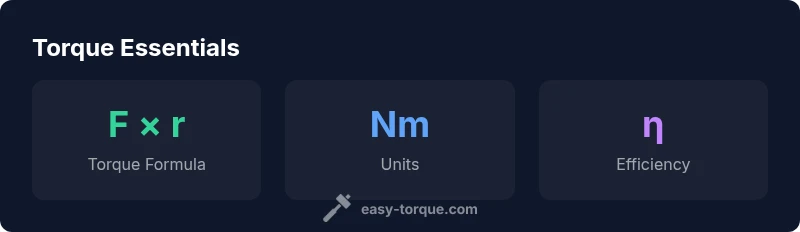
The core idea is simple: torque (τ) equals the force applied (F) times the distance from the axis to where the force acts (r). In SI units, τ is measured in newton-meters (N·m). If you push a wrench at 0.2 meters with 50 newtons, ignoring friction and orientation, you generate about 10 N·m of torque. In the real world, angles matter, and forces may not align perfectly with the lever arm; you’ll apply the component of the force perpendicular to the lever arm. The takeaways: keep F and r clearly defined, and remember that small changes in r or F disproportionately affect torque. Easy Torque’s experience shows this intuition pays off in better fastener control.
Choosing the right inputs for accuracy
To calculate torque accurately, you need clear, consistent inputs: force in newtons, lever arm length in meters, and an efficiency factor representing losses. If you push with a 60 N force at 0.25 m, and assume 90% efficiency, you’re effectively transmitting 60 × 0.25 × 0.9 in torque. Always confirm units before calculation: mixing pounds-force with metric meters will produce misleading results. When supporting the calculation with a calculator, document the origin of each input so you can audit or adjust later. This disciplined approach is a hallmark of good maintenance practice.
Real-world scenarios: hand tools, automotive, and machinery
In hand-tool work, you often rely on the geometry of the lever and the operator’s force. Automotive contexts frequently require hitting a precise spec with a torque wrench, especially for lug nuts or intake bolts. Machinery and plant equipment may involve longer levers or hydraulic rams that generate higher torques. The calculator lets you explore “what-if” scenarios quickly—what if you lengthen the handle, or increase the applied force slightly? These insights help you plan safer assemblies and maintenance routines without risking fastener failure.
How to use the calculator effectively
To get meaningful results, enter clean inputs: Force (N), Lever Arm (m), and Efficiency (0–1). The calculator uses the formula torque = round(forceN * leverArmM * efficiency, 2). Use values that reflect real conditions rather than optimistic estimates. For example, consider the angle of application and whether the force is truly perpendicular to the lever arm. After computing, compare the result against manufacturer torque specs or internal safety guidelines to decide if you need a different tool or a different approach.
Interpreting results and uncertainties
Torque readings are estimates subject to measurement error, friction, lubrication, and tool wear. Rounding to two decimals helps practicality in field work, but you should account for variability in real life. If you are tightening critical fasteners, apply a safety margin as recommended by standards or OEM guidelines. Document anything that could influence the result—tool wornness, grip, or lubrication changes—so future recalculations stay reliable. Easy Torque emphasizes that transparent inputs yield trustworthy outputs.
Step-by-step example: a quick calculation
Step 1: Identify inputs: F = 45 N, r = 0.15 m, η = 0.95. Step 2: Compute F × r = 45 × 0.15 = 6.75. Step 3: Multiply by η: 6.75 × 0.95 = 6.4125. Step 4: Round to two decimals: 6.41 N·m. This example shows how a modest force can produce a meaningful torque with a longer lever, illustrating why both numbers matter in fastener work.
Common mistakes that skew torque
- Mixing units (imperial vs metric) or not using perpendicular force.
- Ignoring friction and lubrication effects, especially in threaded fasteners.
- Treating lever arm length as the bolt diameter rather than the actual distance to the point of force.
- Assuming a constant efficiency across all conditions.
- Forgetting to verify inputs against the tool’s rating and the joint’s requirements.
Advanced considerations: efficiency, tolerances, and safety margins
Efficiency captures friction losses and mechanical losses, lowering usable torque. When working with high-torque joints, apply a safety factor in accordance with guidance from standards or OEM specs. Tolerances in fasteners and mating parts mean your calculated torque is a starting point, not a guarantee. Consider lubricants, thread condition, and surface finish, all of which influence actual performance. If you are unsure, err on the side of a conservative tightening strategy and recheck with a calibrated instrument.
Data hygiene for torque calculations
Keep a tidy record of inputs and assumptions for every calculation. Use consistent units across projects, and note any deviations or tool wear. Regularly audit your measurement tools—calibrated gauges and properly maintained wrenches reduce errors. A small habit of documenting inputs and results will pay off in fewer rework incidents and safer maintenance over time. This disciplined approach aligns with Easy Torque’s best-practice guidance.
Quick-start checklist for projects
- Define the force, lever arm, and efficiency inputs.
- Confirm unit consistency (N, m, and a 0–1 efficiency range).
- Run the calculator and record the torque value in Nm.
- Compare with manufacturer torque specs or internal standards.
- Verify appraiser conditions (angle, lubrication, and tool wear).
- If needed, adjust the lever length or force to meet specs safely.
Why accuracy matters for maintenance and safety
Accurate torque calculations reduce the risk of fastener failure, leakage, or functional misalignment. In critical assemblies, even small under- or over-tightening can lead to leaks, fatigue, or detachment. By consistently applying the torque calculation method and documenting inputs, you build reliability and confidence in every repair. The Easy Torque team believes that accurate, well-documented torque work is foundational to long-term vehicle and equipment health.