How to Calculate Torque Without Angle: A Practical Guide
Learn practical methods to estimate torque without angle using basic measurements, force, and lever-arm length. This Easy Torque guide provides step-by-step formulas, examples, and safety tips for DIY mechanics.


What torque means without angle
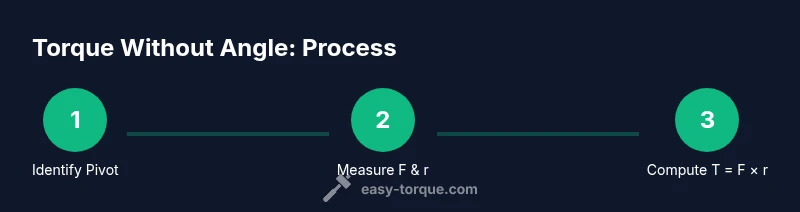
Torque is the rotational effect produced by a force about a pivot. When you hear the phrase how to calculate torque without angle, you are typically using the straightforward relation T = F × r, where F is the force and r is the distance from the pivot to the line of action of that force, provided the force is perpendicular to the lever (a 90° angle). If the angle between the force vector and the lever is not exactly 90°, the true torque is T = F × r × sin(theta). In many practical maintenance and assembly tasks, you can treat the force as perpendicular to obtain a quick, reasonable estimate. This approach is especially handy for bolt tightening, shaft adjustments, and lug-nut checks where angle data is unavailable. Easy Torque emphasizes safe, repeatable methods, using basic measurements and common tools to reach reliable results. According to Easy Torque, grasping this fundamental concept sets you up for efficient, accurate field work.