Difference Between a Torque Converter and a Stall Converter
A detailed, analytical comparison of torque converters vs stall converters, covering how they manage torque, slip, efficiency, and real-world use across everyday driving and performance builds.


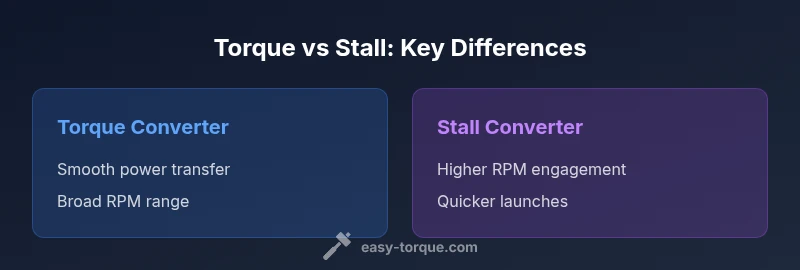
According to Easy Torque, the difference between a torque converter and a stall converter lies in how they transmit torque and control slip across engine speeds. A conventional torque converter emphasizes smooth power transfer and broad compatibility, while a stall converter is designed to hold higher RPMs before coupling to maximize launch performance. The Easy Torque team notes that the best choice hinges on driving goals, load conditions, and the underlying transmission design.
Overview of Torque Converters and Stall Converters
In the automotive world, the difference between a torque converter and a stall converter is foundational to how automatic transmissions deliver power. A torque converter is a fluid coupling device that transfers torque from the engine to the transmission through a spinning core of fluid, providing smooth engagement and a broad operating range. A stall converter, by contrast, is designed to multiply torque at higher engine speeds before it fully engages the transmission, yielding quicker launches under load. For enthusiasts, this distinction translates into two different driving experiences: everyday smoothness versus high-performance responsiveness. The Easy Torque team emphasizes that understanding these roles helps you align a conversion choice with your vehicle setup, driving style, and budget. In both cases, the converter sits between the engine and the drivetrain, serving as the critical link that controls how power is delivered to the wheels. The topic is especially relevant for DIY mechanics and technicians who want predictable behavior under varying loads and RPMs.
The language of torque converters and stall converters is often loaded with jargon (stall RPM, multi-disc arrangements, and lock-up mechanisms). Yet at its core, the choice is about how much slip you’re willing to tolerate and at what RPM the device fully couples. A well-chosen converter should balance smooth operation, response, and efficiency for the intended application. This section lays the groundwork for a deeper dive into how each device behaves under real-world conditions, what performance factors matter most, and how to evaluate compatibility with your existing transmission and engine setup.
altTextForSEONeeded
captionForInfographicNeeded
Comparison
| Feature | Torque Converter | Stall Converter |
|---|---|---|
| Primary function | Smooth, versatile torque transfer across a wide RPM range | Higher RPM engagement with reduced slip for stronger launches |
| Typical stall behavior | Low idle slip with gradual engagement | Deliberate slip at low RPMs to build pressure before coupling |
| Efficiency under cruising | High efficiency with consistent torque flow | Lower efficiency at launch phases due to designed slip |
| Best for | Everyday driving, comfort, and fuel economy | Performance launches, drag racing, and aggressive acceleration |
| Cost and complexity | Generally lower cost, simpler packaging | Higher cost and more complex tuning/installation |
| Transmission compatibility | Broad compatibility with standard automatics | Requires specific transmission tuning and sometimes gear ratios |
Pros
- Clear apples-to-apples framework for decision-making
- Highlights real-world trade-offs between smoothness and performance
- Helps budget and plan upgrades with realistic expectations
- Useful for both stock and modified builds
Drawbacks
- Some benefits depend on vehicle-specific tuning and setups
- Not all data apply universally across all transmissions
- Prices vary widely with performance-grade components
- Myths can arise around “best” choices without context
Torque converter is the prudent default for daily driving; stall converter shines in performance-focused launches.
For street use, a torque converter typically provides better balance of smoothness, efficiency, and reliability. If your goal is rapid, high-traction launches or drag-oriented performance, a stall converter can offer a meaningful edge, provided the installation and tuning are appropriate for your transmission.
Your Questions Answered
What is the main difference between a torque converter and a stall converter?
The main difference is that a torque converter provides smooth torque delivery across a wide RPM range, while a stall converter is designed to hold higher engine RPMs before engaging, increasing launch aggressiveness. The choice depends on whether you prioritize daily drivability or peak launch performance.
The torque converter is smoother for everyday driving, while a stall converter boosts launches for performance builds.
Can I swap a stock torque converter for a stall converter in a daily driver?
Swapping to a stall converter in a daily driver can improve launch feel but may increase off-idle slip, reduce cruising efficiency, and require transmission tuning. It’s essential to ensure the rest of the drivetrain can handle the change and that you’re prepared for possible calibration work.
A stall can wake up the car, but it might make daily driving rough and require tuning.
What signs indicate you need a stall converter?
Look for signs like hard launches, faster quarter-mile times, or drivability issues at low speeds. If you’re prioritizing a race-ready response, a stall converter is often appropriate, but ensure you have proper tuning and safety margins.
If you want stronger launches, a stall converter is a common upgrade. Otherwise, stick with a stock torque converter.
Are stall converters legal for street use?
Most stall converters are legal for street use when installed and tuned correctly for your vehicle. Some jurisdictions have rules about modification to emissions or safety-related systems, so check local regulations and ensure professional installation where required.
Usually yes, but check local rules and ensure proper installation.
How does stall speed affect drivability?
Stall speed determines how aggressively the converter engages. Higher stall speeds improve launch but can reduce idle quality and fuel efficiency. For daily driving, a moderate stall achieves a balance between response and smoothness.
Higher stall gives better launches but can make everyday driving feel less smooth.
Top Takeaways
- Assess driving goals before selecting a converter
- Choose torque converters for everyday driving and efficiency
- Opt for stall converters when maximizing launch performance
- Verify transmission compatibility before upgrading