How to diagnose bad torque converter: Step-by-step guide
Urgent, practical guide to diagnosing a bad torque converter with step-by-step checks, diagnostic flow, and safety-minded fixes from Easy Torque.


Most common signs of a failing torque converter are transmission slipping, shudder, or overheating. Start with a fluid level and condition check, then run a live-data test to verify clutch engagement and turbine speed. If the fluid is burnt or data shows clutch slip, plan a professional inspection to prevent transmission damage.
How to diagnose bad torque converter: overview and importance
When you suspect a bad torque converter, you’re really looking at the heart of an automatic transmission. The torque converter connects the engine to the transmission, allowing stall-free operation and smooth power transfer. Problems here often mimic other drivetrain faults, so a methodical approach is essential. According to Easy Torque analyses, most failures begin with heat, contaminated fluid, or clutch-slippage symptoms that cascade into drivability issues. In this guide we’ll cover practical, safety-first checks and an evidence-based diagnostic flow so you can determine if the torque converter is the root cause or if other components are at fault. This topic is critical for DIY mechanics, technicians, and enthusiasts who want to avoid unnecessary teardown.
Safety and prep before diagnosing a bad torque converter
Safety comes first. Park on a level surface, engage the parking brake, and disconnect the battery when removing panels or draining fluid. Wear eye protection and gloves, and ensure the vehicle is cool before touching the transmission fluid. Gather a basic set of tools: a fluid catch pan, torques for standard bolts, a fluid extractor, a basic OBD-II scanner, and a reliable reading light. If you lack a proper wheel chock or jack stands, do not attempt pressure tests. Easy Torque recommends using a clean workspace and verifying OEM specifications for fluid type and torque values. Document fluid color and smell as initial data points; burnt or dark fluid often signals overheating or contamination.
Non-destructive checks you can perform first
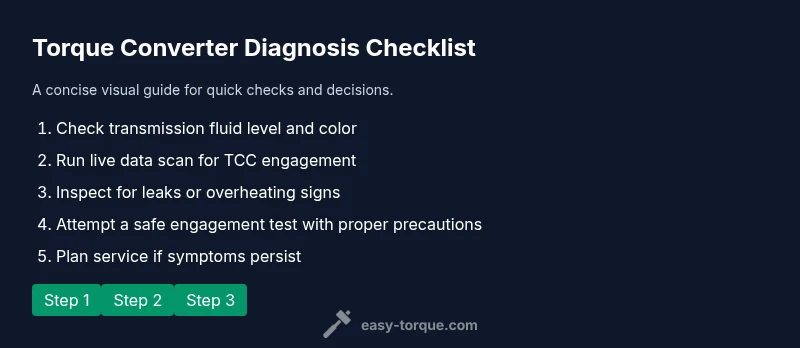
Start with non-destructive checks to narrow down the issue. Check transmission fluid level when the engine is warm and the transmission at operating temperature, as specified by the vehicle manufacturer. Look for burnt smell, discoloration, or metallic particles in the dipstick. Use a live data scan to monitor the torque converter clutch (TCC) engagement, turbine RPM, and transmission fluid temperature. A healthy TCC should engage smoothly, with minimal slip at highway speeds. If you see erratic clutch data or overly high fluid temperatures, the problem is pointing toward the torque converter or cooling system rather than other transmission components.
Diagnostic flow: symptom → diagnosis → solution path
At this stage, you’ll follow a structured flow to map symptoms to likely causes and appropriate fixes. The primary symptom categories include slipping or shudder, poor acceleration, and overheating. Each sign points to different roots (fluid issues, TCC failure, or internal wear). The diagnostic flow helps you sort out these possibilities efficiently, prioritizing safety and minimizing unnecessary disassembly. When in doubt, escalate to professional service, especially if transmission teardown appears likely. This approach aligns with Easy Torque’s pragmatic troubleshooting framework and keeps you focused on actionable steps rather than guesswork.
Interpreting data and planning the next steps
With data collected, interpret the signs against known failure modes. If fluid is clean and warm, but the vehicle slips in gear or the TCC data shows inconsistent engagement, the torque converter or its clutch is a strong suspect. If temperatures rise rapidly during a road test, cooling issues may be aggravating a marginal torque converter. In many cases, the driver can avoid a full teardown by cleaning a clogged cooler line or replacing contaminated fluid, but more severe signs (metal debris, loud grinding, or persistent slipping after fluid service) typically require professional diagnosis and potentially a transmission rebuild or torque converter replacement. Easy Torque emphasizes planning: list tools, set a time budget, and know when to call a pro to prevent collateral damage.
Steps
Estimated time: 60-120 minutes
- 1
Prepare the vehicle and collect tools
Set parking brake, chock wheels, and ensure the engine and transmission are cool. Gather a fluid drain pan, pressure gauge (if available), OBD-II scanner, compatible transmission fluid, and basic hand tools. Open the hood and visually inspect for obvious leaks or damaged lines.
Tip: Safety first: never drain fluid when the system is hot; wear eye protection. - 2
Check fluid level and condition
With the engine at operating temperature and in Park, check the transmission fluid level and condition. If the fluid is dark, burnt-smelling, or has a metallic sheen, plan fluid service and consider a fluid flush. Document the color and odor as data points.
Tip: If you’re unsure, compare the color to the manufacturer’s approved fluid spec. - 3
Connect a live-data scan and review TCC data
Connect a scanner to monitor torque converter clutch engagement, turbine speed, and fluid temperature in real time. A healthy TCC should engage smoothly around a certain RPM window without excessive slip. Note any abnormal lock/unlock behavior or clutches slipping.
Tip: Record data during a controlled drive to capture real-world behavior. - 4
Perform a controlled engagement test
If safe and feasible, test TCC engagement in a controlled environment using manufacturer guidelines. Observe RPM behavior and any abrupt changes in transmission response. Do not force engage beyond recommended limits.
Tip: Never perform high-risk tests in traffic or on public roads. - 5
Assess external signs and cooling
Inspect cooling lines, radiator, and cooler passages for blockages or leaks. Overheating can amplify symptoms and mimic other issues. Check for along-case debris and ensure the cooler is functioning.
Tip: A clogged cooler line can falsely indicate a failing torque converter. - 6
Decide on next steps and safety plan
If symptoms persist after fluid service and data checks, prepare for possible service with a professional. Plan for a potential teardown or replacement if the diagnostics point firmly at the torque converter.
Tip: Document all findings so the technician has a clear starting point.
Diagnosis: Transmission slipping, shudder, or overheating with possible clutch engagement issues
Possible Causes
- highFailed torque converter clutch (TCC) engagement or sticking
- highBurnt or contaminated transmission fluid causing clutch slip
- lowWorn internal transmission components (bands, valve body) mimicking torque converter problems
Fixes
- easyDrain and replace transmission fluid with the correct specification and consider a cooler line clean if overheating
- mediumTest and replace the torque converter clutch solenoid or the torque converter itself if clutch engagement is inconsistent
- mediumInspect valve body seals and bands; replace worn parts if diagnostics point to them
- hardComplete transmission teardown and torque converter replacement if symptoms persist after fluid service
Your Questions Answered
What are the most common signs of a bad torque converter?
Slippage, shudder, and overheating are typical symptoms. Other signs include poor acceleration and heat-related fluid changes. Use a diagnostic flow to confirm.
Common signs are slippage, shudder, and overheating. Run live data to confirm clutch engagement before deciding on service.
Can a torque converter failure cause transmission damage?
Yes. Prolonged torque converter problems can stress the transmission, leading to bearing wear, fluid breakdown, and eventual failure if not addressed.
Yes, prolonged issues can cause transmission damage; address them to prevent bigger problems.
Is it possible to diagnose a torque converter without removing the transmission?
Some symptoms can be evaluated with fluid checks and live data, but a definitive diagnosis often requires deeper inspection, sometimes including teardown.
You can get clues from fluid and data, but a solid verdict may need teardown.
How long can I drive with a suspected bad torque converter?
Avoid long or aggressive drives. If you must, limit speed and monitor for overheating or transmission noise and seek service soon.
Don’t drive long distances; get it checked soon to prevent damage.
What maintenance helps prevent torque converter problems?
Regular fluid changes with correct spec and preventing overheating are key. Address cooling issues and fix leaks promptly.
Keep up with fluid changes and cooling to prevent torque converter troubles.
Watch Video
Top Takeaways
- Identify signs early to prevent damage
- Check fluid and monitor live data before teardown
- A bad torque converter often requires professional service
- Plan testing steps and safety measures in advance
- Document findings for technicians