What Happens When a Torque Converter Goes Bad
Discover urgent signs of torque converter failure, how it impacts shifting and reliability, and a practical, step-by-step plan to diagnose and fix the issue with Easy Torque guidance.


Although symptoms vary, what happens when a torque converter goes bad is usually transmission slipping, shuddering, or harsh shifts. The quick fix is to verify fluid level and condition, confirm codes, and plan a converter replacement if needed. A professional diagnosis is often required for a definitive fix.
What happens when a torque converter goes bad
The torque converter is the fluid-driven link between your engine and automatic transmission. When it degrades or fails, you don’t just lose smooth shifting—you risk drivetrain damage and unsafe driving conditions. So, what happens when a torque converter goes bad is often a mix of slipping, shuddering, and delayed engagement that shows up during acceleration or when coming to a stop. You may notice the engine racing while the car crawls, or a harsh kick into gear, especially at low speeds. The cause can range from contaminated or low transmission fluid to worn internal components such as the clutch inside the converter or leaking seals. Easy Torque’s analysis emphasizes that fluid quality is a foundational issue: dirty or burnt fluid accelerates wear and can mimic other transmission faults. If you observe unusual noises like whirring or grinding near the transmission, it could be the converter affecting efficiency and heat management. Remember, early recognition improves outcomes and can prevent more extensive repairs.
Common causes and early warning signs
What happens when a torque converter goes bad is often driven by a handful of root causes. The most common is poor transmission fluid health: low Level, contaminated, or burnt fluid reduces lubrication and cooling, hastening wear on the converter’s clutch and bearings. Overheating from heavy towed loads, frequent stop-and-go driving, or running with low fluid can degrade the converter’s internal clutches. Other culprits include worn turbine or stator components, a leaky seal, or a failing torque converter clutch solenoid that prevents proper engagement. Early warning signs mirror other transmission faults but tend to point to the converter when present: slipping during acceleration, a noticeable shudder when shifting into gear, delayed engagement, or a bright warning light on the dash. Based on Easy Torque analysis, addressing fluid issues and ruling out external transmission problems are essential first steps to avoid unnecessary converter replacements.
How the problem affects performance and fuel economy
A failing torque converter disrupts the smooth transfer of power from engine to transmission. You may notice sluggish acceleration, reduced fuel economy, and increased engine RPM without commensurate speed. Heat buildup becomes more likely as the converter slips, which can damage the transmission fluid and accelerate wear on internal components. Over time, the lack of efficiency also strains other drivetrain parts and can lead to costly repairs. From a DIY perspective, diagnosing performance losses early is critical; it helps you decide whether to pursue a converter repair, rebuild, or full replacement. Easy Torque emphasizes that early, careful assessment saves time and money while keeping your vehicle safer on the road.
Diagnostic approach you can take at home
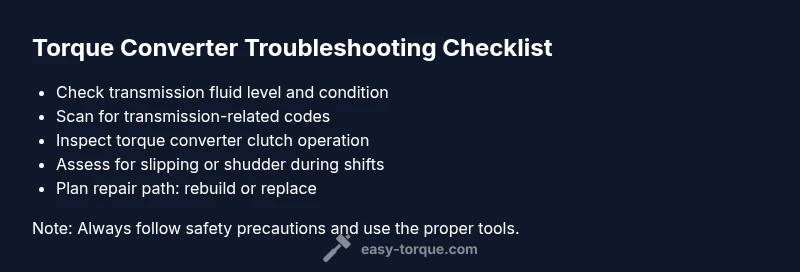
Start with a tangible check: inspect transmission fluid level, color, and smell. Burnt or Ler fluid indicates a problem. Next, scan for check-engine or transmission codes with an OBD-II reader; even if the vehicle doesn’t throw a specific torque converter fault, related codes can point to transmission hydraulics or sensors. If you have access to a professional stall test or a transmission pressure test tool, perform a controlled test to gauge converter clutch engagement and stall speed. Observe for symptoms like slipping, shuddering, or delayed engagement as you drive. Remember, some tests require specialized equipment and training, so if the issue persists, seek a qualified technician. Safety first: never dive into high-pressure cooling or internal transmission work without proper gear and procedure.
Replacement, maintenance, and prevention strategies
When what happens when a torque converter goes bad is confirmed, options include repairing or replacing the converter, or rebuilding the unit depending on damage. Replacement with a quality unit is often the most reliable path, while rebuilding can save cost where feasible. After any converter work, a complete transmission fluid flush and refill is usually recommended to remove contaminants and restore proper hydraulic function. Preventive care matters: schedule regular transmission fluid changes with the correct spec, avoid overheating by using cooling aids during heavy towing, and monitor for early signs of wear. Easy Torque’s guidance is to treat the converter as part of the transmission ecosystem: proper maintenance, timely diagnosis, and professional intervention when needed minimize long-term damage and downtime.
Steps
Estimated time: 2-6 hours
- 1
Verify symptoms with a controlled test drive
Ride conditions that trigger symptoms (acceleration and gear shifts) and document when warnings appear. This helps distinguish converter issues from other transmission faults.
Tip: Keep a consistent route and speed to compare notes on multiple passes. - 2
Check fluid level and quality
Park level and engine warm, inspect transmission fluid color and odor. A burnt or gritty smell is a red flag for converter wear.
Tip: If fluid looks dark or smells burnt, plan a drain-and-fill or flush with a qualified shop. - 3
Scan for diagnostic trouble codes
Use an OBD-II scanner to pull codes related to transmission hydraulics or torque converter. Even if no converter code appears, related sensors can point to the problem.
Tip: Save and log codes for trend analysis if symptoms recur. - 4
Assess converter clutch operation
If you have access to proper tools, perform a stall test to check clutch engagement speed and slip. Abnormal stall readings indicate converter trouble.
Tip: Abide by safety protocols; stall testing can be risky without proper equipment. - 5
Decide on repair path
If the converter is confirmed faulty, choose between replacement or a rebuild based on damage extent, availability, and vehicle value.
Tip: Trade-off: replacement is typically more reliable; rebuilds can save cost when feasible. - 6
Execute replacement or rebuild
Install a compatible torque converter, refill fluids, and recheck for leaks. Correct torque specs and steps are critical to prevent future failures.
Tip: Follow manufacturer torque specs and use a clean, lint-free environment. - 7
Road test and verify
After service, drive under varied loads to ensure smooth engagement and no abnormal noises. Recheck fluid level and inspect for leaks.
Tip: Monitor for the first 100 miles and address any new signs promptly.
Diagnosis: Car exhibits transmission slipping, shuddering, or delayed engagement, especially during acceleration or when stopping.
Possible Causes
- high Torque converter failure
- high Low or contaminated transmission fluid
- medium Worn clutch/bearings inside the converter
Fixes
- easyCheck transmission fluid level and condition; top up or flush if necessary
- easyRun a basic code scan to identify related issues and monitor for torque-converter-related codes
- mediumIf symptoms persist, plan professional replacement or rebuild of the torque converter
Your Questions Answered
What are the most common signs of a bad torque converter?
Common signs include slipping, shuddering, delayed engagement, overheating, and transmission warning lights. If these persist after fluid checks, seek a professional inspection.
Common signs are slipping and shuddering; if they persist, get a professional inspection.
Can you drive a car with a bad torque converter?
Driving with a suspected bad torque converter is risky and can cause further damage. Avoid long trips and high speeds until diagnosed.
It’s risky to drive with a suspected converter issue; get a professional diagnosis first.
How is a bad torque converter diagnosed?
Diagnosis combines fluid analysis, a test drive, code scanning, and sometimes a stall test. A technician may inspect clutch operation and measure hydraulic pressures.
Diagnosis uses fluid checks, codes, and tests to confirm converter issues.
Is replacing a torque converter expensive?
Costs vary with vehicle and replacement parts. Replacing with an aftermarket or OEM unit affects price and long-term reliability; discuss options with your technician.
Costs can vary; replacement options should be weighed against reliability and vehicle value.
Can prevention prevent torque converter issues?
Yes. Regular transmission fluid changes with the correct spec, proper towing practices, and avoiding overheating help prevent premature wear.
Yes—keeping up with maintenance and avoiding overheating reduces risk.
Top Takeaways
- Inspect fluid health early to prevent converter wear
- Diagnosis requires proper tools and systematic checks
- Replacement or rebuild should be planned if symptoms persist
- Prevent future failures with regular fluid changes and cooling checks