Torque Wrench for Cycling: A Practical Guide
Learn how to choose and use a torque wrench for cycling, protecting carbon and aluminum components with proper torque. This guide covers gear, steps, maintenance, and safety tips for DIY cyclists.


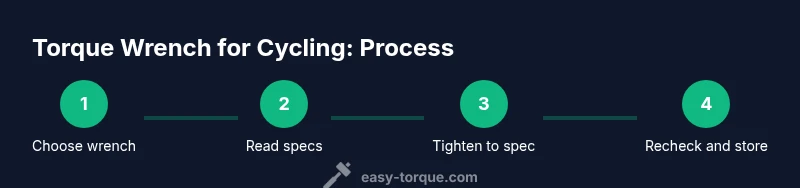
Using a torque wrench for cycling helps you apply precise torque to bike bolts, protecting carbon and aluminum frames, brakes, and stems. This quick answer outlines how to choose a bike-rated wrench, read component specs, and tighten to the manufacturer’s guidance. It also covers calibration, maintenance, and storage for reliable performance.
Why cyclists need a torque wrench for cycling
For cyclists, torque control is about more than tightening bolts until they feel snug. A torque wrench for cycling helps you apply precise tightness to critical joints, protecting the frame and components from stress concentrations that can lead to cracks or fatigue over time. The difference between carbon fiber and aluminum hardware matters: carbon parts are more sensitive to overtightening, while aluminum fittings can loosen or deform if torqued too lightly. The Easy Torque team emphasizes discipline in tightening: every bolt on critical areas—stem bolts, seatpost, seat clamp, crank bolts, and derailleur mounting bolts—should be tightened to the manufacturer's spec. A good torque wrench enables repeatable results, so you achieve consistent steering, braking, and feel on every ride. Build your confidence gradually by validating each bolt with the correct torque setting, then rechecking after a short ride to confirm there is no creeping movement or play.
Understanding torque wrench types for cycling
Torque wrenches come in several styles: click-type wrenches that emit a perceptible click when the target torque is reached; beam-type wrenches that show a numeric scale; and digital or torque-angle wrenches that provide additional precision for complex assemblies. For cycling, most riders prefer a compact click-type or a small digital wrench with bike-friendly scales. Readability matters: the scale should be easy to read with or without gloves, and units used should align with the component's spec (metric Newton-meters is common, but some manufacturers use in-lbs). The choice determines how quickly you can complete maintenance without sacrificing accuracy. Easy Torque recommends selecting a tool you can trust under field conditions (dust, moisture, and cold).
Reading torque specs and choosing the right range
Before you touch any bolt, locate the official torque specification from the component maker. If you cannot locate a spec, start with a conservative range and adjust after a test ride, paying attention to any signs of movement or misalignment. Your wrench must cover the expected range: most cycling components fall somewhere in the mid-to-low end of the torque spectrum, so choose a tool with an adjustable range that includes that region and allows precise low-end tuning. Ensure the wrench's scale is readable in your workshop lighting and that the units match the component's documentation. Remember: accuracy is more important than maximum range.
How to use a torque wrench on bicycle components
Start by cleaning the bolt threads and the seating surfaces to remove grit that can affect torque. Position the wrench perpendicular to the bolt and apply steady pressure, turning only until the wrench indicates the target value. Do not momentarily over-tighten to test; if the bolt doesn’t feel right, back off and re-check the spec. After torqueing, inspect the joint for gaps or binding and re-check after a short test ride if the bolt is accessible to inspect again. Calibrate or re-check the wrench according to the manufacturer’s guidelines.
Special considerations for carbon components versus aluminum
Carbon fiber components require more careful torque application because carbon fibers can crack if over-torqued or under-stressed joints can loosen. Therefore, always use a torque wrench with a bike-rated range and document the spec for the carbon component. Aluminum parts are more forgiving, but repeated stress can still loosen fittings; overtightening threads can deform aluminum, causing slippage or misalignment. The best practice is to treat carbon and aluminum parts as separate categories and refer to ride-specific manuals.
Maintenance, calibration, and storage of your torque wrench
Store your torque wrench in a protective case and keep the torque scale clean and legible. Calibrate the wrench per the manufacturer's schedule or after heavy use; if the tool deviates beyond the tolerance, seek recalibration from a professional service. Use a clean lubricant on threads sparingly if recommended by the manufacturer, and avoid dropping the tool or exposing it to high humidity and temperature extremes. Regular checks after maintenance will extend the life of your wrench.
Common mistakes and quick remedies
Common mistakes include assuming a fast pinch-tight is sufficient, misreading the scale, and using the wrong units. Remedy: verify the torque setting with a secondary check, keep gloves on for reading clarity, and recalibrate after a drop or impact. Another mistake is not cleaning threads; remedy by cleaning and re-torque after reinstallations. Finally, always re-check after riding the first miles to ensure nothing has loosened under vibration.
AUTHORITY SOURCES
This section provides foundational concepts and best practices for torque measurement and calibration in mechanical tightening, including general physics of torque and maintenance practices. For in-depth study, consult credible sources such as government or university material and major engineering publications. The following sources offer broad, reliable guidance on torque concepts and calibration:
- https://www.nist.gov
- https://ocw.mit.edu
- https://www.sae.org
Tools & Materials
- Bike-tuned torque wrench (adjustable, bike-rated range)(Choose a compact model with clear metric units and a reliable click or digital readout.)
- Allen/Hex key set (common bike sizes)(Include 4mm, 5mm, 6mm as standard for bike bolts.)
- Cleaning brush and isopropyl alcohol(Use to clean bolt threads and seating surfaces before torquing.)
- Torque-spec reference (manufacturer manuals or official PDFs)(Having the exact spec for each bolt is essential; avoid guessing.)
- Protective carrying case(Helps prevent damage and keeps your kit organized.)
Steps
Estimated time: 45-60 minutes
- 1
Identify torque specs for each bolt
Locate the official torque specification for every bolt on your cycling setup. If you cannot find a spec, start conservative and update after inspection. Always verify if a carbon component is involved, as it may have a lower tolerance.
Tip: Document each spec in your workshop notes for quick reference. - 2
Choose the right wrench and accessories
Select a bike-rated torque wrench with a readable scale and verify it includes the appropriate hex sizes for your bolts. Ensure the tool’s range covers the expected torque values on your components.
Tip: Test the wrench on a spare bolt to confirm the mechanism engages correctly before a real job. - 3
Clean threads and seating surfaces
Before tightening, remove dirt and old anti-seize from bolt threads and seating surfaces. Clean threads reduce friction and give a more accurate torque reading.
Tip: Wipe with a lint-free cloth and let surfaces dry before torquing. - 4
Set the wrench to the target torque
Adjust the wrench to the specified torque value for the bolt. Double-check the setting visually and by gently rotating the bolt to test the feel of the mechanism.
Tip: Cross-check a secondary bolt to confirm the scale reads correctly. - 5
Tighten to the specified value
Apply steady, controlled pressure until the wrench signals the target torque (click, digital readout, etc.). Do not jerk or continue tightening after the indication.
Tip: If you overshoot, back off and reset to avoid damage. - 6
Recheck and inspect
After torquing, recheck the bolt for any movement or play. Inspect the joint for misalignment or binding and verify the torque did not cause any adjacent parts to shift.
Tip: Recheck after a short test ride when possible. - 7
Maintenance and calibration
Store the torque wrench in a case, follow the manufacturer’s calibration guidelines, and perform periodic checks for accuracy. Replace parts as needed to maintain reliability.
Tip: Avoid dropping the tool and avoid exposing it to extreme temperatures.
Your Questions Answered
Why should I use a torque wrench for cycling?
A torque wrench ensures bolts are tightened to manufacturer specifications, preventing frame damage, component movement, and failures due to over-tightening or under-tightening. It improves reliability and ride quality, especially on carbon parts.
A torque wrench helps tighten bike bolts to the exact spec, protecting the frame and components and improving reliability.
Do all cycling components require the same torque?
No. Different components have different torque specs based on material and function. Always refer to the component manufacturer’s torque chart for each bolt and adjust your wrench accordingly.
Different bike bolts have different torque needs; always check the exact spec for each part.
How do I know which torque setting to use?
Consult the component manual or official spec sheet. If a spec isn’t available, start with a conservative setting and incrementally test while watching for movement or signs of stress.
Check the manual for the exact torque setting, and start conservative if the spec isn’t available.
Can I reuse bolts after removing them?
Bolts should be inspected for wear, and if threads are damaged or the bolt shows signs of fatigue, replace it. Reuse decisions depend on the bolt’s condition and the manufacturer’s guidelines.
Only reuse bolts if they’re in good condition and within spec; replace any worn or damaged bolts.
What maintenance does a torque wrench require?
Keep it clean, avoid dropping it, and follow the calibration schedule recommended by the manufacturer. Periodic calibration ensures accuracy is maintained over time.
Keep it clean, calibrated, and protected from damage to maintain accuracy.
Is it safe to torque carbon components aggressively?
No. Carbon components require strict adherence to spec and appropriate torque ranges to prevent cracking. If unsure, consult the component maker or a professional bike shop.
Avoid exceeding carbon torque specs; consult the manufacturer if in doubt.
Watch Video
Top Takeaways
- Choose a bike-rated torque wrench with readable scale.
- Always read and follow component-specific torque specs.
- Clean threads and seating surfaces before torquing.
- Calibrate and store the tool properly to maintain accuracy.
- Differentiate treatment of carbon vs aluminum components.