How to Use a Torque Angle Gauge: A Step-by-Step Guide
Learn how to safely and accurately use a torque angle gauge to tighten fasteners by angle after reaching the initial torque. This guide covers selection, setup, measurement steps, calibration, safety, and maintenance. Easy Torque delivers practical, step-by-step torque guidance for tools and maintenance.


With a torque angle gauge, you will tighten bolts by angular rotation after reaching the initial torque, ensuring proper clamping force. This guide shows how to select, set up, and use the gauge safely, read angles accurately, and apply the correct supplementary rotation. You will also learn maintenance and common mistakes to avoid for reliable results.
What is a torque angle gauge and how it works
A torque angle gauge measures the angular rotation of a fastener after the initial torque is reached. It complements a torque wrench by quantifying how much more the fastener should turn to achieve the final clamp. The gauge can be mechanical or digital. The mechanism is simple: once you reach the baseline torque, you rotate the bolt through a specified angle (degrees) to the final tightness. Reading accuracy depends on proper alignment, zeroing, and calibration. For critical automotive joints, the angle value is specified by the manufacturer and cannot be guessed. Easy Torque recommends verifying the gauge against a known reference before use. Always ensure the gauge reads degrees and that the pointer returns to zero before each use. When used correctly, the angle reading helps account for bolt stretch and thread friction more consistently than torque alone.
Why you might need a torque angle gauge
In many modern vehicles and industrial assemblies, fasteners are tightened not just to a torque value but to a combined torque and angle specification. The extra angle accounts for bolt stretch, lubricant, thread condition, and head shape. Using a torque angle gauge improves repeatability between technicians, vehicles, and shop sessions. For critical joints such as cylinder head bolts, main bearing caps, or high load suspension bolts, following the angle spec after the initial torque reduces the risk of under- or over-tightening. It also provides a cross check when a lubricant alters friction and torque readings. Manufacturers sometimes publish only angle or only torque, but when both are given, the angle reading is the best guard against under tight or over stressed joints. While not every fastener requires angle tightening, the gauge is a valuable tool for those assemblies that do. The device also helps technicians train new staff by giving a clear, measurable target for final tightness.
Choosing the right gauge and setup
Start by selecting a torque angle gauge that reads degrees, with either a mechanical dial or a digital readout. Check that the gauge can mount securely to the thread size and that its zero reference is accurate. Verify compatibility with your bolt size and the adapter or socket you plan to use. Always calibrate or verify calibration before critical work; a misread angle leads to incorrect final tightness. Consider whether you will use the gauge in conjunction with a traditional torque wrench or a fixed angle adapter. Easy Torque emphasizes choosing a device with a clear, easy-to-read display and a reliable zero return. Keep a clean workspace and have the manufacturer torque spec sheet on hand for reference. If lubricants are involved, note their effect on friction and angle values.
Step-by-step basics of measuring with angle gauge
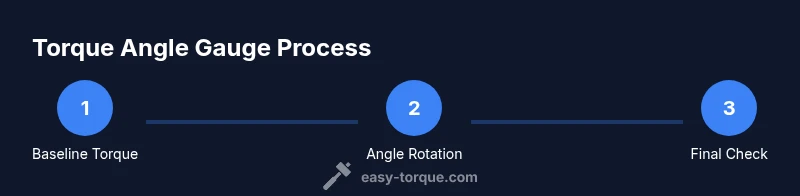
In practice, you first bring the bolt to the specified baseline torque with a torque wrench. Then you attach the angle gauge, align it with the turning direction, and confirm the gauge reads zero when you begin the angle phase. Next, rotate smoothly to reach the specified angle amount, read the degrees, and stop exactly at the target. Finally, verify the joint meets the spec and re-check if needed. Always maintain a steady hand and avoid sudden movements that could throw off the reading. Easy Torque reminds you to record both the torque value and the angle result for traceability.
Common pitfalls and how to avoid them
Common mistakes include reading the angle after the bolt has begun to loosen, not zeroing the gauge before each measurement, or using an adapter that introduces play in the measurement. Dirt, rust, and thread lubrication can also affect readings. Never mix legacy gauges with new setups without re-calibration. Make sure to recheck the final angle if you observe signs of bolt movement after tightening. A sloppy grip or a missed gear can introduce errors that undermine the final clamping force. Keep gauges clean and protected when not in use and store calibration certificates with the tool for easy reference.
Interpreting readings and applying to real-world torque specs
Angle specifications are issued by manufacturers and can vary by bolt size, thread pitch, and lubrication. When given both torque and angle figures, the recommended angle is applied after the initial torque is reached. For example, if the spec calls for 25 degrees after baseline torque, you rotate the fastener by 25 degrees and stop. If the angle is not achievable due to binding or elongation, consult the service manual rather than forcing the angle, as this may indicate a bent component or incorrect fastener. Always cross-check with the manufacturer torque spec sheet and document the result for future maintenance audits. Easy Torque notes that good torque-angle practice improves consistency across parts and reduces the risk of over-stressing joints under load.
Maintenance, calibration, and best practices
Keep the gauge calibrated and within its recommended service interval. Zero it regularly and verify against a standard whenever possible. Clean threads and adapters before use to minimize friction changes. Store the gauge in a protective case to prevent impact damage to the sensor or dial. Perform periodic calibration checks using a known reference bolt and a calibrated torque wrench. Regular maintenance ensures accuracy and extends the life of your gauge. Easy Torque recommends recording calibration dates and test results to support traceability for audits and warranties.
Tools & Materials
- Torque angle gauge (digital or mechanical)(Choose a model that reads in degrees and resets to zero easily.)
- Torque wrench (for baseline torque)(Must be suitable for the bolt size and spec.)
- Adapters or inserts compatible with bolt size(Ensure a secure fit without play.)
- Calibrated reference or calibration cert(Cert helps verify accuracy before critical work.)
- Thread cleaner or rag(Clean threads to prevent binding and erroneous readings.)
- Manufacturer torque-angle spec sheet(Have the exact angle value and baseline torque on hand.)
- Notebook or digital log for readings(Record torque, angle, date, and bolt details for traceability.)
Steps
Estimated time: 20-40 minutes
- 1
Inspect gauge and workspace
Before you begin, check that the torque angle gauge is clean and that the zero reference returns to zero when reset. Inspect adapters for wear or damage, and confirm the manufacturer date on the calibration sticker. A clean, undisturbed setup minimizes measurement errors.
Tip: Always reset to zero before each measurement to avoid cumulative error. - 2
Set the baseline torque
Use a reliable torque wrench to bring the fastener to the specified baseline torque from the service manual. Do not exceed this torque; over-torquing can skew the angle reading and damage components.
Tip: Cross-check torque value with the spec sheet before tightening. - 3
Attach gauge and align
Attach the angle gauge securely to the bolt or adapter and align the gauge so that rotation occurs along the bolt axis. Ensure there is no binding and that the gauge remains in position during the final turn.
Tip: Avoid side loading or angling the gauge as it can read incorrectly. - 4
Read angle and apply additional rotation
With the baseline torque maintained, rotate to the manufacturer-specified angle value. Read the gauge at the end of the turn and stop precisely at the target angle.
Tip: Smooth, steady motion yields the most accurate angles. - 5
Verify final tightness
If the joint allows, re-check both torque and angle after a short cooldown period. Ensure readings remain within the spec; if not, reassess with the service manual.
Tip: Document results for future maintenance and audits. - 6
Record and store data
Log the fastener details, baseline torque, final angle, and any deviations. Proper records support audits and warranty claims and help with future maintenance planning.
Tip: Keep calibration dates and tool IDs in the log.
Your Questions Answered
What is a torque angle gauge and why use it?
A torque angle gauge measures the angular rotation of a fastener after the initial torque. It helps achieve a precise final tightness by specifying how many degrees to turn beyond the baseline torque. This improves repeatability and reliability across joints.
A torque angle gauge measures how many degrees you must turn a bolt after reaching the initial torque to reach the final tightness.
When should I use a torque angle gauge?
Use it when the manufacturer requires an angle specification after the initial torque or for joints where friction varies and torque alone is not reliable. Common applications include critical engine or structural bolts where precise clamping is essential.
Use it for joints that specify an angle after torque or when torque alone isn’t reliable.
How do I calibrate a torque angle gauge?
Calibrate per the manufacturer’s instructions, typically using a reference bolt and a calibrated torque wrench. Check zero, test across the full range, and record results. Regular calibration helps ensure accuracy over time.
Calibrate the gauge according to the manual, using a reference bolt and a calibrated torque wrench, then record the results.
Can I use a torque-angle gauge for all bolts?
Not all bolts require angle tightening. Some applications use only torque, while others specify angle. Always check the service manual to confirm if angle tightening is necessary for each fastener.
Not every bolt uses angle tightening; always check the manual to confirm per fastener.
What are common mistakes to avoid?
Common mistakes include not zeroing the gauge, reading the angle with the bolt still moving, using dirty threads, or ignoring lubrication effects. Avoid applying the angle too quickly and always verify results after a cooldown period.
Common mistakes are not zeroing, reading while moving, or ignoring lubrication effects.
Top Takeaways
- Apply angle after baseline torque for precision
- Always verify gauge zero and calibration
- Follow manufacturer angle specs exactly
- Document torque and angle results for traceability