Torque Wrenches Calibration: A Practical Guide
Comprehensive, step-by-step instructions for torque wrenches calibration, including home checks, professional options, and maintenance tips to ensure accurate, repeatable torque results.


In this guide you will learn how to calibrate a torque wrench, check its accuracy, and maintain measurement reliability over time. You'll see simple home methods for quick checks and when to service professional equipment. A reliable calibration routine helps prevent under- or over-torqued fasteners in DIY and professional work.
Why calibration matters for torque wrenches
According to Easy Torque, regular torque wrenches calibration is essential for accuracy and safety. When a wrench reads a value that deviates from the actual torque applied, fasteners can be over-tightened or under-tightened, risking component damage or joint failure. Calibration aligns the wrench’s indicated torque with a traceable reference standard, ensuring repeatable results across tools and operators. In professional settings, even small errors multiply over long-term assemblies, making calibration a must for automotive repair, aerospace, and machinery maintenance.
In practice, calibration gives you confidence that a 30 N·m setting will produce roughly 30 N·m in clamping force, not 28 or 32. The process also helps uncover wear, misalignment, or internal spring fatigue that reduces accuracy. Finally, maintaining an auditable calibration trail supports quality programs and safety compliance.
Basic terminology and tolerance you should know
Torque wrench basics matter for calibration decisions. Understand nominal torque (the stated setting), actual torque (the force delivered), and tolerance (the allowed deviation). Out-of-tolerance (OOT) means readings fall outside the manufacturer or standard range and require service. Traceability links your results to national or international standards, ensuring consistency across tools and time. Be comfortable with units like N·m and ft·lb, and know that environmental conditions can affect accuracy. Proper terminology helps you communicate issues clearly to service providers or your team.
Another key term is linearity, which describes whether the wrench’s output tracks proportionally with applied torque across its range. If a wrench is non-linear, it might read correctly at one point but drift at another. Finally, remember calibration is part of broader maintenance, not a one-off event; repeat at recommended intervals to retain reliability.
Types of torque wrenches and how calibration differs
Torque wrenches come in several forms: click-type, beam, dial, and digital. Click-type wrenches provide a tactile release at a set point and are the most common for automotive work. Beam wrenches rely on a visible deflection scale, which can be less precise and more sensitive to parallax errors. Dial wrenches use a dial indicator, while digital models display torque numerically and may offer auto-calibration features.
Calibration approaches differ by type. Click-type tools often require calibration to verify trigger point alignment and spring tension within tolerance; some models allow minor adjustment via a calibration nut or screw. Digital wrenches may be calibrated through software and wired references. Regardless of type, calibration aims to confirm that the indicated torque matches the true torque across the tool’s range, and to correct any drift or wear effects. Regular checks help identify worn springs, bent handles, or damaged housings that affect accuracy.
Tools and standards used in calibration
A robust calibration setup uses traceable references and stable fixtures. Essential items include a set of calibration weights or a digital torque tester with a known reference reading, a calibrated fixture to apply torque along the wrench’s axis, and a caliper or micrometer for precise measurements of components and alignment. A temperature-controlled environment helps reduce drift, while a torque adapter or extension bar can be used to reach different leverage points.
Standards and records underpin calibration credibility. Use weights and readers that are certified and traceable to a recognized standard (e.g., national metrology institutes). Maintain a calibration certificate and an auditable log that shows the point values tested, the observed readings, and any adjustments made. Environmental notes (temperature, humidity) can help interpret results and plan retests.
Step-by-step: calibrating a click-type torque wrench
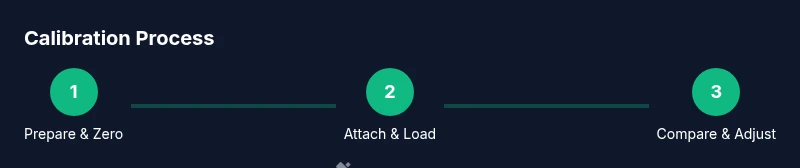
Calibration begins with preparing the bench and ensuring the wrench is clean and zeroed. Attach the wrench to a stable calibration fixture, aligning the torque axis with the applied load. Start at a low torque level, applying a known reference torque using traceable weights or a calibrated torque tester. Record the wrench’s indicated value and compare it to the reference; if within tolerance, proceed to the next point. For adjustable tools, perform any manufacturer-approved adjustment to bring readings into spec, then re-test. Finally, document results and schedule the next calibration.
This section outlines the critical testing points and decision thresholds to determine whether the tool remains in service or requires servicing.
Step-by-step: calibrating a digital torque wrench
Begin by completing a zero check and ensuring fresh batteries if required. Mount the wrench on a calibrated fixture and apply a defined torque using a traceable reference. Read the digital display and compare against the reference; most models allow calibration via software or built-in calibration procedures. If readings deviate beyond tolerance, recalibrate per the manual or return for service. Re-test after adjustments to confirm improved accuracy.
Keep a log of the software version, reference values, and date of calibration for traceability.
How to perform a quick field check (ring-out test) at home
For a fast field check without a full lab setup, use a known weight setup to apply a small, mid-range torque to the wrench and observe whether the reading matches within a reasonable tolerance. Do this with care, ensuring the setup is secure and that the wrench is not at its limits. A ring-out test won’t replace formal calibration but helps you spot obvious drift between uses.
Always document field results and compare against baseline values to detect significant changes over time.
Common pitfalls and how to avoid them
Common calibration pitfalls include testing at only one torque point, using uncalibrated reference standards, and neglecting to zero or reset the tool before measurements. Environmental factors like temperature, vibration, and friction can introduce drift. Don’t forget to secure the fixture and avoid parallax errors when reading scales. Finally, when a tool is out of tolerance, do not continue using it in critical work; arrange professional service.
Calibration maintenance: schedule, records, and traceability
Maintenance means scheduling regular calibration and keeping thorough records. Create a calendar with the recommended interval and a checklist for each test point. Store calibration certificates and keep a repair history for each wrench. Traceability connects your results to a standard reference, supporting quality control and safety programs. Review notes after every calibration cycle and adjust the schedule if your usage intensity increases or issues are detected.
Tools & Materials
- Traceable calibration weights (N·m or ft·lb)(Set of weights with known values, traceable to a standard.)
- Calibration fixture or torque tester(A stable rig to apply torque along the wrench’s axis.)
- Torque wrench to be calibrated(The wrench under test; ensure it's clean and zeroed.)
- Torque adapter/extension bar(For reaching different leverage points without altering the tool’s axis.)
- Caliper or micrometer(For precise measurement of fixture components and adapters.)
- Temperature control/thermometer(Record ambient temperature to assess drift.)
- Safety gear (eye protection, gloves)(Personal protective equipment as needed.)
Steps
Estimated time: 60-120 minutes
- 1
Prepare the calibration setup
Clear the workspace and wipe the wrench clean. Confirm zero on the wrench and verify the calibration fixture is properly aligned with the wrench’s torque axis.
Tip: Zero the wrench before loading to prevent offset errors. - 2
Attach to calibration fixture
Mount the wrench securely in the fixture in the correct orientation to ensure torque is applied along the centerline. Check for any play or misalignment.
Tip: Use a torque adapter if required to maintain alignment. - 3
Apply a known torque at a low point
Using traceable weights or a calibrated tester, apply a low torque (e.g., 20-30% of range) and record the indicated value.
Tip: Stabilize the setup before taking readings. - 4
Record and compare readings
Note the wrench’s indication and compare to the reference. Repeat at mid and high torque points.
Tip: Use multiple points to assess linearity. - 5
Adjust if possible
For adjustable wrenches, make manufacturer-approved adjustments to bring readings into spec. For non-adjustables, note the out-of-tolerance condition for service.
Tip: Document any adjustments and verify after re-testing. - 6
Repeat across the range
Test at low, mid, and high torque values to confirm consistency. If any point is out of tolerance, re-evaluate or service.
Tip: Consistency across the range is more important than individual points. - 7
Document results and schedule next calibration
Record all results, tool identification, and environmental conditions. Schedule the next calibration per policy.
Tip: Attach the calibration certificate to the tool for quick audits.
Your Questions Answered
What is torque wrench calibration?
Calibration is the process of verifying and adjusting a torque wrench so its indicated torque matches the true applied torque at multiple points across its range. It ensures accuracy, repeatability, and safety in fastener installations.
Calibration verifies accuracy of your torque wrench so fasteners are tightened correctly.
How often should I calibrate my torque wrench?
Calibration frequency depends on usage and environment. Many users perform checks annually or after heavy use, drop, or suspected drift. Always follow the manufacturer’s recommendations and your maintenance policy.
Most shops calibrate torque wrenches yearly or after heavy use, but check your policy.
Can I calibrate a torque wrench at home?
Yes, you can perform basic field checks at home with a stable fixture and traceable reference standards. A full laboratory calibration requires proper equipment and documentation.
You can do basic home checks, but for formal calibration you’ll want proper equipment.
What should I do if my wrench is out of tolerance?
Do not use the wrench for critical work. If out of tolerance, either adjust (if supported) and re-test, or send the tool to a qualified calibration facility for service.
If out of tolerance, stop using it and arrange service or adjust if the maker allows.
What’s the difference between click-type and digital wrenches in calibration?
Click-type wrenches rely on a mechanical trigger and spring; digital wrenches rely on sensors and software. Both require verification across their ranges; adjustments are often more straightforward on digital models.
Both types need checks across their range; digital may use software adjustments.
What standards govern torque calibration?
Calibration relies on traceability to national or international standards. Keep records of certificates, reference values, and environmental conditions to support traceability and quality control.
Calibrations should be traceable to recognized standards and well-documented.
Watch Video
Top Takeaways
- Plan calibration with traceable references.
- Test across the full torque range.
- Record results for traceability and compliance.
- Schedule regular maintenance and keep a detailed log.