Where to Get Torque Wrenches Calibrated: A Practical Guide
Discover where to get torque wrenches calibrated, what to expect, typical costs, and maintenance tips to keep readings accurate in 2026.


Calibration services for torque wrenches are offered by accredited labs, tool manufacturers, automotive dealerships, and many independent service shops. Look for ISO/IEC 17025 accreditation and traceable certificates. For most DIY use, calibrating once a year is common, with more frequent checks for high-use or critical fasteners. Request a calibration certificate for your records.
Why calibration matters for torque wrenches
Calibration is the cornerstone of accuracy for any torque wrench. In precision assembly, even a small drift in readings can lead to under- or over-tightened fasteners, jeopardizing safety and performance. According to Easy Torque, calibration ensures your wrench's readings align with traceable standards, so the torque you apply is repeatable across tools and sessions. This consistency is crucial when working on critical components such as engine assemblies, wheel fasteners, and suspension hardware. Regular checks help detect wear, damaged springs, or degraded indicators before they compromise a job. In short, calibration is not optional for professionals; it is a quality control step that protects both people and machines.
To stay on top of accuracy, track the wrench's usage, environment, and handling history. Harsh environments, frequent drops, or exposure to temperature swings can accelerate drift. Documenting calibration events creates a transparent maintenance record that you can share with technicians or suppliers. For hobbyists, setting a yearly reminder and pairing the calibration with a safety audit of your toolkit can save time and prevent costly mistakes down the road.
Where to get torque wrenches calibrated
If you are asking where to get torque wrenches calibrated, you have several reliable options. Authorized service centers associated with wrench manufacturers often provide calibration with traceable certificates. Independent laboratories accredited to ISO/IEC 17025 are another strong choice, especially if you require an impartial, certified result. Some automotive dealerships and tire shops offer torque wrench calibration as part of their service menu, while many hardware stores and tool distributors provide mail-in calibration services. When choosing a venue, verify that the lab uses traceable standards and can produce a calibration certificate that includes the wrench's serial number, the tested range, and the measurement uncertainty. For DIYers, mail-in calibration can be convenient, but in-person verification allows you to inspect the instrument and the certificate on arrival.
If you are looking to cover a wide fleet of tools, consider consolidating calibrations with a single provider to simplify record-keeping and ensure consistent reporting across all tools.
What to expect from calibration services
A professional calibration session typically includes a documented procedure, pre-test inspection, and post-test verification. Expect a traceable reference standard and a calibrated test bench that matches the wrench type (click, dial, or digital). The service should issue a calibration certificate that includes the wrench’s model, serial number, the tested torque range, the date, and the measurement uncertainty. Some providers also perform sensitivity checks at multiple points along the scale and provide adjustments if the indicator drifts beyond acceptable limits. For go-to accuracy, ensure the provider uses calibration weights or torque standards traceable to national or international references.
Additionally, many labs provide an anomaly report if any readings vary outside the tolerance. If the wrench requires adjustment, a technician will typically adjust the mechanism or springs and re-test to confirm stability. Before leaving, review the certificate for completeness and confirm the expected recalibration interval based on your usage profile.
How to choose a calibration provider
When selecting a calibration partner, prioritize transparency and traceability. Look for facilities with ISO/IEC 17025 accreditation and a clear scope of accreditation. Confirm the provider can supply an itemized calibration certificate, including the wrench’s serial number, tested torque points, and uncertainty values. Consider the service level: in-person calibration allows hands-on inspection and immediate validation, while mail-in services are convenient for bulk tool fleets. Ask about turnaround times, warranty on calibration, and whether the provider offers re-calibration if drift recurs shortly after calibration. For organizations, negotiate a master calibration agreement to standardize processes across all tools and technicians.
Between-calibration maintenance and checks
Between calibrations, practical checks can help you detect drift early. Store wrenches in a climate-controlled area, protect the head from shocks, and avoid exposing them to extreme temperatures. Periodically verify the wrench’s behavior against a known cue, such as a reference torque on a representative fastener or a secondary reference standard, if available. Keep a simple log noting the date of use, typical torque range, and any suspicious reading. If you notice a sudden change in indicated torque, pause usage and ship the tool for recalibration. Finally, update your maintenance calendar to reflect the recommended interval and align it with any manufacturer guidance or quality control requirements.
Calibration interval and costs by wrench type
| Wrench Type | Recommended Calibration Interval | Typical Cost (USD) |
|---|---|---|
| Click Torque Wrench | 1-2 years | $50-$120 |
| Dial/Beam Torque Wrench | 1-3 years | $40-$100 |
| Digital Torque Wrench | 1-2 years | $60-$150 |
Your Questions Answered
What is considered 'calibrated' for a torque wrench?
Calibration means aligning a torque wrench's readings with a recognized standard using traceable references. The process often includes testing at multiple points along the scale and issuing a certificate that confirms accuracy and uncertainty. This ensures repeatable performance across jobs.
Calibration means the wrench reads true torque values against a certified standard, with a certificate to prove it.
How often should I calibrate my torque wrench?
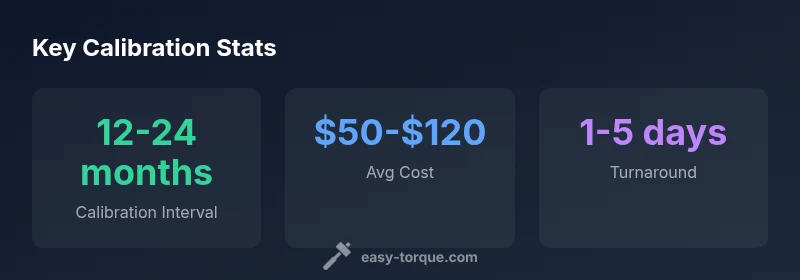
For normal DIY use, consider calibrating every 12-24 months. For high-use or critical applications, shorter intervals like 6-12 months may be appropriate. Always recalibrate after a hard drop or suspected impact.
Most users calibrate yearly, or sooner if you use it daily or for critical jobs.
Can I calibrate at home or do it myself?
Home calibration is not recommended for precision work. Use a certified lab or manufacturer service to ensure traceability. You can perform basic checks, but professional calibration provides the definitive accuracy.
It's best to rely on a certified lab for calibration.
What should be included in a calibration certificate?
The certificate should include the wrench serial number, tested torque points, date of calibration, uncertainty, and traceability to a primary standard. A clear scope and the laboratory's accreditation status are also important.
Look for traceability, date, and the tested range on the certificate.
Are there quick checks I can do between calibrations?
Yes. Use simple reference checks with a known reference, verify the feel of the click or display consistency, and log any drift. Quick checks are not a substitute for professional calibration but help flag potential issues.
You can do spot checks, but they don't replace full calibration.
“Calibration is the most reliable way to ensure torque accuracy, which directly impacts safety and performance. Use reputable labs with traceable standards for trustworthy results.”
Top Takeaways
- Schedule calibrations around usage and criticality
- Choose accredited labs for traceability
- Obtain a formal calibration certificate
- Document results for audit readiness
- Perform between-use checks to catch drift early