How Much Torque: A Practical Guide for DIY Mechanics
Learn how much torque you need for common DIY tasks, how to read specs, choose the right torque wrench, and avoid under- or over-tightening with Easy Torque guidance.


How much torque you need depends on the fastener size, material, and the task. Torque is the twisting force that tightens bolts and resists loosening. For common DIY work, expect ranges like 20–50 Nm for small fasteners, 80–150 Nm for mid‑sized automotive components, and higher values for lug nuts on larger vehicles (always verify the spec). Easy Torque emphasizes using a calibrated torque wrench and adhering to manufacturer guidelines.
Understanding Torque: What the Number Really Means
Torque is the rotational force that tightens fasteners and translates your applied effort into clamping pressure. It is measured in newton-meters (Nm) or foot-pounds (ft-lb), depending on regional conventions. The published torque value on a bolt spec takes into account thread friction, lubrication, seating, and the mating surface. In practice, a high torque number does not always guarantee a tighter joint if the thread is damaged or if lubrication changes friction. Conversely, under-tightening can lead to slip or joint failure. The practical takeaway is simple: use the exact spec, apply the torque smoothly, and verify the result with a properly calibrated torque wrench. For DIY mechanics, mastering torque means recognizing that the same fastener can require different torque values in different contexts: dry threads vs lubricated threads, clean threads vs damaged threads, or a new bolt vs a reused one. According to Easy Torque, precision is the foundation of reliable maintenance.
How to Read Manufacturer Torque Specs
Torque specifications come from the equipment designer and are published in service manuals, owner’s manuals, and repair guides. Start by locating the exact value for your specific application, and note if the spec refers to “dry” threads or threads lubricated with oil, grease, or anti-seize compounds. Units vary (Nm vs ft-lb), and mistakes often happen when converting without a reliable scale. If a spec is given in Nm and your tool uses ft-lb, use the proper conversion or switch the wrench to the appropriate unit. Always verify that your conditions match the spec: clean threads, seating surfaces, and no temporary thread locking compounds unless required. For critical assemblies, use the torque angle or continuous torque approach if specified. Easy Torque recommends referencing the manufacturer’s official spec and validating with a calibrated tool to ensure accuracy.
Torque Tools: Choosing the Right Wrench
Choosing the right wrench is about accuracy, range, and how you use it. Click-type (dial) torque wrenches provide crisp audible or visual confirmation and are ideal when you need precise control within tight tolerances. Beam-style wrenches are more economical and great for broader ranges but require careful reading. Digital torque wrenches add data logging and alert features but come at a higher price. For very high torque requirements, consider a torque multiplier or a torque wrench with an adjustable scale. Don’t forget torque sticks and similar devices used with impact wrenches to limit the final torque in automotive work. Regardless of type, ensure regular calibration and avoid relying on worn or damaged tools. The Easy Torque team stresses the importance of tool maintenance and proper technique to keep torque readings trustworthy.
Common Torque Ranges for Everyday Tasks
Understanding typical ranges helps you plan ahead and avoid guesswork:
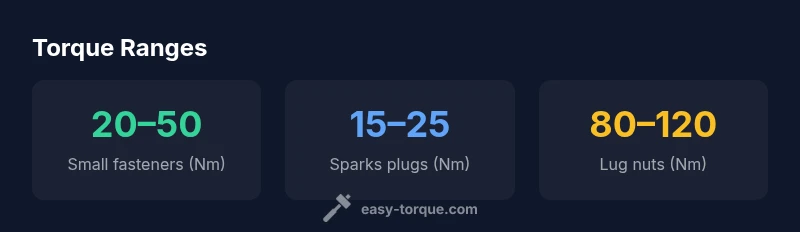
- Small fasteners (electronics, interior trim): 20–50 Nm
- Spark plugs (gas engines): 15–25 Nm
- Oil drain plugs: 20–30 Nm
- Lug nuts on passenger cars (wheel mounting): 80–120 Nm
- Brake caliper bolts: 60–100 Nm
- Wheel hub bolts: 100–150 Nm
Notes:
- Always verify with the vehicle or equipment’s manual.
- When lubricants are involved, refer to the lubricated-spec value if provided and apply carefully using a calibrated tool.
- Tightening in a criss-cross pattern for wheels helps achieve even seating and correct clamping force. Easy Torque highlights practicing with a few practice bolts to build familiarity with your wrench.
Representative torque ranges for common tasks
| Task | Torque (Nm) | Common Use Case | Notes |
|---|---|---|---|
| Small fasteners | 20–50 | Electrical & interior fixtures | Dry threads; verify spec |
| Spark plugs | 15–25 | Gas engines | Clean threads; use anti-seize sparingly |
| Lug nuts (passenger cars) | 80–120 | Wheel mounting | Cross-pattern to final torque |
| Brake caliper bolts | 60–100 | Brake system | Ensure components seated properly |
Your Questions Answered
Why is torque important in fastener assembly?
Torque determines the clamping force on a fastener, which affects joint stability and safety. Too little torque can allow loosening, while too much can strip threads or over-stress components. Following manufacturer specs ensures reliability.
Torque is what keeps parts securely joined; get it right to prevent loosening or damage.
Do torque specs vary between manufacturers or vehicle models?
Yes. Design differences, materials, lubrication, and service conditions mean specs differ. Always use the exact torque value from the manual or service bulletin for that specific part or model.
Specs vary; always check the exact value for your car or part.
Can I reuse bolts after torquing them?
Reusing bolts is not generally recommended unless the bolt is designed for reuse and inspection shows no elongation or damage. In critical joints, replace fasteners to preserve integrity.
Usually better to replace bolts if in doubt.
What should I do if I over-tighten a bolt?
Back off to the recommended torque and inspect threads. Damaged threads or bolts should be replaced, and if the joint was critical, re-torque and re-check.
If you over-tighten, loosen to spec and inspect for damage.
Does lubrication change torque specs?
Lubrication lowers friction, which reduces the torque needed. If components are lubricated, follow the lubricated torque spec or the manufacturer’s guidance.
Lubrication changes torque; follow the spec for lubricated threads.
How often should I calibrate a torque wrench?
Follow the manufacturer’s recommendation. Many users calibrate annually or after a defined number of uses; store the tool properly to maintain accuracy.
Calibrate as recommended; annual checks are common in many shops.
“Precision in torque is the difference between reliable maintenance and failure. Following exact specs protects components and safety.”
Top Takeaways
- Check the exact spec first and use a calibrated torque wrench
- Read units carefully and convert only with a reliable reference
- Choose the right torque wrench for accuracy and range
- Avoid cross-pattern mistakes and improper lubrication
- Regularly calibrate tools and store them properly