What Torque Do You Use? A Practical Guide for DIYers
Explore what torque you should use for common fasteners with practical ranges, best practices, and step-by-step guidance from Easy Torque for DIYers.


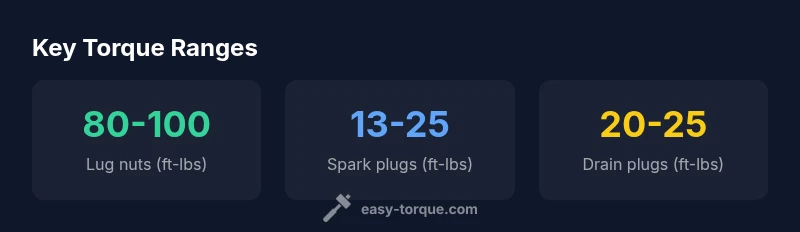
There isn’t a single universal torque you should always use; torque depends on the fastener size, material, and lubrication. For common tasks, typical ranges are: lug nuts 80-100 ft-lbs, spark plugs 13-25 ft-lbs, and drain plugs 20-25 ft-lbs. That means you may need different torques for similar fasteners on different cars, and even between dry and lubricated threads.
Why correct torque matters
Torque control is a foundational habit for any mechanic, whether you’re a weekend DIYer or a professional. The right torque ensures fasteners achieve the correct clamping force without risking thread damage, bolt failure, or component distortion. In automotive work, under-torquing can lead to wheel loosening, leaks, or improper gasket seating, while over-torquing can strip threads, warp parts, or snap bolts. The practical takeaway is simple: follow the specification for the fastener and use the proper torque tool to apply it. When you ask, what torque do you use, you must consider the fastener size, thread pitch, lubrication state, and service conditions. The Easy Torque team emphasizes documenting torque values and rechecking them after service to maintain safe, durable assemblies.
How torque specs are determined
Torque specs aren’t random numbers. They are the result of controlled tests by manufacturers, accounting for fastener geometry, material strength, lubricant effects, and intended service loads. Differences in thread pitch, bolt diameter, grade, and whether threads are dry or lubricated all influence the final value. A single fastener type can have a range of acceptable torques depending on seating surface, sealants, and operating temperature. The official spec gives you the target and the allowed tolerance. In practice, you should always reference the vehicle or equipment manual and apply torque with a calibrated wrench to within the published range. Consistency in tool use and pattern matters as much as the exact number.
Common torque ranges for everyday tasks
- Lug nuts: Typical ranges fall around 80-100 ft-lbs, depending on vehicle and wheel size. Always consult the specific rotor and lug pattern for your car.
- Spark plugs: Common seats require 13-25 ft-lbs; the range varies by plug type and engine design. Do not exceed the upper limit to avoid thread damage.
- Oil drain plugs: Frequently in the 20-25 ft-lbs window, but some engines require looser or tighter values based on gasket design and oil pan material. Lubrication state and thread condition influence the final torque.
- Brake caliper bolts: Often in the 15-25 ft-lbs range; follow the exact sequence and retorque after initial seating if instructed by the manufacturer.
Tools and technique: using a torque wrench correctly
A torque wrench is a precision instrument that converts a user-applied force into calibrated torque. Start by lubricating threads only where the manufacturer says it’s allowed; avoid excessive lubricant on components that could alter friction. Set the wrench to the target torque before seating the fastener. Apply steady force and stop when the wrench clicks or indicates the preset torque. Use the correct pattern for multi-bolt components (e.g., star sequence on wheels) to ensure even seating. Regular calibration checks and proper storage extend the life of the tool.
Environment, lubrication, and material science impact torque
Temperature, humidity, and lubrication dramatically affect the clamping force you actually achieve. Warmer ambient temperatures can reduce material strength slightly, increasing the risk of under-torquing if you don’t adjust the setting. Lubricated threads reduce friction, often lowering the required torque compared with dry threads. Anti-seize compounds and thread sealants can further shift the target value, so always read the spec and, if necessary, consult the service bulletin for the component. Clean threads before torqueing and replace damaged fasteners rather than attempting to re-use compromised parts.
Special cases and quick tips
Certain fasteners require special attention: lug nuts in a star pattern, spark plugs with proper seating depth, and drain plugs with new gaskets where applicable. For aluminum components, use caution to avoid galling and ensure proper torque to prevent thread damage. When you don’t have a torque wrench, avoid guessing—use a torque adapter or seek guidance from service documentation or a professional. Document all torque values in your maintenance log for future reference.
Verifying torque and maintaining fasteners
After installation, re-check all critical fasteners following the recommended torque sequence, especially after a test drive. If you notice any abnormal vibration, noise, or movement, re-inspect the fastener and re-torque if necessary. Regular inspections during maintenance intervals help prevent fastener failures and improve safety. Keep your torque tools calibrated, and rotate through your torque settings to prevent wear on any single setting.
Common torque ranges for everyday automotive fasteners
| Task | Typical torque range (ft-lbs) | Notes |
|---|---|---|
| Lug nuts | 80-100 | Check owner's manual for wheel/spec |
| Spark plugs | 13-25 | Depends on plug type and seat |
| Oil drain plug | 20-25 | Lubrication and thread condition matter |
| Brake caliper bolts | 15-25 | Use a star pattern for seating |
Your Questions Answered
What torque should lug nuts be tightened to?
Lug nuts typically range 80-100 ft-lbs; verify with the manual for your vehicle. Always torque in a star or criss-cross pattern to seat evenly.
Lug nuts are usually tightened to about 80 to 100 foot-pounds. Check your manual and tighten in a star pattern.
How do I know which torque spec to use?
Use the torque spec published by the vehicle manufacturer for the specific fastener and condition; if in doubt, consult a service manual.
Always use the factory spec for your car.
Can I reuse old torque specs after disassembly?
If fasteners are removed, you should re-torque to the current spec; reusing prior torques is not recommended.
Don't reuse old torque values; re-check.
What happens if I over-tighten a bolt?
Over-tightening can strip threads, warp components, or break the bolt; use a torque wrench and proper sequence.
Over-tightening can damage threads or parts.
Do torque specs change with lubrication?
Yes; lubricated threads reduce friction and usually require a lower torque value than dry threads.
Lubrication lowers the required torque.
What if I don’t have a torque wrench?
Without a torque wrench, you should avoid high-risk fasteners and seek guidance; some tasks can be done with torque-stick or calibrated torque tools.
Not having a torque wrench makes precise torque hard; seek guidance.
“Proper torque is the foundational habit that protects fasteners and ensures safety across every service.”
Top Takeaways
- Know the car’s spec per model
- Always verify torque with a calibrated wrench
- Expect variation across cars and lubrication
- Inspect threads and replace damaged fasteners