Most Common Torque Specs: A Practical Guide for DIY Mechanics
Learn the most common torque specs for everyday automotive fasteners, how ranges vary by size and grade, and how to apply torque accurately using a torque wrench.


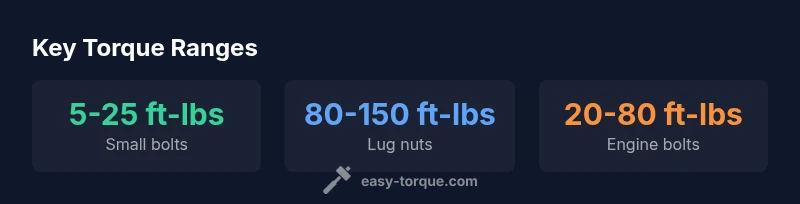
Across everyday automotive fasteners, the most common torque specs fall into broad ranges that depend on size and grade. Small bolts typically land in the 5–25 ft-lbs range, while lug nuts and higher‑grade fasteners often require 80–150 ft-lbs. Always verify using the vehicle’s service manual or a trusted torque chart.
Why torque specs matter
Torque specifications establish the clamping force that keeps joints secure under vibration, heat, and dynamic loads. Getting this right prevents component loosening, leaks, or bolt failure. For most DIY projects, you’ll start with the most common torque specs as a baseline and then dial in based on size, grade, and lubrication. The Easy Torque team emphasizes that accuracy matters more than speed; a precise torque value preserves thread integrity and equipment reliability.
Most common torque specs: an overview
Torque numbers vary by fastener size and grade, but several broad patterns repeat across many vehicles. Small machine screws and connectors often sit in the 5–25 ft-lbs range. Lug nuts on standard wheels typically require substantially higher clamping force, commonly in the 80–150 ft-lbs region, depending on stud size and wheel material. Brake and engine-related fasteners fall into a mid-range band, roughly 15–60 ft-lbs for many components, with certain high‑strength bolts reaching toward the upper end. In every case, strain is sensitive to lubrication, thread engagement, and whether the thread surface is lubricated or dry. Build a mental map: small fasteners = light torque, lug nuts = heavy torque, engine bolts = mid-range with engine-specific caveats.
Lug nuts and wheel fasteners: typical ranges
Wheel fasteners deserve special attention because a mis-torque can cause wheel wobble or rotor damage. Standard passenger cars often use lug nut specs near 80–120 ft-lbs when measured on steel wheels with common studs; premium wheels or high-strength studs push toward the 120–150 ft-lbs range. If you’ve upgraded to forged wheels or aluminum studs, verify with the manufacturer’s torque chart. Always remember to follow the cross-pattern torque sequence to distribute load evenly and avoid warping the rotor or seat.
Engine and chassis bolts: typical ranges and caveats
Engine mounting bolts, rocker-arm bolts, and other chassis bolts usually fall in a mid-range band (20–80 ft-lbs), but exact values depend heavily on bolt grade, thread size, and whether the threads are lubricated. High‑strength fasteners may require special tightening sequences or torque-angle checks beyond simple final torque. For critical assemblies—like flywheels, main bearing caps, or caliper brackets—use the manufacturer’s spec and, if in doubt, consult service bulletins. The key takeaway is that “typical ranges” are a starting point, not a substitute for the official chart.
Lubrication and thread condition: how they shift numbers
Friction governs how a bolt translates torque into clamping force. Lubricated threads reduce friction, often requiring lower torque to achieve the same clamp. Dry threads can demand higher torque, but the margin for error is narrower. Using thread sealant or anti-seize compounds can further alter the effective torque, so always consult the spec for lubrication guidance. When changing lubrication from dry to lubricated, re-check torque values and avoid mixing lubricants that aren’t recommended by the manufacturer.
Techniques for accurate torque application
A practical approach combines proper equipment and method. Use a calibrated torque wrench, clean threads, and the correct lubricant if permitted. For multi-bolt patterns, tighten in a criss-cross or star pattern and apply torque in steps: bring all fasteners to a light pass, then re-torque to the final value. If the fastener’s spec calls for a torque-angle check, follow with the specified angle after reaching the target torque. After tightening, re-check in a cool-down period to account for any settling.
Building a practical torque reference for your toolbox
Create a personal torque reference chart that covers common bolt sizes on your vehicles. Include two columns: size/gradation and target torque, plus a notes column for lubrication or special sequences. Keep this chart in your tool cabinet or inside your service manual, and update it whenever you adopt new parts or change lubricant. Regularly review service bulletins and manufacturer supplements to keep your references current.
Common torque ranges for everyday automotive fasteners
| Fastener Type | Typical Range (ft-lbs) | Typical Range (Nm) | Notes |
|---|---|---|---|
| Small bolts (generic) | 5-25 | 6-34 | Non-critical assemblies; verify per spec |
| Lug nuts (standard wheels) | 80-120 | 108-163 | Common passenger cars; check vehicle manual |
| Brake/caliper bolts | 15-45 | 20-60 | Brakes; follow service manual |
| Engine/accessory bolts | 20-60 | 28-82 | Component-dependent; lubricated vs dry matters |
Your Questions Answered
Why do torque specs vary so much between vehicles?
Torque specs vary due to bolt grade, size, lubrication, thread engagement, and safety requirements. Each assembly is designed to achieve a specific clamping force, influenced by material properties and loading expectations. Always reference the vehicle’s service information for the exact values.
Torque numbers differ because different bolts, threads, and lubricants change the clamp force. Check the manual for the exact values.
Can I reuse old torque specs if I forgot my chart?
No. Torque values are specific to the fastener and the assembled part. Reusing a chart from a different job or vehicle risks under- or over-torquing, which may lead to failures or leaks. Always verify against the current manual or chart.
No—verify the current specs for that bolt and vehicle.
What’s the best way to tighten multiple bolts in a sequence?
Follow the manufacturer’s tightening pattern (cross, star, or circle) to ensure even load. Tighten in incremental steps and recheck final torque after a short cooldown to account for settling.
Use the star pattern and do final passes for even load.
How does lubrication affect torque?
Lubrication lowers friction, which typically means you apply less torque to reach the same clamp. If you switch lubricants, re-check torque using the specified method and values.
Lubrication changes how much torque you need.
What tools do I need to apply common torque specs?
A calibrated torque wrench is essential. Keep clean threads and follow the manufacturer’s lubricant guidance. In some cases, a torque-angle gauge or digital adapter can help verify the final clamping force.
Get a good torque wrench and follow the chart.
“Torque specs are not one-size-fits-all; always rely on the vehicle manual and manufacturer charts for exact values. A solid torque plan uses a reliable chart, correct lubrication, and calibrated tools.”
Top Takeaways
- Understand baseline ranges before starting any job
- Always verify exact specs in the vehicle manual
- Use lubrication guidance from the manufacturer
- Torque in steps with a star/criss-cross pattern
- Maintain a personal torque reference for quick checks