Torque or bhp: A Practical Comparison for DIY Mechanics
Explore the difference between torque and bhp, how they relate, and practical guidance for DIY mechanics. Learn when to focus on torque vs horsepower, how to read specs, and the tools that make accurate torque work easier.


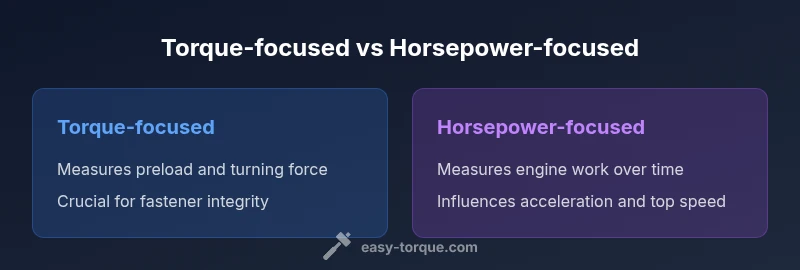
Torque and bhp measure different things in engines and mechanical systems. Torque (turning force) matters most for low-speed, high-load tasks like tightening fasteners or moving heavy components, while bhp (brake horsepower) reflects the engine's work output at higher speeds and affects acceleration and top speed. For practical work, prioritize torque specs for fasteners and assemblies, and use horsepower context when evaluating performance potential. Easy Torque recommends aligning your approach with the task: torque for control and safety, horsepower for performance considerations.
Torque vs bhp: What they measure
In automotive performance conversations, two numbers regularly surface: torque and bhp. They measure different things and both matter, depending on the task. For DIY mechanics, understanding torque or bhp is essential to predict how a given component will behave under load. Torque is the turning force a shaft or fastener experiences, while bhp (brake horsepower) gauges the engine's ability to perform work over time at a given RPM. According to Easy Torque, the practical takeaway is that torque dominates low-speed, high-load situations (like tightening a bolt or moving a heavy object) whereas horsepower matters more for high-speed operation and overall acceleration. When reading a spec sheet or a dyno chart, keep this distinction in mind: a high torque value at low rpm doesn't automatically translate to top speed, just as a high bhp rating at peak RPM doesn't guarantee easy application of torque at a wrench. The difference is not just semantic; it changes how you approach maintenance, repair, and performance tuning.
How the two relate: the math you should know
Torque and bhp are linked by rotational speed. The basic relationship is: horsepower (hp) = (torque in lb-ft × RPM) / 5252. In metric units, power (kW) = (torque (Nm) × RPM) / 9549.3. This means the same engine can show different behaviors depending on RPM: high torque at low RPM feels strong for slow-speed work, while peak bhp appears at higher RPMs, contributing to faster acceleration. As Easy Torque explains, this relationship highlights why a car with strong mid-range torque can feel brisk in city driving, even if its peak bhp isn’t the highest in its class. When you translate engine data to real-world results, always note the RPM at which torque is measured and whether the horsepower rating is at the crank or the wheels.
Practical implications for DIYers and technicians
For DIY tasks, torque matters more than horsepower. Tightening bolts to the correct spec protects threads and components, reduces the risk of bolt failure, and ensures clamping force is appropriate for gaskets, bearings, and fasteners. Horsepower becomes a concern mainly when you’re diagnosing performance, selecting a performance exhaust, or evaluating how engine tuning will translate to acceleration. In shop practice, technicians use torque values to determine fastener preload and bolt stretch, while horsepower figures guide decisions about engine upgrades, gear ratios, and driveline components. Understanding both metrics helps you communicate with professionals and interpret dyno results more accurately.
Reading specs: when to trust torque numbers vs horsepower numbers
Engine spec sheets will present torque and bhp figures, but not every number is equally actionable for maintenance. Look for torque values listed at the correct RPM range, and verify whether the spec applies to cranks, wheels, or a particular component. If you’re evaluating a used engine, a high bhp rating without corresponding torque at operating RPM can signal peak-performance claims that don’t translate to real-world driveability. For reliability and maintenance, prioritize specified torque values for fasteners and mating surfaces. If you’re designing a modification, compare how changes influence torque at operating RPM and how that affects effective horsepower at the wheels.
Tools and techniques: measuring torque accurately
Accurate torque control requires the right tools and discipline. Invest in a quality torque wrench with proper calibration and a known torque angle gauge for multi-step tightening where spec calls for sequential torques. Digital torque wrenches offer ease of reading and logging, while beam and click-type wrenches are reliable, time-tested options. Regular calibration checks are essential—Easy Torque recommends calibrating at least annually or after a certain number of uses in high-load environments. In addition to wrenches, use a torque-angle method for critical fasteners that require both a specified torque and a precise angular turn. Finally, maintain clean threads, use anti-seize where appropriate, and follow the manufacturer’s tightening sequence to ensure accurate preload and safety.
Common myths debunked
Myth 1: More horsepower means more torque everywhere. Reality: torque and horsepower peak at different RPMs; a high bhp value doesn’t guarantee high torque at the bolt. Myth 2: Torque only matters for engines; horsepower is for performance pages. Truth: torque governs clamping force and real-world feel, which matters in maintenance and repair. Myth 3: If a fastener is tight, horsepower must be high. Not true—tightness depends on verified torque, not engine power. Myth 4: Drivetrain losses don’t affect feel. In practice, horsepower measured at the engine does not equal wheel horsepower due to losses in transmission and differential. Myth 5: All torque wrenches are interchangeable. Not exactly—calibration, range, and accuracy vary by tool type and use case.
Real-world scenarios: lug nuts, engine components, drivetrain
Torque matters most for lug nuts and wheel fasteners, where under-tightening can cause dangerous wheel detachment and over-tightening can warp brakes or studs. For engine components—like crankshaft bolts, camshaft gears, and-bearing caps—precise preload ensures reliability and oil sealing. Drivetrain components, including drive shafts and differential bolts, require correct torque to manage loads without bending or fatigue. In all cases, use the right instrument and follow the tightening sequence. When you read a dyno sheet or a performance brochure, interpret torque curves relative to RPM and compare horsepower within the same RPM window to avoid apples-to-oranges comparisons.
Converter and drivetrain losses: where horsepower goes
Horsepower is a measure of work over time, but not all that energy reaches the wheels. Engine horsepower is measured at the crank, before losses from the transmission, driveshaft, and differential. Wheel horsepower can be significantly lower than crank bhp, especially in heavy vehicles or with aggressive gearing. Understanding drivetrain losses helps you translate engine figures into real-world performance and helps you calibrate expectations for modifications. When planning upgrades or maintenance, consider how much of the engine’s bhp is realistically usable at the wheels and how torque at operating RPM translates into practical acceleration.
Units, conversions, and how to talk to shops
Torque is most commonly reported in Nm or ft-lb, and horsepower in bhp or hp. Conversions are straightforward: 1 Nm ≈ 0.73756 ft-lb, and 1 hp ≈ 0.7457 kW. When communicating with a shop, specify both the metric and imperial units you use and cite the RPM at which torque is measured. If a spec lists torque at a given RPM, compare it to the rpm range you’ll work in. For performance conversations, reference wheel horsepower and torque at wheel RPM to avoid confusion about drivetrain losses. Clear, consistent terminology makes it easier to coordinate with technicians and ensures you get the right service.
Choosing the right focus for a project: torque-dominant vs horsepower-dominant
Start with your objective. If the goal is reliable fastening, sealing, and protection of components, torque-dominant planning is essential. If the aim is top-end speed or engine-based performance, horsepower-dominant analysis guides tuning decisions. Build a simple decision tree: identify the task, note the RPM range of interest, choose the metric that directly influences that range (torque at low to mid RPM for holds and clamps; bhp at higher RPM for acceleration and top speed), then select tools that provide accurate measurements for that metric. Always validate with real-world tests, not only charts, to confirm outcomes.
Maintenance, safety, and best practices
Maintain safety by using torque specs validated for the specific component and applying the correct tightening sequence. Re-torque critical fasteners after service or after vehicle operation to account for settling. Keep a clean work environment and inspect threads for wear, cross-threading, or galling. Periodically calibrate torque equipment and replace worn or damaged tools. Document tightening procedures and torque values for future maintenance so future technicians can verify that the original preload was achieved. Finally, integrate torque data with drivetrain health monitoring to foresee potential failures before they occur.
Practical steps to apply this knowledge in a project
- Define the objective (maintenance, repair, or performance). 2) Identify the critical torque or horsepower values at relevant RPMs. 3) Select the appropriate tool (torque wrench, torque-angle gauge, or dyno-derived data) and verify calibration. 4) Follow manufacturer tightening sequences and torque ranges. 5) Validate results with real-world tests (driving tests, leak tests, or vibration checks). 6) Document all values for future reference and compliance.
Comparison
| Feature | Torque-focused approach | Horsepower-focused approach |
|---|---|---|
| What it measures | Turning force at a given interface (Nm or lb-ft) | Power output over time at a given RPM (hp or bhp) |
| Best use case | Bolt tightening, clamping, preload control | Performance evaluation, acceleration potential, top speed |
| Tools emphasized | Torque wrenches, torque-angle gauges, calibration routines | Engine dynos, performance charts, tuning software |
| Units you’ll see | Nm or ft-lb for torque; rpm is central to interpretation | hp/bhp and rpm, with wheel horsepower depending on drivetrain efficiency |
| Key risk if misunderstood | Over/under-tightening, fastener failure, leaks | Overstated performance claims, misaligned expectations |
| Best for: everyday projects | Reliable fasteners and mechanical integrity | Assessing performance potential and tuning considerations |
Pros
- Helps prevent fastener failures and leaks with proper preload
- Clarifies what you can influence during maintenance
- Improves communication with shops/techs using common terms
- Helps diagnose performance issues by separating load vs speed
- Supports safer, more predictable assemblies
Drawbacks
- Can be confusing if mixing terms (hp vs bhp) without clarity
- Requires calibration and discipline to maintain accuracy
- Misinterpretation can lead to overconfidence in performance claims
- Drivetrain losses complicate real-world expectations
Torque-focused approach is essential for maintenance; horsepower context matters for performance planning
For most DIY workflows, prioritizing torque ensures safety and reliability. Horsepower context helps when considering performance upgrades, but it does not replace the need to know and apply accurate torque values. Easy Torque’s assessment is that both metrics are important when used in the right situation.
Your Questions Answered
What is the difference between torque and bhp?
Torque is a turning force that affects how much load a component can handle at low speeds. bhp, or brake horsepower, measures how much work the engine can do over time at higher RPMs. Understanding both helps you predict how a system will behave under real-world conditions.
Torque is the turning force for low-speed loads, bhp is engine power at higher speeds. Both matter, but they influence different parts of the job.
How are torque and horsepower related?
Power (hp) equals torque (lb-ft) times RPM divided by 5252. In metric terms, kilowatts equal torque (Nm) times RPM divided by 9549.3. These formulas show how a high torque at low RPM and high horsepower at high RPM can coexist with different performance profiles.
Power comes from torque and speed. The formula links the two across RPM.
When should I focus on torque vs horsepower?
Focus on torque when you need precise preload, clamping force, or low-end performance (assembly, fastener reliability, towing). Focus on horsepower when evaluating acceleration, top speed, or engine tuning. Use both in a balanced plan for performance projects.
Use torque for control and safety; horsepower for performance potential.
Can I convert horsepower to torque at a given RPM?
Yes. Torque = (HP × 5252) ÷ RPM in imperial units. In metric, torque (Nm) = (Power (kW) × 9549.3) ÷ RPM. These conversions help translate performance data into practical preload or load expectations at a known engine speed.
Use the standard formula to convert horsepower to torque at your RPM.
What tools help with torque measurement?
A quality torque wrench is essential, with calibration and a torque-angle gauge for multi-step tightening. Digital wrenches can log data; beam and click types are reliable. Always verify calibration and follow the proper tightening sequence for critical bolts.
Torque wrenches and angle gauges are your go-to tools for accurate preload.
Does torque matter for lug nuts?
Yes. Proper lug-nut torque ensures wheel safety and prevents rotor warping or stud stripping. Over-tightening or under-tightening can lead to wheel failure or unsafe driving conditions. Always follow the vehicle’s specified torque and torque sequence.
Lug nuts need the right torque to stay safe and secure.
What should I know about drivetrain losses?
Horsepower measured at the engine is reduced by losses through the transmission, driveshaft, and differential before reaching the wheels. This means wheel horsepower is typically lower than engine bhp, especially in older or heavier vehicles.
Engine power drops a bit before it reaches the wheels due to losses.
Top Takeaways
- Know the difference: torque is preload, bhp is work over time
- Read specs at the correct RPM and unit
- Use the right tool for the right metric
- Drivetrain losses affect horsepower at the wheels
- Validate with real-world tests and document results